Cape Town on a budget: neighborhoods, safety and a one-week budget
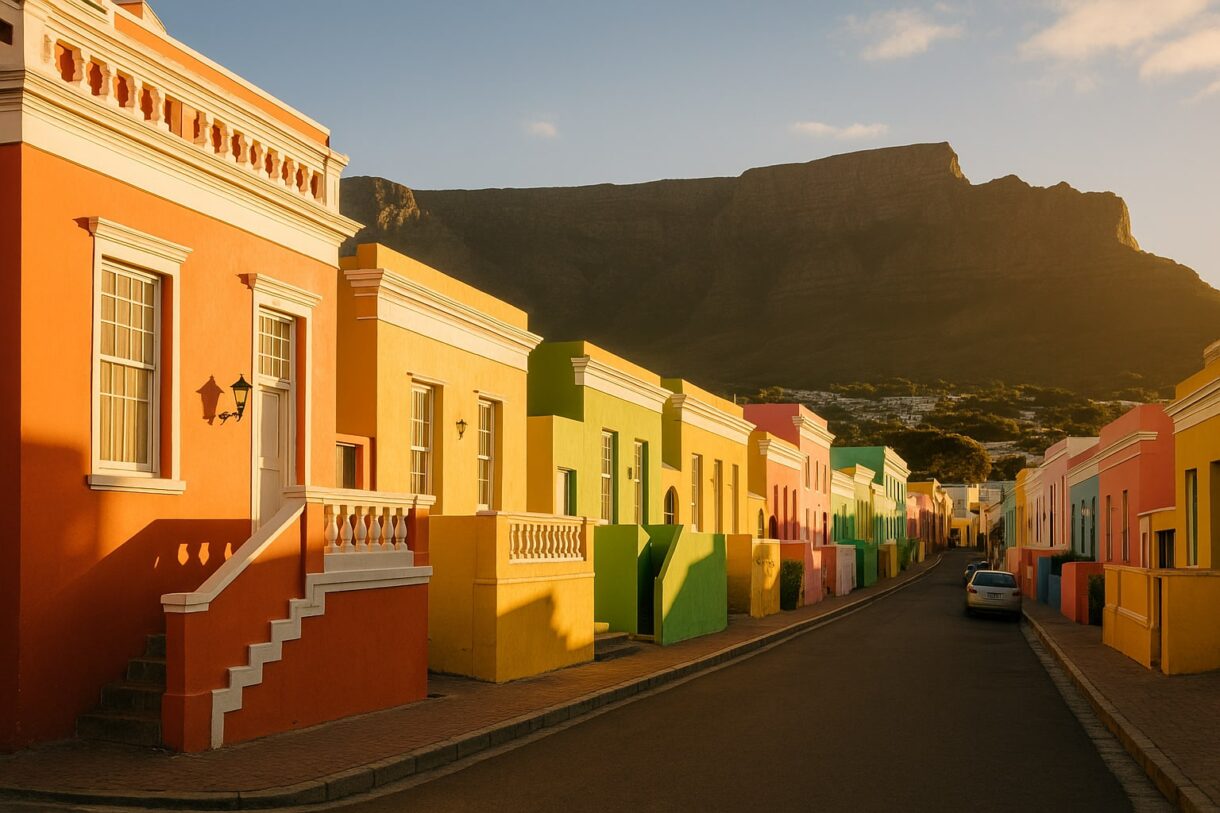
Seven days in Cape Town is just enough to get to know the city without rushing and to make two or three trips out to the peninsula and the Stellenbosch wine estates. If you’re coming for the first time, the plan that works is to stay between Sea Point and the City Bowl, rent a car only on the days you leave the city, and accept that here the weather is in charge: Table Mountain can be closed by wind for three days in a row.
This article is useful if you’re travelling as a couple, with friends or as a family with teenagers, on a mid-range budget (roughly €80-150 per person per day, all included except international flights). I also point out options for backpackers and for those looking for something more upscale.
Why Cape Town deserves a full week
Cape Town is not the administrative capital (Pretoria is) nor the most populous city in South Africa (Johannesburg surpasses it), but within roughly 50 kilometres it concentrates a flat-topped mountain, two oceans, vineyards more than 300 years old, colonies of African penguins and the Malay quarter of Bo-Kaap, a legacy of the enslaved people brought by the Dutch East India Company from the 17th century onwards. The city was founded in 1652 as a supply station on the route to Asia, and that mix — Dutch, British, Malay, Xhosa, Khoisan — explains its character and its gastronomy.
It also explains its contrasts: neighbourhoods such as Camps Bay look like the Côte d’Azur, and twenty minutes away by car are the townships of Khayelitsha and Langa. Ignoring this would be dishonest; visiting it well is a learning experience.
Quick reference for planning the trip
| Item | Value |
|---|---|
| Recommended days | 6-8 (7 is the ideal balance) |
| Best season | October-April (southern summer); January-February is peak season |
| Currency | South African rand (ZAR); €1 ≈ 20 ZAR approx. |
| Useful language | English everywhere; Afrikaans and Xhosa less used |
| Flight from Spain | Madrid-Cape Town with a stopover (Doha, Amsterdam, Istanbul): 12-15 h |
| Visa | Not required for Spaniards up to 90 days |
| Plug | Type M (three thick pins): you need a specific adapter |
| Mid-range budget/day | €80-150 per person excluding flights |
When to go and what to expect from the weather
The southern summer (December to March) is sunny, dry and windy: the “Cape Doctor”, a southeasterly wind, can blow for whole days and close the Table Mountain cable car. January and February are the most crowded and expensive months, especially because of local holidays.
October-November and March-April are the best window: temperatures of 20-26 °C, less wind, more reasonable prices and southern right whale sightings near Hermanus (June to November, peak in September-October). Winter (June-August) is rainy and cold in the afternoons, but flights and accommodation can be up to 40% cheaper.
Where to sleep depending on your profile
The choice of neighbourhood shapes the trip more than in almost any other city. Real distances and atmosphere vary a lot.
| Neighbourhood | Profile that fits | Double hotel price/night | Advantage | Drawback |
|---|---|---|---|---|
| City Bowl / Gardens | First visit, culture | €60-120 | Central, close to museums and Kloof Street | Empty at night on Sundays |
| Sea Point | Couples, families | €70-140 | Seafront promenade, safe to walk | Beach not suitable for swimming |
| V&A Waterfront | Comfort, families with children | €150-350 | Everything at hand, heavily guarded | Touristy and expensive |
| Camps Bay | Couples with a car | €120-300 | Spectacular beach and sunsets | Far from the centre, windy |
| Woodstock / Observatory | Backpackers, creatives | €25-60 (hostels) | Urban art, markets | Mixed areas: ask for local advice |
| Constantia | High budget, vineyards | €200-500 | Historic wine estates, quiet | You absolutely need a car |
For a first week, my honest recommendation: three or four nights in Sea Point or City Bowl and the last two in Simon’s Town or on a Constantia wine estate to wind down calmly.
How to get from the airport and move around the city
The Cape Town International (CPT) is about 20 km from the centre. Options:
- Uber or Bolt: €12-20 to the City Bowl, €15-25 to the Waterfront. The most practical option; request it inside the terminal and wait in the signposted area.
- MyCiTi Bus (route A01 to the centre): about €6-8, rechargeable card, operates until around 21:30. Comfortable if you travel light.
- Counter taxi: expensive (€25-35) and with no real advantage over Uber.
Within the city, Uber and Bolt are the norm: journeys of €2-6 along the Waterfront-Sea Point-City Bowl axis. The MyCiTi bus works well on the coastal route. Don’t use shared minibuses unless someone local is with you: they’re cheap but opaque for tourists.
To leave the city (Cape Peninsula, vineyards, Hermanus) rent a car: €25-45 per day with international companies; you drive on the left and the roads are in good condition.
Real budget for one week
Approximate figures per person, excluding international flights, in mid-season (October-November 2026, approx.):
| Item | Backpacker | Mid-range | Upscale |
|---|---|---|---|
| Accommodation (7 nights) | €150-250 | €400-800 | €1,200-2,500 |
| Meals | €100-150 | €250-400 | €500-800 |
| Local transport | €50-80 | €150-250 (with a car for 2 days) | €300-500 |
| Activities and entrance fees | €80-120 | €150-250 | €300-500 |
| Weekly total | €380-600 | €950-1,700 | €2,300-4,300 |
Useful references: a decent breakfast costs €4-7, a meal at a bistro on Kloof Street €12-20, dinner with wine at a good restaurant €25-45. A glass of Stellenbosch sauvignon blanc in a bar: €3-5. The Table Mountain cable car return trip is around €22-25; entrance to Boulders Beach (penguins), €8-10.
Safety without paranoia: what to do and what not to do
Cape Town has high crime statistics, but violence is concentrated in very specific areas far from tourist circuits. With common sense, the trip passes without incident. Practical rules:
- At night, always take an Uber, even for short trips. Walking along Long Street at 2 in the morning with your phone in your hand is asking for trouble.
- Don’t display valuables in the street: phone only when you’re using it, camera put away between photos.
- Signal Hill and Lion’s Head at dawn or dusk: go with more people, never alone. There have been muggings at early hours.
- ATMs: use the ones inside shopping centres or the Waterfront, never the ones on the street.
- Car rental: leave nothing visible inside, not even an empty bag. Always park in a guarded area (the car guards in vests expect a tip of 5-10 ZAR).
- Townships: visit them only on an organised tour with a local guide. Going on your own adds nothing and complicates things.
Areas to avoid at night: upper parts of Woodstock towards Salt River, the surroundings of the central station, and any street that empties for no reason. Always ask your accommodation about the specific route.
A seven-day itinerary that works
Day 1 — Arrival and Sea Point. Arrival, a walk along the Sea Point Promenade at sunset, a quiet dinner in Mouille Point. Don’t force it if you arrive jet-lagged.
Day 2 — City Bowl and Bo-Kaap. Company’s Garden, South African Museum, a walk up to Bo-Kaap (Wale and Chiappini streets). Eat a bobotie or a bunny chow at Biesmiellah, the Malay restaurant in the neighbourhood that has been open for over 40 years. Afternoon on Long Street and Kloof Street.
Day 3 — Table Mountain and Kirstenbosch. Take the cable car early (it opens around 8:00; check the wind conditions the night before on the official website). Come down at midday and spend the afternoon in the Kirstenbosch botanical garden: one of the best in the southern hemisphere, with an entrance fee of €6-8.
Day 4 — Cape Peninsula (rental car). Classic route: Hout Bay, Chapman’s Peak Drive (toll of about €3), the Cape of Good Hope and Cape Point (park entrance, €20-22), penguins at Boulders Beach and the return via Simon’s Town and Muizenberg. A long day, but a rounded one.
Day 5 — Stellenbosch or Franschhoek vineyards. 45-60 minutes by car. Three wineries per day is enough; tastings cost €5-8. Eat in Franschhoek, a Huguenot town founded by French refugees in 1688. Return at sunset.
Day 6 — Robben Island and the Waterfront. Ferry from the V&A Waterfront (book in advance on the official website, about €30 return with a 3.5-hour guided tour). In the afternoon, the Watershed market and dinner with harbour views.
Day 7 — Camps Bay or township tour. If you prefer to relax, beach and lunch in Camps Bay. If you want context, a guided tour of Langa or Khayelitsha with a recognised local operator (€50-70). Finish on Signal Hill at sunset.
If you have an extra day, Hermanus to see whales (in season) or Cape Agulhas, the southernmost point of the continent, are both worth the trip.
What to eat and where, without falling into the tourist trap
Cape cuisine blends Malay, Dutch and African influences. Try the bobotie (spiced minced meat topped with egg), the bunny chow (a hollowed-out loaf filled with curry), the braai (South African barbecue, almost a ritual), and fish such as smoked snoek. The white wines — chenin blanc and sauvignon — are the local strength, better than many reds.
Markets: Neighbourgoods Market (Woodstock, Saturday mornings) for breakfast among producers; Oranjezicht City Farm Market (Waterfront, Saturdays and Sundays), more focused on organic produce. For meat, any neighbourhood steakhouse offers a fillet for €15-22, very high quality.
If you’re interested in other urban guides with this practical approach, also see our piece on Rio de Janeiro, safe neighbourhoods and Carioca customs: they share similar dilemmas around neighbourhood and safety.
Common mistakes to avoid
- Climbing Table Mountain on the first day without checking the wind: you lose the entrance fee if they close it.
- Renting a car for all seven days: in the centre it’s a nuisance and parking it is an extra cost.
- Leaving Robben Island for the last day: if there’s a heavy swell they cancel and you miss it.
- Going to Boulders Beach at midday in January: queues of an hour. Go first thing or last thing in the day.
- Trusting that “everything is close”: the city is large and journeys in rush hour take longer.
Frequently asked questions
Is Cape Town safe for tourists? With basic precautions, yes. Serious incidents are concentrated in neighbourhoods a tourist does not visit. The rule is: never on foot at night, always Uber, and valuables out of sight. Millions of travellers visit every year without problems.
How many days do I need at minimum? Five for the city and one excursion. Seven is the round number that lets you see the peninsula, the vineyards and Robben Island without rushing. Fewer than four is too short.
Do I need a visa as a Spaniard? No, up to 90 days as a tourist. You need a passport with at least two blank pages and validity of at least 30 days after departure. Check the updated requirements before flying.
Can you drink the tap water? Yes, the water is drinkable throughout the metropolitan area. On rural excursions, bottled water is better.
How much should you tip? 10-15% in restaurants is expected (sometimes a service charge is included; check the bill). For car guards, 5-10 ZAR. For private tour guides, 50-100 ZAR per person per day.
Is it worth going in August (southern winter)? It depends. It’s cheaper and not crowded, but it rains, it’s cold in the afternoons, and some days Table Mountain isn’t visible. It pays off if you’re going to Hermanus for the whales or if your priority is a tight budget.
Final recommendation
Book your accommodation in Sea Point or Gardens for the first four days and a two-night escape to a guesthouse in Simon’s Town or Constantia to finish. Rent a car only on days 4 and 5 (peninsula and vineyards). Buy your Table Mountain cable car ticket on the same day in the morning according to the wind forecast, not in advance. With that you resolve 80% of the difficult decisions and keep room to improvise depending on how the weather behaves.
Accommodation Places of Interest Means of Transport #barrios #Ciudad del Cabo #consejos de viaje #Guía de viaje #presupuesto #transporte público


 Don't get fooled: plan your trip well and avoid these scams on your holidays
 Central Macedonia, the destination Spaniards have discovered to fall in love with Greece
 Summer in Brussels: flowers, festivals and typical gastronomy
Comentarios cerrados