Aínsa vs. Roda de Isábena: two Pyrenean medieval capitals that almost no one compares
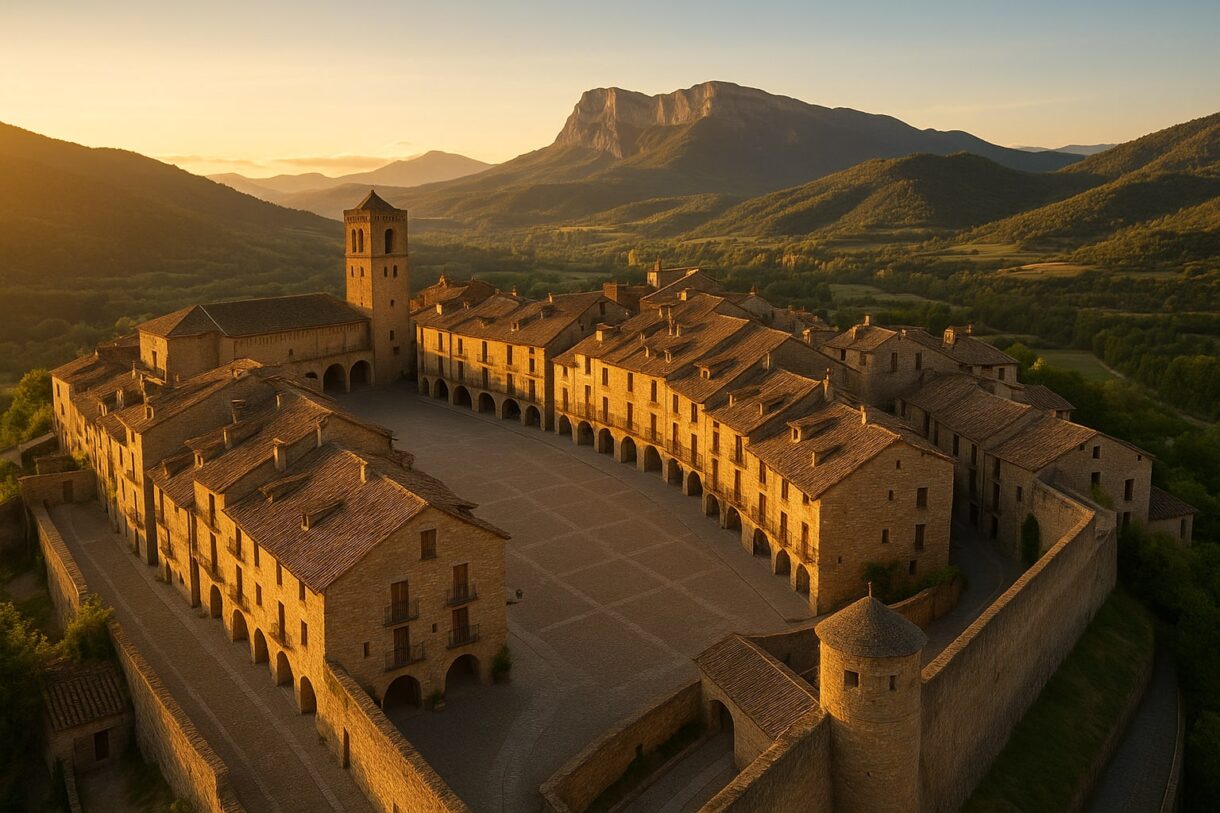
If you have a weekend in Alto Aragón and can’t decide between Aínsa and Roda de Isábena, the quick answer is this: Aínsa offers more village life, more services and a arcaded square that is best explored slowly; Roda de Isábena gives you an intact Romanesque cathedral in a hamlet of fewer than forty inhabitants. If you can only see one and pure heritage is what draws you, go to Roda. If you’re looking for a base for several days in the Pyrenees with dinners, shops and nearby routes, choose Aínsa.
This article is for anyone travelling against the clock, who doesn’t want to repeat the usual clichés about Ordesa and prefers to understand what makes each place different before putting the route into the car. They are just over an hour apart by mountain road, but they belong to two regions —Sobrarbe and Ribagorza— with parallel medieval histories that guidebooks rarely bring together.
Two capitals, two regions, one Pyrenees
Aínsa was capital of the former Kingdom of Sobrarbe, an early medieval entity that tradition places in the 9th–11th centuries and that was eventually absorbed into the Kingdom of Aragon. Its upper core, on a promontory between the Ara and Cinca rivers, preserves the original defensive layout and a castle whose building phases range from the 11th to the 17th century.
Roda de Isábena, by contrast, was episcopal see of Ribagorza from 956, when Bishop Odesindo moved the cathedra there. For a little over a century it was the religious capital of a small Pyrenean kingdom, until in 1149 the see was transferred to Lleida. What remains today is a Romanesque cathedral consecrated in 1067 and a handful of stone houses on top of a hill above the Isábena valley.
Quick comparison table
| Detail | Aínsa | Roda de Isábena |
|---|---|---|
| Region | Sobrarbe (Huesca) | Ribagorza (Huesca) |
| Approx. inhabitants | 2,200 | Fewer than 40 |
| Historic milestone | Capital of the Kingdom of Sobrarbe | Smallest episcopal see in Europe |
| Main monument | Castle (11th–17th c.) and arcaded Main Square | Cathedral of San Vicente (11th c.) |
| Visit duration | Half a day or a full day | 2–3 hours |
| Services | Hotels, restaurants, shops | Very limited (one guesthouse, a couple of rural houses) |
| Base for excursions | Yes (Ordesa, Pineta, Añisclo) | Limited (Congosto de Obarra, Benasque at 1 h) |
Aínsa: the upper town of Sobrarbe
You reach the old quarter by leaving the car in the car parks of the new town, below. The walk up is short, about ten minutes along Calle Mayor, which is cobbled and has dark wooden arcades. At the top opens the Plaza Mayor, one of the most complete arcaded ensembles in the Aragonese Pyrenees: rectangular layout, round arches and ashlar masonry from the 12th–13th centuries.
At the western end stands the castle, with a Romanesque keep and a walled enclosure enlarged in the time of Philip II to strengthen the border with France. Inside are the Sobrarbe-Pyrenees Geopark Space and the Eco Museum dedicated to Pyrenean wildlife, with opening hours that are worth checking at the tourist office because they change between high and low season.
The church of Santa María, from the 12th century, has an irregular trapezoidal cloister and a crypt that can be visited for a symbolic fee (around 1–2 €, check before going). It’s worth climbing the bell tower if you don’t suffer from vertigo: the view takes in the Sierra de Guara to the south and the Peña Montañesa to the north.
What to eat in Aínsa
Sobrarbe cuisine relies on lamb, mushrooms and cured meats. Dishes with their own names include chiretas (tripe stuffed with rice and lamb), crespillos (battered borage) , migas a la pastora and recuelo desserts. There are restaurants on the Plaza Mayor and in the lower village; a set menu costs around 18–28 € and an à la carte dinner easily comes to 35–45 € per person.
Roda de Isábena: the cathedral that outlived the village
Getting to Roda is part of the experience. It lies in the Ribagorza region, about 20 km north of Graus via the A-1605, a narrow road that climbs the hill for its final stretch. You park at the entrance to the settlement; the hamlet can be crossed in five minutes.
The Cathedral of San Vicente, consecrated in 1067 under Bishop Arnulfo, is the only building of this size from the Romanesque period in Alto Aragón to have come down to us without major alterations. It has three naves, three apses, a 12th-century cloister with historiated capitals, and a crypt containing the tomb of San Ramón, Bishop of Roda between 1104 and 1126, whose polychrome carving is one of the most distinctive pieces of Romanesque funerary art in the Peninsula.
The visit is guided (booking is essential or you should arrive at a tour time; check the website of the Diocese of Barbastro-Monzón or the guesthouse itself). Approximate duration: 45 minutes. Entry costs around 3–5 €. You see the cloister, the crypt, the chapter house with wall paintings and the upper choir.
The refectory turned restaurant
In the former refectory of the canons there is La Catedral, a restaurant occupying a 12th-century hall with a barrel vault and original frescoes. I don’t recommend it as a fashionable choice: it is literally the only place where you can eat charcoal-grilled lamb beneath a medieval mural. Menu around 25–35 €. Book well in advance, especially at weekends.
Getting there and getting around
The two villages are in the Huesca Pyrenees, but not on the same route. Aínsa lies along the N-260 (the Pyrenean axis), about 2 hours by car from Huesca and about 3 hours from Zaragoza. Roda de Isábena is to the east, closer to Lleida: about 2 hours from the city of Lleida via the N-230 and a turn-off through Graus.
Between Aínsa and Roda there are about 90 km of mountain road, with a real driving time of 1 h 30 min if there are no roadworks or farm traffic. There is no useful public transport between the two: a car is essential if you want to combine them.
When to go
- Spring (April–June): the best balance. Mild temperatures, green valleys, no crowds of tourists.
- Summer (July–August): Aínsa fills up, especially in the first half of August for the Morisma, a medieval theatrical performance held every two years in the Plaza Mayor (check the calendar on the town council website). Roda de Isábena copes better with visitors thanks to its small size.
- Autumn (September–October): mushrooms, colour in the beech forests, good temperatures.
- Winter: Roda is very quiet and has reduced services; Aínsa works as a base for Cerler and Astún.
If you want to combine history with fewer crowds, apply the same logic as with Santillana del Mar out of season: on weekdays and outside August you’ll see things differently.
Where to stay
In Aínsa there is a wide range of options: boutique hotels in the old quarter (90–150 € for a double in high season), rural houses in the lower village (60–90 €) and apartments. Book well ahead for August and long weekends.
In Roda de Isábena, the iconic option is the Hospedería de Roda de Isábena, run by the Red de Hospederías de Aragón, set in the former priory palace next to the cathedral. Rooms cost around 70–100 €. There are also a couple of rural houses in the same village or in nearby places such as La Puebla de Roda.
Common mistakes
- Trying to see both in one day without sleeping over. It can be done, but you miss the best of it: the silence of Roda at sunset and the Plaza Mayor in Aínsa once it empties after lunch.
- Going to Roda without checking the cathedral visiting times. It isn’t open at all hours; you enter on guided tours.
- Expecting Aínsa to be a village frozen in time. The old quarter is, but the new town below is functional and modern. The two coexist.
- Underestimating the roads. The stretch between the two regions includes mountain passes and tight bends. Allow generous time margins.
What’s nearby
From Aínsa you can reach in under an hour the gorges of Añisclo and the Pineta valley (Ordesa and Monte Perdido National Park), the abandoned and restored village of Morillo de Tou, and the medieval ensemble of Boltaña.
From Roda the Congosto de Obarra, with the Romanesque monastery of Santa María, are close at hand, as is the Benasque valley, although the latter is already a good hour and a half by road.
For those who enjoy towns with a wine heritage more than a cathedral one, there are parallels with Laguardia and its excavated wineries in the Rioja Alavesa: another model of a small walled town with a life of its own.
Frequently asked questions
Which one is worth more if I only have one day?
If you’re interested in pure Romanesque and want a concentrated heritage experience, Roda de Isábena. If you prefer strolling, eating well and having options around you, Aínsa. Roda can be seen in half a morning; Aínsa needs a full day.
Can you visit both in a weekend?
Yes, and it’s the most recommended combination. Saturday morning in Aínsa, lunch there, afternoon drive and night at the Roda guesthouse. Sunday morning guided cathedral visit and return.
How much does it cost to enter the Cathedral of San Vicente in Roda?
Around 3–5 € for the guided visit, which lasts about 45 minutes and includes the cloister, the crypt with the tomb of San Ramón and the chapter house. Check the updated times before going, as they vary by season.
Is it a good destination with children?
Aínsa works well: a castle with interactive exhibitions, pedestrian streets, ice cream parlours. Roda is more contemplative; very young children may get bored during the guided visit, although they usually enjoy the walk up the hill.
What’s the difference between the Kingdom of Sobrarbe and the County of Ribagorza?
Both were early medieval Pyrenean entities that emerged after the Muslim retreat. Sobrarbe, with its traditional capital at Aínsa, was soon integrated into Aragon. Ribagorza, with Roda as its episcopal see, had its own comital dynasty before also joining the Crown of Aragon in the 11th century.
Is there public transport between Aínsa and Roda de Isábena?
Not in any practical sense. There are limited regional bus lines and no direct connection between the two villages. To combine them you need your own or a rented car.
If I had to settle on one concrete plan: sleep on Saturday at the Hospedería de Roda, have dinner in the refectory, get up early on Sunday to see the cathedral with no one else around, and head down to have chiretas at the Plaza Mayor in Aínsa at midday. In 36 hours you’ll have taken in the two medieval capitals of the Aragonese Pyrenees that almost no one compares, and you’ll understand why they deserve to appear together on any serious route through Alto Aragón.
Places of Interest Leisure and Culture #castillos #catedrales #Guía de viaje #historia #pueblos con encanto #Turismo cultural
 Don't get fooled: plan your trip well and avoid these scams on your holidays
 Central Macedonia, the destination Spaniards have discovered to fall in love with Greece
 Summer in Brussels: flowers, festivals and typical gastronomy
Comentarios cerrados