Where to Stay in Tokyo: Shinjuku, Shibuya, Asakusa or Ginza Depending on Your Trip
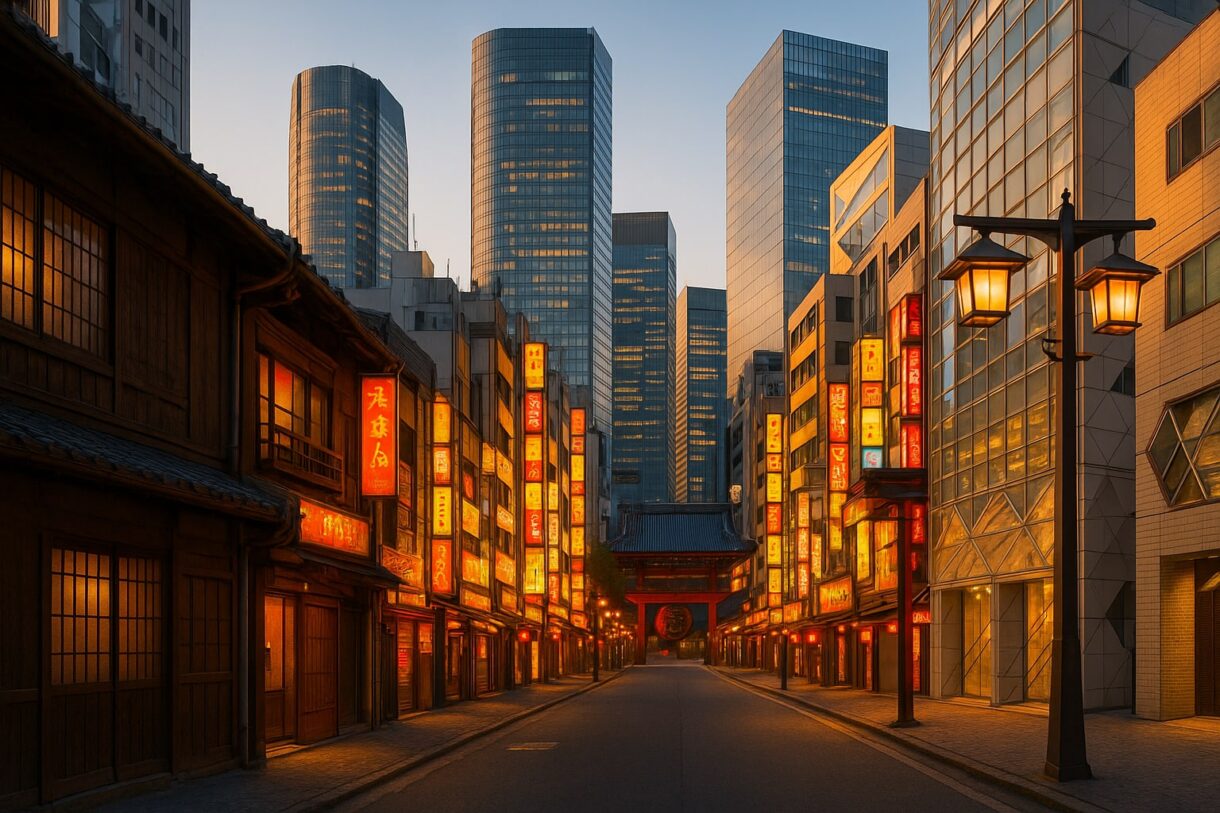
The short answer: which neighborhood to choose in Tokyo depending on your type of trip
If it’s your first time in Tokyo and you want maximum transport connections, stay in Shinjuku. If you’re traveling as a couple or looking for a young, fashionable atmosphere, Shibuya. If you’re interested in traditional Tokyo, with temples and ryokan, Asakusa. And if you’re traveling for work, shopping, or looking for an elegant, quiet hotel, Ginza.
This guide is useful if it’s your first visit, if you’re returning with a different travel profile, or if you’re traveling with children or on a tight budget. There is no universal “best neighborhood”: there is one that best fits what you want to do each day.
Why neighborhood choice matters so much in Tokyo
Tokyo is not a single city; it is 23 special wards (ku) with their own character, linked by a metro and rail network that moves nearly 40 million people a day. Sleeping in the wrong place can cost you between 45 minutes and an hour of daily travel, on top of the expense of tickets.
The city is organized around the Yamanote circular line of JR East, which connects the major stations (Shinjuku, Shibuya, Tokyo, Ueno). If you stay near one of its stops, almost everything is within 20-30 minutes. Outside it, travel times soar.
Quick comparison table of the four neighborhoods
| Neighborhood | Ideal profile | Average hotel price (double, mid-season) | Atmosphere | Best connection |
|---|---|---|---|---|
| Shinjuku | First time, logistics base | 12,000-22,000 ¥ | Neon, bars, offices | JR Yamanote + 11 more lines |
| Shibuya | Young people, couples, fashion | 14,000-24,000 ¥ | Commercial, nightlife | JR Yamanote, Ginza, Hanzomon |
| Asakusa | Culture, families, budget | 8,000-15,000 ¥ | Traditional, quiet at night | Ginza, Asakusa, Toei Asakusa |
| Ginza | Business, luxury, shopping | 20,000-45,000 ¥ | Elegant, understated | Ginza, Marunouchi, Hibiya |
Indicative prices in yen for 2026, standard double room outside cherry blossom and Golden Week. Check before booking: cherry blossom season (late March to early April) and Golden Week (late April to early May) can double rates.
Shinjuku: the default option if it’s your first time
Shinjuku Station is the busiest station in the world, with over 3.5 million passengers a day and eleven lines converging. In travel terms: you arrive easily from Narita Airport on the Narita Express (around 3,250 ¥, 80-90 minutes), and from there you can connect to practically any point in the city without absurd transfers.
The neighborhood has two faces. To the west of the station, skyscrapers, chain hotels and the Metropolitan Government Building (free observation deck, usually open until 22:00). To the east, Kabukichō, the famous red-light district, with izakayas, karaoke bars and Omoide Yokocho, a post-war alley full of tiny counters where you can eat yakitori for 200-400 ¥ per skewer.
It suits you well if you value logistics, aren’t intimidated by crowds, and want to be able to go out for dinner late without taking a taxi. It’s not the best choice if you’re traveling with young children: Kabukichō can feel intense after 21:00.
Shibuya: for those seeking young, commercial Tokyo
Shibuya is famous for its pedestrian crossing, yes, but it is also the neighborhood where Japanese urban fashion sets the trends. Here you’ll find Center Gai, the shopping area along Cat Street toward Harajuku, and large vertical department stores such as Shibuya Scramble Square (Shibuya Sky observation deck, entry around 2,500-3,000 ¥).
In practical terms, staying in Shibuya puts you a short walk from Harajuku, Omotesandō and Yoyogi Park, the most walkable area with the most daytime life in the city. The connection to Haneda Airport is direct via monorail + Yamanote (around 650 ¥, 40-50 minutes).
It’s the natural choice if you’re traveling as a couple, are between 25 and 40 years old, and want to alternate contemporary restaurants, shopping and going out late. Downsides: hotels are somewhat more expensive than in Shinjuku for equivalent quality, and nighttime noise is real.
Asakusa: traditional Tokyo and the best value for money
Asakusa is to the northeast, next to the Sumida River, and retains the air of the shitamachi, the “low city” of Edo-period artisans and merchants. Here is the Sensō-ji temple (founded in 645, the oldest in Tokyo), the Nakamise-dōri street with its sweet stalls, and a high density of family-run ryokan and well-kept capsule hotels.
Prices drop noticeably: you’ll find decent double rooms from 8,000-10,000 ¥ and ryokan with shared bathrooms from 6,000 ¥ per person. Street food (senbei, ningyo-yaki, dorayaki) runs about 200-500 ¥ per piece.
The trade-off is connectivity: Asakusa is off the Yamanote line. Getting to Shibuya takes 30-40 minutes with a transfer. If your plan is to visit temples, museums (the Edo-Tokyo Museum and the Ueno area are nearby) and return to the hotel early, it’s worth it. For intense nightlife, it isn’t.
If the traditional pace appeals to you, you might want to compare with Kyoto and its ryokan and temple etiquette experience to decide where to spend more nights.
Ginza: elegance, business and high-end shopping
Ginza was Tokyo’s first Westernized neighborhood in the Meiji era and today concentrates luxury flagship stores (Chanel, global Uniqlo, Itoya for stationery), Michelin-starred restaurants and international chain hotels. On Saturday and Sunday afternoons, Chūō-dōri becomes pedestrianized: a good time for a stroll.
It is the most expensive area: doubles from 20,000 ¥ and easily above 40,000 ¥ in hotels such as Park Hotel Tokyo or Muji Hotel Ginza. In return, you get nighttime quiet, Tokyo Station five minutes away by metro (useful for the shinkansen to Kyoto or Osaka), and proximity to the Imperial Palace and the outer market of Tsukiji.
It suits you if you’re traveling for work with meetings in the center, if you’re traveling without children and want a quiet hotel after intense days, or if your trip includes several bullet train journeys.
Other areas worth keeping on your radar
- Ueno: prices similar to Asakusa, a large park, museums and good connection to Narita via the Keisei Skyliner (around 2,570 ¥, 45 minutes).
- Roppongi: international nightlife, museums (Mori Art Museum), expensive hotels. Useful for expats; less so for first visits.
- Akihabara: if your trip revolves around anime, manga and electronics. Functional mid-priced hotels.
- Ikebukuro: a cheaper alternative to Shinjuku, good Yamanote connection, less touristy.
How much it costs to sleep in Tokyo in 2026 by category
| Type of accommodation | Price range per night (double room) |
|---|---|
| Hostel / capsule | 3,500-6,500 ¥ per person |
| Budget hotel (APA, Toyoko Inn) | 8,000-13,000 ¥ |
| Mid-range hotel (business + 3-4★) | 13,000-25,000 ¥ |
| Upscale / boutique hotel | 25,000-50,000 ¥ |
| Traditional ryokan in Asakusa | 12,000-30,000 ¥ (often with breakfast) |
Indicative data for 2026, mid-season. Prices rise sharply during cherry blossom, Golden Week (late April to May 5) and New Year.
How to get around from each neighborhood
A Suica or Pasmo (rechargeable cards) is essential: it can be topped up at any machine and works on metro, JR, buses and many vending machines. A typical metro trip costs 180-320 ¥.
If you fly into Narita, the Narita Express or Keisei Skyliner go directly to Shinjuku, Shibuya, Tokyo and Ueno. If you fly into Haneda, the monorail or the Keikyū line will get you to the center for 500-700 ¥ in 30-45 minutes. Taxis from Narita easily exceed 25,000 ¥: they only make sense with complicated luggage and several passengers.
Common mistakes when choosing accommodation in Tokyo
- Booking by price without checking the station. A hotel 15 minutes’ walk from the nearest station, in Tokyo, is a hotel far away.
- Confusing “Tokyo Station” with “downtown”. It’s a major railway station, but the area has no nightlife and no shops open late.
- Tiny rooms without warning. Business hotels typically have 12-15 m². If you’re traveling with a large suitcase, filter by room size.
- Not considering noise. In Kabukichō or near Shibuya’s Hachikō exit, choose a higher floor.
- Staying very far away to “save money”. Each extra trip costs 200-300 ¥ per person and eats up time.
When to go and how it affects hotel prices
The best windows are April (avoiding Golden Week), late May, October and early November. June is rainy but cheap; August is humid and hot. Cherry blossoms bloom between late March and early April: book 3-4 months in advance or accept high rates.
Frequently asked questions
Is Shinjuku or Shibuya better for sleeping on a first visit? Shinjuku, for its transport connections. Eleven lines converge there and it has direct access from Narita, something Shibuya doesn’t offer as easily.
Is Asakusa too quiet at night? It depends on what you’re looking for. After 21:00 activity drops off considerably, especially around the temple. If you want to have a late dinner or go out for drinks, you’ll need to move to Shinjuku or Shibuya.
Is it worth paying for a hotel in Ginza? Only if you value quiet, proximity to the Imperial Palace and Tokyo Station for the shinkansen, or if your trip is for work. For pure tourism, you get better value for money in Shinjuku or Asakusa.
Can a family with children stay comfortably? Yes, especially in Asakusa (family rooms in hotels such as Richmond or Almont) and Ueno (park and museums nearby). Many Japanese hotels limit standard rooms to two adults: check the policy before booking.
How much does an average day in Tokyo cost? With a mid-range hotel, three meals including an izakaya-style dinner, transport and one attraction entry, budget between 15,000 and 22,000 ¥ per person. By adjusting accommodation and eating at chains such as Ichiran or CoCo Ichibanya, it can drop to 9,000-12,000 ¥.
Do you pay in cash or by card? More and more shops accept card and mobile payment, but many small izakayas, temples and machines are still cash-only. Always carry 10,000-15,000 ¥ on you.
Final recommendation
If you’re torn between the four, this is the formula that works for most first visits of 5-7 days: three or four nights in Shinjuku as a logistics base and two or three nights in Asakusa to close the trip at a slower pace and try a ryokan. You save yourself from changing neighborhoods every day and see both faces of the city without giving up either.
Accommodation Tips #Alojamientos #barrios #consejos de viaje #hoteles #Tokio


 Don't get fooled: plan your trip well and avoid these scams on your holidays
 Central Macedonia, the destination Spaniards have discovered to fall in love with Greece
 Summer in Brussels: flowers, festivals and typical gastronomy
Comentarios cerrados