Kyoto for Slow Travelers: Ryokan, Temple Etiquette and Budget
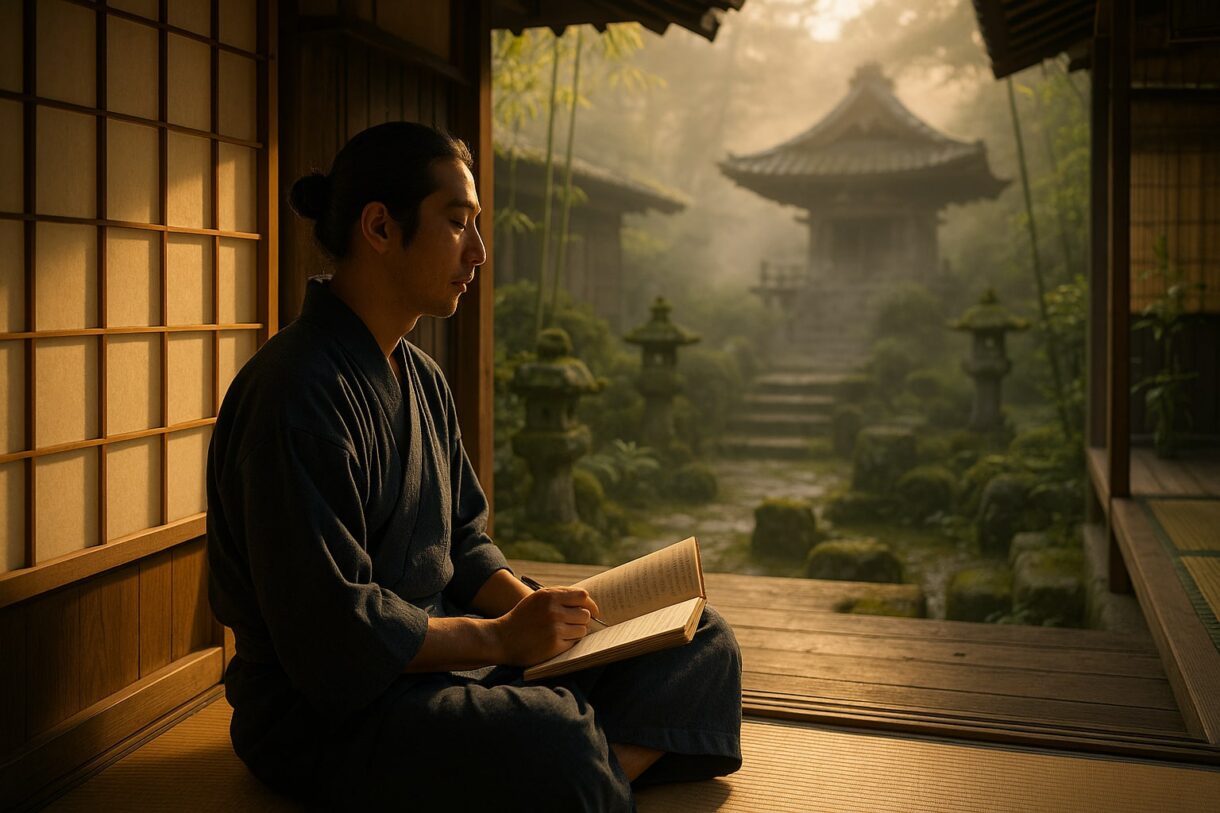
Kyoto can’t be read quickly. It was the capital of Japan for more than a thousand years, from 794 until the Meiji Restoration in 1868, and that accumulated depth becomes noticeable when you step off the Shinkansen and walk through Gion at dusk: wooden houses with vertical slats, lanterns lit all at once, the sound of geta (wooden clogs) on the pavement. If you arrive with a schedule of “ten temples in two days”, you will miss exactly what makes this city different.
This article is for anyone who wants to travel to Kyoto at a relaxed pace: sleeping in a ryokan, understanding why you take off your shoes in a temple, and doing realistic calculations in yen. No marathon routes or lists of must-sees.
Why Kyoto asks for a different rhythm
The city preserves more than 1,600 Buddhist temples and some 400 Shinto shrines. Seeing them all is absurd; understanding three is possible. The charm lies in stopping: a dry garden of fifteen stones at Ryōan-ji, a matcha tea in a chashitsu in the Higashiyama district, the conversation with a craftsman from Nishijin who weaves silk as his great-grandfather did.
Kyoto also suffers from overtourism. During the cherry blossom season (late March to mid-April) and the autumn foliage season (mid-November), Arashiyama and Fushimi Inari become congested from nine in the morning onward. The solution is not to avoid them, but to get up early.
What a ryokan is and why you should sleep in one
A ryokan is a traditional Japanese inn. Tatami floors, a futon that is laid out at night, sliding paper doors shōji, and almost always a communal bath with hot spring water (onsen) or at least a wooden ofuro. It is not a hotel with Japanese decor: it is a different way of inhabiting space.
The stay usually includes kaiseki (traditional multi-course dinner of small dishes) and a Japanese breakfast. The staff, led by the okami-san (hostess), greets you with tea and sweets and explains the bathing hours. You are expected to move around the ryokan wearing the yukata provided in your room.
Traditional ryokans in Kyoto: categories and styles
There are three clear tiers. The historic luxury ryokans such as Tawaraya or Hiiragiya, in the center, cost around 80,000–150,000 yen per person per night with dinner and breakfast. The mid-range ryokans, many in Higashiyama or near the Kamo River, range between 20,000 and 40,000 yen. And the minshuku (family-run, simpler version) can go down to 10,000–15,000 yen.
Practical tip: book two or three months in advance if you travel in spring or autumn. Many traditional ryokans do not appear on Booking; you need to write to them by email or book through sites such as japanican.com or japaneseguesthouses.com.
Temple etiquette: Buddhist and Shinto
Confusing a temple with a shrine is common. Buddhist temples (tera, ending in -ji or -dera) have pagodas, Buddha statues and an incense burner where you can purify yourself with the smoke. Shinto shrines (jinja) are recognized by the torii, the red or wooden gate that marks the threshold to the sacred.
Rules that really matter
- Before entering a shrine, go to the temizuya (purification fountain). Take the ladle with your right hand, rinse your left, switch hands and rinse your right. Then pour water into your left hand to rinse your mouth (without letting the ladle touch your lips). Pour the rest to clean the handle.
- At the Shinto altar: two deep bows, two claps, make your wish in silence, one more bow.
- At Buddhist temples: do not clap. Bow once, offer a coin (5 yen brings luck through a pun with go-en, “good connection”), and bow again.
- Take off your shoes whenever you see a raised wooden step and slippers lined up. Clean socks, please.
- Photos: forbidden inside almost all the main halls. Look for the pictograms.
- Silence. It is not a museum; it is an active place of worship.
What to avoid even if no one scolds you
Sitting on the edge of the tatami with your feet dangling, pointing at images with your finger, talking on the phone on the grounds, or going in with food. No one will throw you out, but it makes those who are praying uncomfortable.
A relaxed itinerary in Kyoto (5–6 days)
- Day 1: arrival, a walk through Pontochō at nightfall, a light dinner of obanzai (Kyoto home-style cooking).
- Day 2: Higashiyama early in the morning (Kiyomizu-dera opens around 6:00), walk down Sannenzaka and Ninenzaka before the crowds arrive, afternoon at Nanzen-ji and the Philosopher’s Path.
- Day 3: Arashiyama at dawn (bamboo before 8:00), Tenryū-ji temple, lunch of yudōfu (boiled tofu) at a restaurant in the neighborhood, free afternoon.
- Day 4: Fushimi Inari very early, full climb to the Yotsutsuji viewpoint (about 45 minutes), afternoon at Tōfuku-ji.
- Day 5: a slow day. A single temple (Ryōan-ji or Daitoku-ji), a tea ceremony, Nishiki market at the end of the afternoon.
- Day 6: day trip to Uji (30 minutes by train) for matcha tea and the Byōdō-in temple, the one on the 10-yen banknote.
If you have fewer days, drop Uji and split Arashiyama and Fushimi into separate days rather than combining them.
Budget for traveling to Kyoto: real numbers
Approximate figures in yen, with the approximate 2026 exchange rate (1 € ≈ 160 ¥, check before you go).
| Item | Daily range |
|---|---|
| Mid-range ryokan (with dinner and breakfast) | 20,000–35,000 ¥ |
| Business hotel or hostel | 8,000–15,000 ¥ |
| Food (street lunch + mid-range dinner) | 3,000–6,000 ¥ |
| Urban transport (bus + metro) | 700–1,200 ¥ |
| Temple entrance fees | 400–800 ¥ per temple |
| Tea and sweets in a traditional house | 1,500–3,000 ¥ |
A comfortable week, sleeping in mid-range ryokans, comes to 1,800–2,500 € per person excluding the flight. With a modest hotel and eating at neighborhood izakayas, you can get down to 1,000–1,400 €.
The flight from Spain, with a stopover in Istanbul, Doha or Helsinki, ranges between 700 and 1,100 € in mid-season. Kyoto has no airport of its own: you arrive at Kansai (KIX) in Osaka and then take the train (Haruka Express, about 80 minutes, 3,600 ¥).
How to organize the visit
Best time: late October to early December for autumn foliage with mild temperatures. January and February are cold but cheap and quiet. Avoid Golden Week (late April, first week of May) and Obon (mid-August).
Getting around: ICOCA (rechargeable card) works on buses, metro and trains. The JR Pass no longer pays off as it once did because of the 2023 price increases; calculate your journeys with hyperdia.com or navitime before buying it.
Language: outside tourist areas, English is scarce. Download Google Translate with offline Japanese and keep the name of your ryokan written in kanji handy.
If you are interested in comparing with another great Asian city, this practical Beijing guide with budgets and etiquette follows a similar logic.
What to take home
A packet of Uji matcha of ceremonial grade (look for the shops Marukyu Koyamaen or Ippodo, in the center). It keeps well sealed for several months and turns any breakfast into something else. If you prefer an object, a tenugui (printed cotton cloth) from the Eirakuya shop costs 1,200–2,000 ¥ and takes up no space in your suitcase.
For the next day, if you have time, consider a trip to Nara (45 minutes by train): Tōdai-ji, the deer in the park and a more rural day before returning to Osaka or Tokyo.
Frequently asked questions
How many days do I need to visit Kyoto without rushing?
Five or six days allow you to see the essentials at a relaxed pace, include a day trip to Uji or Nara, and set aside an afternoon for something slow (a tea ceremony, a little-visited garden). With fewer than four days you will be running around.
Is it expensive to sleep in a traditional ryokan in Kyoto?
It depends on the level. A family-run minshuku can cost 10,000–15,000 yen per person with breakfast. A historic ryokan with kaiseki easily exceeds 50,000. The mid-range, between 20,000 and 35,000, is where you will find the best balance of quality and experience.
Can I enter temples with children?
Yes, and the Japanese love seeing families. Just ask them to be quiet inside the halls and keep them from running on the tatami. Many temples have large gardens where they can move about freely.
When is the best time to see the cherry trees in Kyoto?
Full bloom usually occurs between March 25 and April 10, with annual variations of up to a week. The Japan Meteorological Agency publishes updated forecasts from January. Book accommodation three or four months in advance.
Do I need to speak Japanese to get around Kyoto?
It is not essential, but it helps to know four basic phrases: sumimasen (excuse me/sorry), arigatō gozaimasu (thank you), onegaishimasu (please) and eigo o hanasemasu ka? (do you speak English?). In traditional ryokans, having the name written in Japanese will save you more than one mix-up with the taxi driver.
Accommodation Tips Customs and Traditions #consejos de viaje #Guía de viaje #Kioto #ryokan #templos #Turismo cultural

 Don't get fooled: plan your trip well and avoid these scams on your holidays
 Central Macedonia, the destination Spaniards have discovered to fall in love with Greece
 Summer in Brussels: flowers, festivals and typical gastronomy
Comentarios cerrados