Osaka's food scene: how much it costs to eat takoyaki and okonomiyaki like a local
Kuidaore: the city that eats itself broke
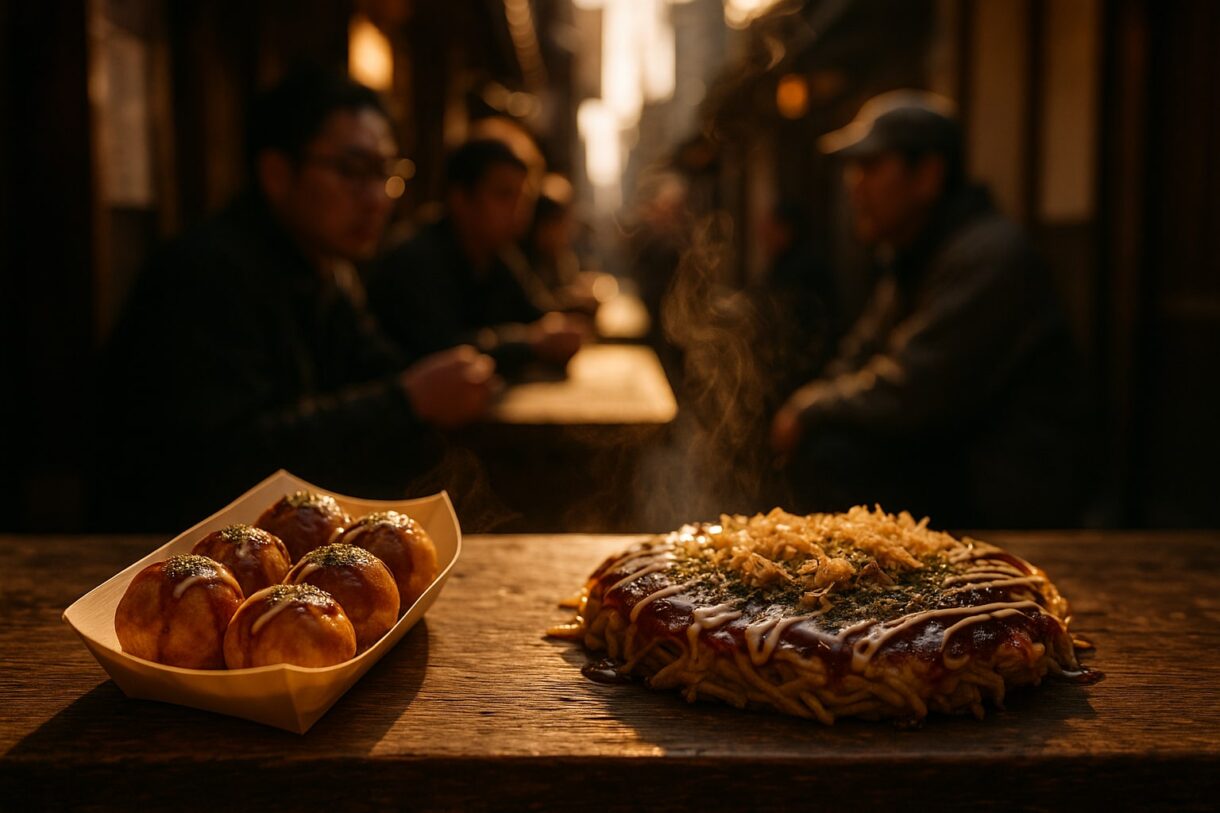
There is a word in Osaka that defines its residents better than any guidebook: kuidaore (食い倒れ), literally “eating oneself into ruin.” It is not a tourist brochure exaggeration; it is a way of life. In a city where Kyoto prays and Tokyo works, Osaka eats. And it does so with an almost provincial pride toward two dishes born on its streets: takoyaki and okonomiyaki.
If you are looking for the stately Japan of zen gardens, this is not your city. Osaka smells of batter browning on the griddle, of caramelized Worcestershire sauce, of dried bonito dancing over hot food. This guide is for anyone who wants to eat what an Osakan eats on a Tuesday night, without paying the premium of Dotonbori at its loudest.
Some context: why Osaka eats this way
For centuries Osaka was Japan’s kitchen (天下の台所, tenka no daidokoro). A commercial port since the Edo period, rice from across the country and seafood from the Seto Inland Sea arrived here. When ingredients were scarce after the war, the city reinvented flour batter with whatever was available: cabbage, an egg, a little protein. This is how modern okonomiyaki emerged in the 1950s, and takoyaki, created by Tomekichi Endo in 1935 in the Nishinari district.
These are not fine-dining dishes. They are neighborhood food, counter food, street-stall food with wobbly stools. And that is exactly their value.
Takoyaki: how much it costs and where to eat it well
Takoyaki (たこ焼き) are batter balls filled with octopus (tako), pickled red ginger (beni shoga), and green onion, cooked on an iron griddle with semispherical molds. They are served with takoyaki sauce, Japanese mayonnaise, aonori seaweed, and shavings of dried bonito (katsuobushi) that curl with the heat.
Real prices in 2026
The ranges you will find on the street:
| Format | Price (JPY) | Price (USD approx.) |
|---|---|---|
| 6 pieces (street stall) | 400-550 ¥ | $2.70-3.70 |
| 8 pieces (standard) | 600-800 ¥ | $4-5.40 |
| 10-12 pieces (restaurant) | 800-1,200 ¥ | $5.40-8 |
The most famous stalls in Dotonbori charge at the high end. Those in the Namba or Tenma neighborhoods are cheaper and often better.
Where to try it with discernment
- Wanaka Sennichimae: near Namba, more than 60 years frying takoyaki. Rounds of 8 pieces for about 600-700 ¥. A reasonable line even at peak hours.
- Takoyaki Doraku Wanaka (several branches): the more polished version of the house above, with cheese or ponzu takoyaki options.
- Kukuru in Dotonbori: famous for takoyaki with generous chunks of octopus poking out. Slightly pricier (800-1,000 ¥ for 8 pieces), but you can tell.
A practical tip: wait thirty seconds before biting. The interior reaches temperatures that genuinely burn. Locals know this.
Okonomiyaki: what it is and what you will pay
Okonomiyaki (お好み焼き) translates as “cooked as you like.” It is a thick batter omelet with chopped cabbage, egg, and the ingredient of your choice: pork (buta), shrimp (ebi), squid (ika), cheese, mochi. It is cooked on a griddle (teppan) in front of you and topped with okonomi sauce, mayonnaise, aonori, and katsuobushi.
Beware of confusion: Osaka-style okonomiyaki mixes all the ingredients into the batter before cooking. Hiroshima’s version stacks them in layers. These are different schools, and in Osaka people defend theirs with vehemence.
Price ranges
- Basic okonomiyaki (pork or simple mix): 900-1,200 ¥
- Seafood version or house special: 1,300-1,800 ¥
- Set menu with drink and side: 1,800-2,500 ¥
In Dotonbori you can pay 2,000 ¥ for an okonomiyaki that costs you 1,100 ¥ in a residential neighborhood. The difference rarely lies in the product.
Named restaurants
- Mizuno (Dotonbori): open since 1945, keeps the original recipe. Its yamaimo-yaki (with grated yam) runs about 1,600-1,800 ¥. Prepare for a 30-60 minute line.
- Chibo (Dotonbori and other locations): an Osaka chain of consistent quality. The Dotonbori-yaki with pork, beef, shrimp, squid, and cheese costs about 1,700 ¥.
- Fukutaro (Namba): more discreet, very popular with neighborhood locals. Authentic teppan atmosphere, prices between 1,100 and 1,600 ¥.
- Ajinoya (near Shinsaibashi): another classic, with modan-yaki (okonomiyaki with yakisoba noodles) for about 1,400 ¥.
If you sit at the counter, you will see the cook flip the batter with two spatulas (hera) in one crisp motion. At some places they hand you the spatulas so you can do it yourself. It is part of the fun.
Daily budget for eating in Osaka
Eating well in Osaka is not expensive if you step away from the tourist axis. A realistic budget for 2026:
- Breakfast (coffee and toast in morning-set style): 500-800 ¥
- (ramen, curry, teishoku): 900-1,400 ¥
- (takoyaki, taiyaki, onigiri): 400-700 ¥
- (okonomiyaki with a drink): 1,800-2,800 ¥
- : 3,600-5,700 ¥ (about 24-38 dollars)
Lunch
Afternoon snack
Dinner
Daily total
With 5,000 ¥ a day you eat very well. With 8,000 ¥ you can afford a
kushikatsu
in Shinsekai or a dinner at an izakaya with sake.
Neighborhoods where you can eat without the markup
- Dotonbori
- : a must for seeing the signs (Kani Doraku’s mechanical crab, the Glico sign), but eat on the side streets, not the main one.
- : alleys east of Namba full of small izakayas. This is where office workers have dinner.
- : to the north, near Osaka-Tenmangu station. The covered Tenjinbashisuji market, one of the longest in Japan, has authentic takoyaki stalls for 400-500 ¥.
- : a retro district dominated by the Tsutenkaku tower. Here kushikatsu (breaded skewers) reigns, but there is good takoyaki too.
Kyobashi: no tourists, lots of - for workers.
How to plan the food tour
Ura-Namba
Tenma
Shinsekai
izakayas
Recommended time
: three days is enough to cover the iconic dishes without rushing. Five days if you want to explore markets and take a day trip to Kobe or Nara.
Best season: spring (March-May) and autumn (October-November). Summer is humid and exhausting; January-February is cold but quiet.
Transport: the Osaka Metro covers everything relevant. A single ride costs 190-370 ¥. The one-day pass (Enjoy Eco Card) costs about 820 ¥ on weekdays.
Reservations: most okonomiyaki places do not take reservations. Go early (18:00-18:30) or late (after 21:00) to avoid lines.
If you combine Osaka with Kyoto, this guide on temple etiquette and a budget for a ryokan in Kyoto will help you understand the difference in tone between the two cities.
What to bring home
Buy a bottle of
Otafuku okonomi sauce
at any supermarket (about 400 ¥). It is a Hiroshima brand, yes, but also the most used in Osaka homes. With it and a griddle at home you can recreate a decent okonomiyaki. And if you want to go deeper, the book
Japanese Soul Cooking
by Tadashi Ono and Harris Salat has a clear recipe.
Frequently asked questions
How much does it cost to eat takoyaki and okonomiyaki in Osaka?
A 6-8 piece takoyaki costs between 400 and 800 ¥ ($2.70-5.40). A full okonomiyaki ranges from 900 to 1,800 ¥ ($6-12). With 2,500 ¥ (about $17) you can have an okonomiyaki dinner with a drink at a decent place outside the tourist axis.
Where can I eat the best takoyaki in Osaka?
There is no objective “best,” but Wanaka Sennichimae, Kukuru, and Takoyaki Doraku are safe references. At the Tenjinbashisuji market you will find neighborhood stalls at half the Dotonbori price with comparable quality.
Can a vegetarian eat takoyaki?
It is tricky. The batter contains
dashi
broth (with bonito), and katsuobushi shavings are everywhere. Some okonomiyaki-ya prepare vegetarian versions if you ask, but traditional takoyaki contains octopus by definition. Look for dedicated vegan spots like Paprika Shokudo Vegan.
How much daily budget do I need to eat in Osaka?
Between 3,500 and 6,000 ¥ ($23-40) you can eat very well without restrictions. Osaka is notably cheaper than Tokyo for street food and izakayas.
Is Dotonbori worth it or is it too crowded?
It is worth seeing one night for the neon spectacle, but eat on the parallel streets or in Ura-Namba. The main street carries a 20-40% markup compared with neighborhoods like Tenma or Kyobashi.
Gastronomy Leisure and Culture #comidas #gastronomía #Osaka #platos típicos #Turismo gastronómico


 Don't get fooled: plan your trip well and avoid these scams on your holidays
 Central Macedonia, the destination Spaniards have discovered to fall in love with Greece
 Summer in Brussels: flowers, festivals and typical gastronomy
Comentarios cerrados