Laguardia, capital of the Rioja Alavesa: wine cellars dug beneath the houses and medieval walls
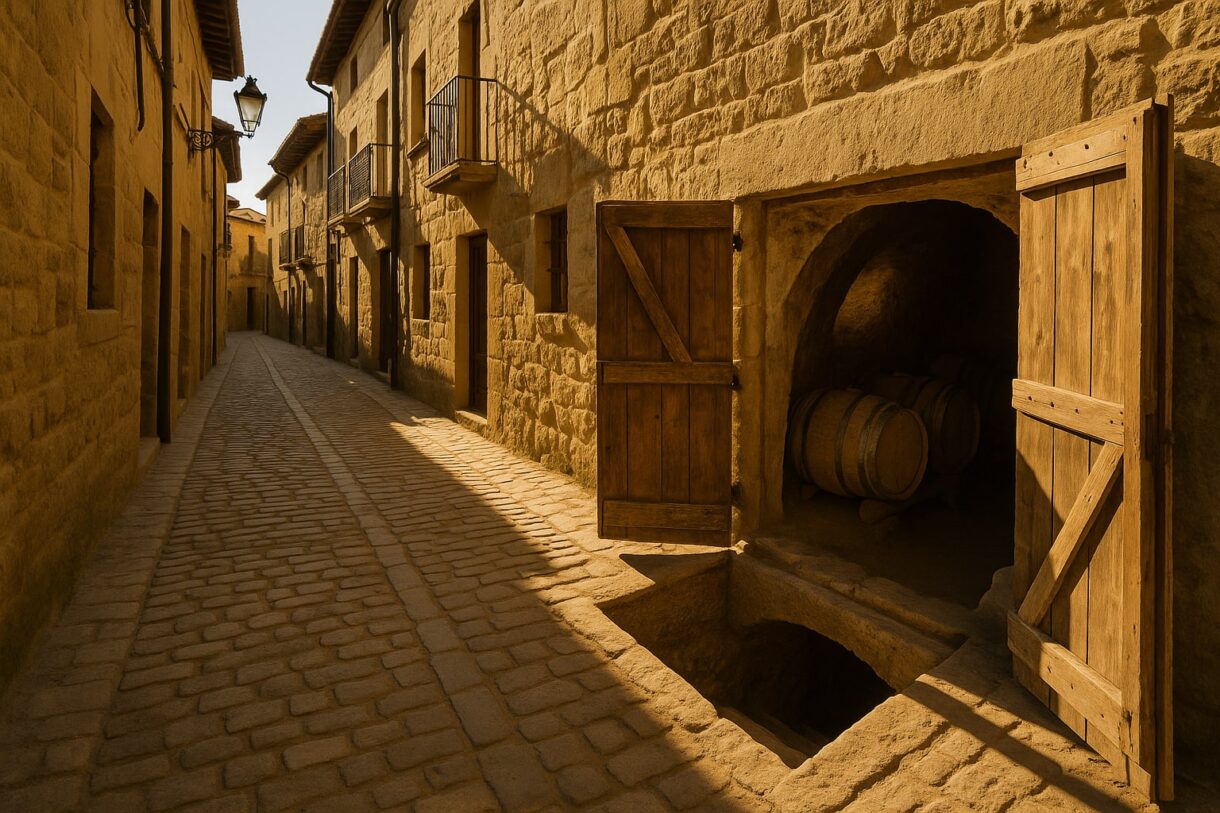
You arrive in Laguardia from the Ebro plain and the first thing you see is a hill crowned with stone. Ochre walls, a bell tower peeking out, and the Sierra de Cantabria behind like a backdrop. The historic centre can be walked in twenty minutes, but the interesting part is underneath: beneath every house on Calle Mayor or Páganos there is a cave dug by hand, some more than five hundred years old, where the wine still rests.
This is a destination for those who travel slowly. Neither a resort nor a bar crawl: a medieval town of fewer than 1,500 inhabitants that serves as the oenological capital of the Rioja Alavesa and makes you walk slowly, because cars do not enter the walled enclosure.
A little history: from Navarrese fortress to wine capital
Laguardia was founded as a defensive settlement at the end of the 10th century, although its official town charter was granted by Sancho VI the Wise of Navarre in 1164. For centuries it was a border stronghold between the kingdoms of Navarre and Castile, which explains its walls, its four original gates and its elevated position overlooking the valley.
Wine appears early. The underground cellars began to be dug between the 15th and 18th centuries to store the production of the noble houses. Today more than 200 caves lie beneath the old town, at depths of 6 to 8 metres, with a constant temperature of around 12–14 °C all year round.
What to see in Laguardia at your own pace
The walls and the gates
Of the five gates that once existed, four are preserved and in use: Páganos, Mercadal, San Juan and Carnicerías (or Nueva). The Santa Engracia gate is the most photographed for its pointed arch. A walk around the outer perimeter of the walls takes half an hour and offers the best view of the vineyards.
Church of Santa María de los Reyes
The main reason to go in is its fourteenth-century Gothic polychrome portico, one of the few in Spain that retain their original paint. It is covered by a seventeenth-century wooden enclosure that protected it from the weather for centuries. It is visited with a guide in short sessions (about 15–20 minutes); check the timetables at the tourist office before going, as they change by season.
Church of San Juan Bautista
At the other end of the town, Romanesque in origin and with Gothic and Baroque additions. Less visited, more peaceful.
Plaza Mayor and the carillon
On the town hall façade there is a clock with moving figures that come out to dance at 12:00, 14:00, 17:00 and 20:00. It lasts one minute, but the square fills up. It is one of the few “theatrical” concessions you will encounter.
Underground cellars: going down beneath Calle Mayor
This is what sets Laguardia apart from any other charming village in the north. Beneath the houses of the old town there is a network of private caves where wine is still made or stored. Some families still produce their own harvest; others have opened to the public.
Cellars you can visit within the historic centre: Carlos San Pedro, El Fabulista (beneath the Palacio Samaniego, on the Plaza Mayor) or Casa Primicia, in the oldest civil building in the town. Guided visits last between 45 and 75 minutes, include a tasting of 2–3 wines and cost around 10–15 € per person. Book in advance during high season.
Outside the old town, within a 5 km radius, you will find the contemporary-architecture wineries designed by well-known names: Ysios (Calatrava), Marqués de Riscal in Elciego (Gehry) or Baigorri. A different register, a different price: between 25 and 45 € per visit with tasting.
What to eat and drink
The cuisine is Riojan-Alavesan: potatoes à la riojana, lamb cooked over vine prunings (grilled over the fire with vine clippings), lamb chops over vine prunings, and in season, vegetable menestra from the Ebro valley. Pintxos are eaten on Calle Mayor and on Páganos; Biazteri and Amelibia are local references for sitting down to a full meal from the menu.
The wine, of course, is DOCa Rioja, Rioja Alavesa subzone: predominantly Tempranillo, crianzas and reservas of medium structure, with more freshness than those from Rioja Baja due to the altitude (500–600 m) and the clay-limestone soil.
How to organise the visit
| Detail | Information |
|---|---|
| Recommended time | 1 full day or a weekend with the wineries |
| Best season | May–June and September–October (grape harvest) |
| How to get there | By car from Vitoria (about 45 min) or Logroño (20 min) |
| Parking | Outside the walls; the old town is pedestrian |
| Approximate price winery + tasting | 10–15 € in the old town, 25–45 € outside |
In August and during long weekends the old town fills up. If you want the town without daytime coaches, go midweek or outside high season. To stay within the walls there are rural guesthouses and small hotels; book with plenty of notice.
What to take home
A bottle bought directly from a family winery in the old town, not from a souvenir shop. And if you are interested in the medieval heritage of the northern peninsula, you can link the trip with Santillana del Mar out of season, another town that is best appreciated when there is no queue at the gate.
Frequently asked questions
How much does it cost to visit a winery in Laguardia?
Wineries within the old town cost between 10 and 15 € with a tasting of 2–3 wines. The contemporary-architecture wineries in the surroundings (Ysios, Marqués de Riscal) rise to 25–45 €. Always book in advance.
What is the best time to visit the Rioja Alavesa?
May and June for the green vineyards, and September–October for the grape harvest and autumn colours. July and August are hot and busier.
Can you visit Laguardia with children?
Yes. The old town is pedestrian and small, safe for walking. Some wineries admit minors on the visit (without tasting); ask when booking. Children usually enjoy the carillon in the square.
How much time do you need to see Laguardia?
The historic centre can be covered in 2–3 hours. With a winery visit and a meal, it is a full day. If you want to combine Elciego, Laguardia and a large winery outside, allow two days.
How do you get to Laguardia without a car?
There are buses from Vitoria and Logroño, but with limited frequency. To get around the wineries in the surroundings a car is practically essential; some local companies organise transfers with wine tourism included.
Gastronomy Places of Interest Leisure and Culture #bodegas #Enoturismo #Guía de viaje #historia #murallas #pueblos con encanto


 Don't get fooled: plan your trip well and avoid these scams on your holidays
 Central Macedonia, the destination Spaniards have discovered to fall in love with Greece
 Summer in Brussels: flowers, festivals and typical gastronomy
Comentarios cerrados