Practical Dublin: how much a pint costs, safe neighbourhoods and transport from the airport
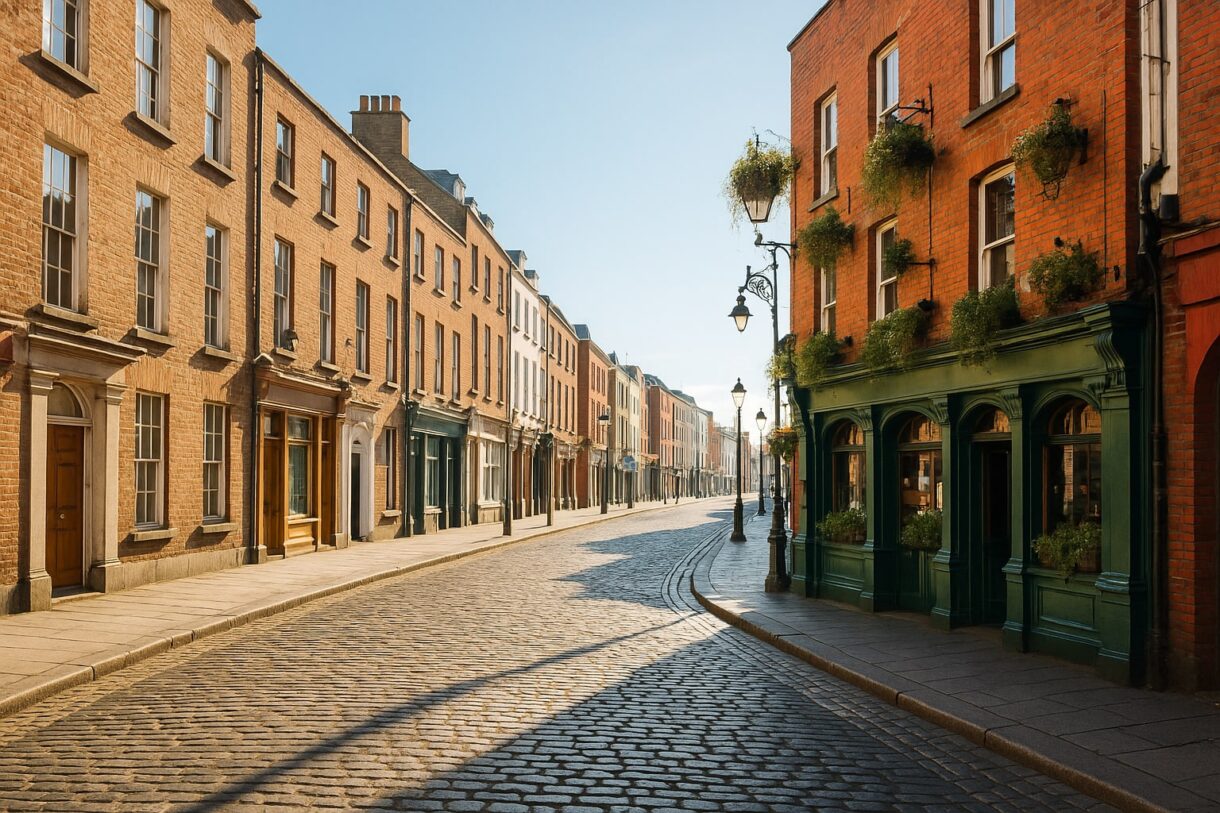
If you’ve already booked your flight and need quick answers: a pint of Guinness in an ordinary Dublin pub costs around €6.20–7.50 (rising to €8–9 in Temple Bar), the Airlink Express 747 bus takes you from the airport to the centre for about €9–12 in 30–40 minutes, and the most convenient and safe areas to sleep are Dublin 2 (south centre, around Grafton Street), Dublin 4 (Ballsbridge, residential) and the north side of the river around O’Connell Street if you want to save money without going far.
This guide is useful whether you’re going for three or four days, travelling as a couple, with friends or on your own, and want to avoid the two classic traps: paying tourist prices for pints in Temple Bar and booking a cheap hotel in an area that’s uncomfortable to walk around. Dublin is expensive, but manageable if you know where to go.
Dublin at a glance
The city is compact: 80% of what you’ll want to see fits into a square roughly 2 km on each side of the River Liffey. Founded by the Vikings in the 9th century and shaped by 18th-century Georgian architecture, it today mixes centuries-old pubs with the European offices of Google and Meta in the Docklands. That dual face — whiskey and glass office blocks — explains much of today’s prices.
| Detail | Value |
|---|---|
| Currency | Euro (€) |
| Language | English (Irish as a co-official language) |
| Best time to visit | May to September; avoid New Year and St Patrick’s Day if you dislike crowds |
| Recommended stay | 3 full nights |
| Average daily budget | €110–160 per person (mid-range hotel + meals + 1–2 pints) |
| Plug type | Type G (you’ll need a British adapter) |
How much a pint costs in Dublin (and where not to pay through the nose)
The pint is the city’s real unit of measurement. Reference prices at the end of 2025 are as follows:
| Type of venue | Pint of Guinness | Pint of craft beer |
|---|---|---|
| Neighbourhood pub (Stoneybatter, Phibsborough) | €5.80–6.50 | €6.50–7.50 |
| City-centre pub (outside Temple Bar) | €6.20–7.20 | €7–8.50 |
| Temple Bar | €8–9.50 | €9–11 |
| Hotel or rooftop | €8.50–10 | €9–12 |
For an honest pint with no pretension, try The Long Hall (South Great George’s Street), Kehoe’s (South Anne Street) and The Palace Bar (Fleet Street, on the edge of Temple Bar but with decent prices). In the north, Walsh’s in Stoneybatter is the local reference. A well-poured Guinness needs 119.5 seconds to settle between the two pours; if they serve it all at once, that’s a bad sign.
A useful tip: in Ireland you don’t tip at the bar for a pint. If you eat seated, 10% is fine.
Transport from Dublin Airport to the city centre
Dublin Airport (DUB) is about 10 km north of the centre. There is no metro or direct train (plans for the MetroLink exist, but it isn’t operational). Your real options are:
| Option | Approx. price | Time | Best for |
|---|---|---|---|
| Airlink Express 747 (Dublin Bus) | €9–12 one way / €15–18 return | 30–45 min | The default option. Stops at O’Connell Street and Heuston |
| Aircoach | €10–12 | 30–50 min | If you’re staying in Ballsbridge or the south side |
| Dublin Bus 16 or 41 (city route) | €2.60–3 with a Leap card | 50–70 min | Backpackers with time and little luggage |
| Taxi | €25–35 | 25–40 min | Groups of 3–4 or late-night arrivals |
| Uber / FreeNow | Similar to a taxi | 25–40 min | FreeNow works better than Uber in Dublin |
Buy your Airlink ticket with a card directly on the bus or through the Dublin Bus app. Avoid those who offer you a “transfer” in the terminal: it nearly always costs more than the 747.
Where to stay in Dublin depending on your trip
Dublin uses a postal code system that helps you find your way. These are the ones that matter:
- Dublin 2 (D2): the area around Grafton Street, Trinity College and St Stephen’s Green. It’s the tourist and shopping centre. Expensive (mid-range hotels €160–240) but everything is within walking distance. Ideal for a first visit and short stays.
- Dublin 1 (D1): north of the Liffey, around O’Connell Street. Cheaper (hotels €110–170) and well connected. Avoid the streets northeast of Connolly Station at night (the Sheriff Street and Summerhill area), which are quiet and have occasional problems.
- Dublin 4 (D4): Ballsbridge and Donnybrook. Residential, embassies, quiet. Hotels such as The Dylan or InterContinental. For those who want calm and don’t mind taking the DART (suburban rail) or the Aircoach.
- Dublin 8 (D8): The Liberties, home to the Guinness brewery. A historic working-class neighbourhood in the middle of change, with authentic pubs and new hotels at reasonable prices (€120–180). A good choice if it isn’t your first time.
- Smithfield and Stoneybatter: to the northwest, fashionable among young Dubliners. Cafés, pubs without tourists, 20 minutes’ walk to the centre.
If you’re travelling on a tight budget, hostels in D1 and D8 (Generator, Jacobs Inn, Abigail’s Hostel) offer dormitory beds for €28–45. Book in advance: Dublin has a chronic shortage of beds and prices rise quickly at weekends.
How to get around Dublin
The centre is best explored on foot. For the rest:
- Leap Visitor Card: unlimited travel card for bus, Luas (tram) and DART. Costs €8 for one day, €16 for three days, €32 for seven days. Buy it at the airport (arrivals Spar) or at newsagents in the centre. It pays for itself from two journeys a day.
- Luas: two lines, green (north–south) and red (east–west). Useful for getting to Heuston Station or the rugby stadium.
- Bicycle: Dublinbikes works with a 3-day subscription for €5, with rides under 30 minutes free. Bike lanes are patchy.
- Taxi: plentiful, with meters. A short ride in the centre costs €8–14.
When to go to Dublin
From May to September the weather is kinder (highs of 16–20 °C) and there are more daylight hours: in June it doesn’t get dark until after 22:00. Winter is mild but grey and rainy.
Two dates to watch: St Patrick’s Day (17 March), with its parade and an overwhelmed city — hotels double their prices and you need to book three months ahead — and the Six Nations rugby matches at the Aviva Stadium, which fill Ballsbridge. If you want to avoid both, go in May, June or September.
Common mistakes and scams
- Eating and drinking in Temple Bar without meaning to. The area is lovely by day, but at night it’s a theme park with pints at €9. Walk 300 metres and drink better for half the price.
- Simply asking for “a Guinness, please”. They’ll give you one, but you’ll lose the 2-minute settling time if you’re in a hurry. Order it as soon as you reach the bar.
- Not carrying cash. Almost everything is paid by card, but some old pubs and markets still work better with coins.
- Trusting the weather. Bring a waterproof even if it’s clear in the morning. It can rain three times in one afternoon.
- Booking a hotel “near the centre” without checking the postcode. “Dublin 11” or “Dublin 9” sound close but are 40 minutes away by bus.
If you’re continuing your route around the British Isles, take a look at our guide to Edinburgh in three days with pubs, whisky and a realistic budget: the approach and prices are comparable.
Safety in Dublin
Dublin is generally a safe city, with the usual precautions of any European capital. Occasional problems are concentrated in very specific areas northeast of the centre (Sheriff Street, the upper part of Gardiner Street) and in some stretches of O’Connell Street in the early hours. By day there is no problem. Keep an eye on your bag in Temple Bar and on the Luas on Friday nights.
For emergencies, the European number 112 works just like the Irish 999.
Frequently asked questions
How many days do I need in Dublin? Three nights (two and a half full days) is the right balance to see the centre, Trinity College, Kilmainham Gaol, the Guinness Storehouse and enjoy a couple of pubs without rushing. With four, there’s room for a trip to Howth or the Howth Cliff walks.
Is it expensive compared to Madrid or Barcelona? Yes, clearly. Expect 30–40% more for food and accommodation, and up to double for beer in tourist areas.
Do I need to book the Guinness Storehouse? It’s advisable. Entry costs €26–30 depending on time slot and visiting hour; buying online in advance avoids queues and is sometimes slightly cheaper.
Can I pay by card everywhere? In practice, yes. Hotels, restaurants, pubs, transport and even markets accept card and contactless. Carry €30–40 in cash just in case.
Is it worth going on St Patrick’s Day? If you enjoy crowds and a party atmosphere, yes. If you want to get to know the city calmly, no: hotels at double the price, pubs packed to the rafters and queues everywhere.
Do they speak Spanish in Dublin? In central hotels and some restaurants, yes (there is a large Spanish-speaking community working in hospitality). Otherwise, English. A basic level is enough to get around.
One final actionable tip: book your first night in Dublin 2 or Dublin 8 and spend the first afternoon walking without a plan from Grafton Street to The Liberties, stopping at a local pub for your first pint. You’ll understand the city far sooner than by reading any guidebook.
Accommodation Tips Means of Transport #alojamiento #consejos de viaje #Dublín #presupuestos de viaje #transporte público


 Don't get fooled: plan your trip well and avoid these scams on your holidays
 Central Macedonia, the destination Spaniards have discovered to fall in love with Greece
 Summer in Brussels: flowers, festivals and typical gastronomy
Comentarios cerrados