First trip to Japan: how many days to spend in Tokyo, Kyoto and Osaka
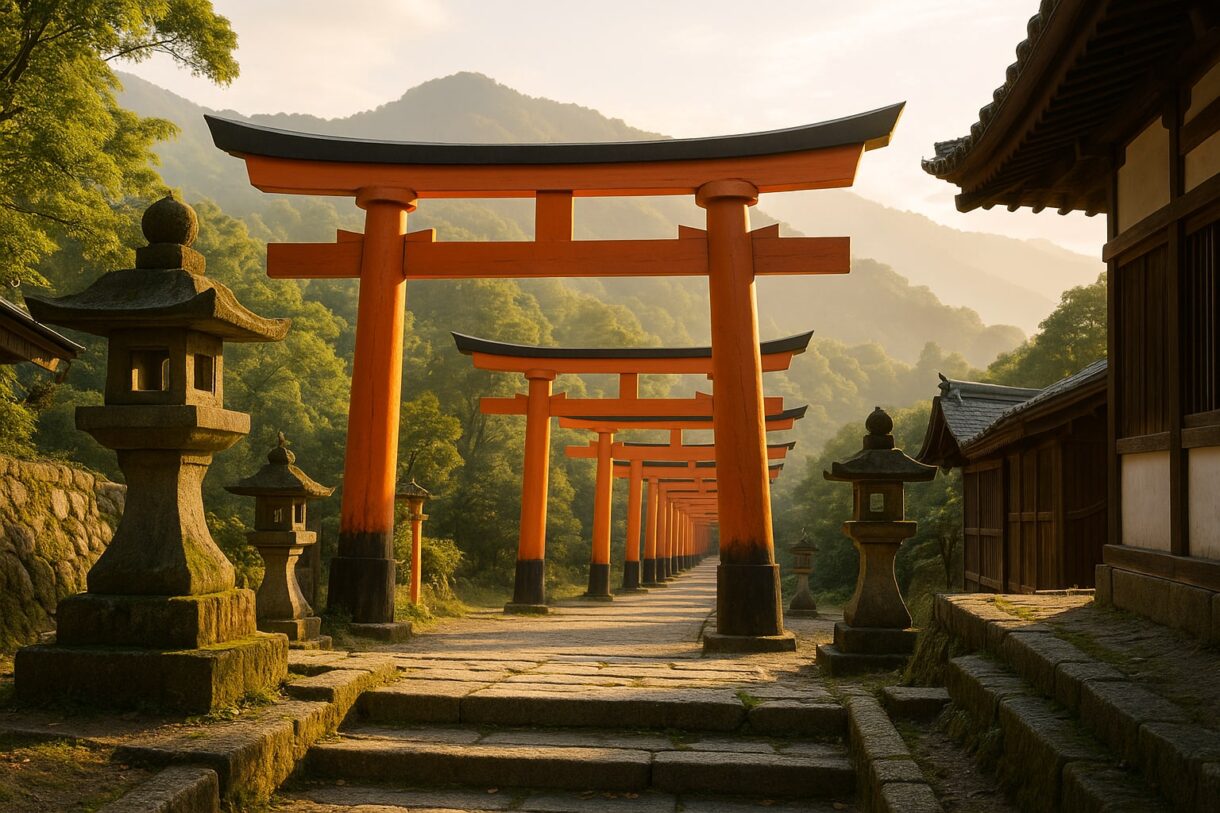
The short answer: 4-5 nights in Tokyo, 3-4 in Kyoto and 1-2 in Osaka
If it’s your first trip to Japan and you have about 10 usable days on the ground (not counting travel days), the split that works best is 4 nights in Tokyo, 3 nights in Kyoto and 1 night in Osaka, with a day trip to Nara from Kyoto. If you reach 12-14 days, extend Kyoto to 4 nights and add Hiroshima-Miyajima or Hakone as intermediate stops.
This guide is for you if you’re going for the first time, travelling as a couple or alone, don’t want to spend the trip checking in and out every two days, and are looking for a balance between the city, the temples and street food. It’s not an extreme backpacker itinerary or a resort one: it’s the classic route, but measured in real hours of sightseeing, not in lists of 50 places.
Why the Tokyo-Kyoto-Osaka axis makes sense on a first visit
The three cities are connected by the Tōkaidō Shinkansen, the busiest bullet train line in the country, which makes the triangle an easy journey even without speaking Japanese. Tokyo concentrates the contemporary face (Shibuya, Shinjuku, the pop culture of Akihabara); Kyoto, a thousand years as the imperial capital with more than 1,600 registered Buddhist temples and 400 Shinto shrines; Osaka, the merchant mentality of Kansai and its own culinary tradition. Adding a fourth destination on a first trip usually means cutting real sightseeing time from the three main ones.
Quick summary of days per city
| City | Recommended nights | What that time covers | Pace |
|---|---|---|---|
| Tokyo | 4-5 | Shibuya, Shinjuku, Asakusa, Harajuku, Akihabara, 1 day trip | High |
| Kyoto | 3-4 | Higashiyama, Arashiyama, Fushimi Inari, Gion + Nara | Medium |
| Osaka | 1-2 | Dōtonbori, Namba, castle, street food dinner | Low |
| Extras (Hakone, Hiroshima, Kanazawa) | +1-2 per stop | Depends on interests | Variable |
How many days in Tokyo: 4 minimum, 5 if you like cities
Tokyo is not a city you can “see” in two days. It’s a set of neighbourhoods with their own personality, each needing half a day. With 4 full nights you comfortably fit in Shibuya and Shinjuku (one afternoon-evening each), Asakusa and Sensō-ji (morning), Harajuku-Omotesandō-Meiji Jingū (another morning), Akihabara or Ginza depending on interest, and you still have a day for an excursion to Nikkō (about 2 hours by train) or Kamakura (a little over an hour).
If your flight lands in the afternoon at Narita or Haneda, count that day as “half”. To choose where to stay, see our specific comparison in where to stay in Tokyo by neighbourhood.
Approximate daily budget in Tokyo (2026):
- Standard hotel in Shinjuku or Asakusa: €90-150 per night for a double room.
- Food: €8-15 for ramen or a lunch set, €25-40 for a decent izakaya dinner.
- Urban transport: €5-8 a day with a rechargeable Suica card.
How many days in Kyoto: 3 nights minimum, 4 if you want to breathe
Kyoto is the city where it’s easiest to fall into the trap of trying to see everything. Three nights are enough for Higashiyama (Kiyomizu-dera, Sannenzaka, Yasaka, Gion) in one full day; Arashiyama (the bamboo grove, Tenryū-ji, the Togetsukyō bridge) in half a day; Fushimi Inari at dawn to avoid the crowds; and Nara as a day trip (under 1 hour by JR train), with Tōdai-ji and the deer of Nara-kōen.
With four nights you fit in the Golden Pavilion (Kinkaku-ji), the dry garden of Ryōan-ji and an afternoon with no agenda in the Pontochō district. If you’re interested in temple etiquette, how to move between them and the option of staying in a ryokan, it’s covered in Kyoto for unhurried travellers.
A real note: Kyoto is overcrowded between March-April (sakura) and November (momiji, red leaves). If you go in those weeks, add a night to absorb the queues at the most visited temples.
How many days in Osaka: one night is enough, two if you’re interested in food
Osaka works as a counterpoint to Kyoto. It’s noisy, direct, less photogenic and much more entertaining on the street. With a single night you cover Dōtonbori (the canal with the neon signs), Namba, a dinner of takoyaki, okonomiyaki and kushikatsu, and a morning at the castle or in the Shinsekai district. If you like eating, two nights are easily justified: you’ll find price and restaurant details in Gastronomic Osaka.
Osaka also serves as an alternative base to Kyoto if hotel prices there soar in high season: there are Shinkansen and rapid trains between the two every few minutes (14-15 minutes by Shinkansen, about 40 by regular train).
10-day itinerary: the standard route
- Day 1: Arrival in Tokyo (Haneda or Narita). Light dinner near the hotel.
- Days 2-4: Tokyo (neighbourhoods + optional trip to Kamakura).
- Day 5: Shinkansen Tokyo-Kyoto (about 2h 15m, around €85-90 without a JR Pass). Afternoon in Higashiyama.
- Days 6-7: Kyoto (Arashiyama, Fushimi Inari, Gion) + Nara.
- Day 8: Morning in Kyoto, afternoon to Osaka (15 min by Shinkansen or 40 min by JR train).
- Day 9: Full day in Osaka.
- Day 10: Flight from Kansai (KIX) or return by Shinkansen to Haneda/Narita.
12-14 day itinerary: with room for Hakone or Hiroshima
With 12 nights, add Hakone (2 nights with an onsen and views of Fuji if the weather allows) between Tokyo and Kyoto. With 14, insert Hiroshima + Miyajima (1-2 nights) after Kyoto and before Osaka: the Kyoto-Hiroshima Shinkansen takes about 1h 40m. Kanazawa is the alternative if you prefer gardens and fewer tourists: about 2h 15m by Shinkansen from Tokyo.
Transport between cities: Shinkansen, JR Pass and real times
| Route | Mode | Time | Approx. single fare |
|---|---|---|---|
| Tokyo – Kyoto | Shinkansen Nozomi/Hikari | 2h 15m – 2h 40m | 13,000-14,000 ¥ (€85-90) |
| Kyoto – Osaka | Shinkansen or JR Special Rapid | 15 min / 40 min | 1,500 ¥ / 580 ¥ |
| Kyoto – Hiroshima | Shinkansen | About 1h 40m | 11,000-12,000 ¥ |
| Tokyo – Hakone | Odakyū Romancecar | About 1h 25m | 2,500 ¥ |
The Japan Rail Pass went up in price in October 2023 and no longer pays off automatically. Do the maths: for a Tokyo-Kyoto-Osaka circuit with a single Shinkansen trip each way, buying single tickets is usually cheaper. If you add Hiroshima or Kanazawa, the 7-day JR Pass (around 50,000 ¥, check the price before booking) may make sense again. Shinkansen reservations can be made at machines or on the JR website, and Suica/Pasmo cards cover urban journeys.
When to go: seasons and overcrowding
- March-April: sakura. High prices, hotels full months in advance.
- May: Golden Week (around 29 April to 5 May). Avoid it if you can: all of Japan moves at once.
- June: tsuyu, the rainy season. Fewer crowds, high humidity.
- July-August: sticky heat in Kyoto and Osaka (35 °C and humidity), major festivals such as Gion Matsuri.
- October-November: arguably the best window. Pleasant temperatures, red leaves from mid-November.
- January-February: dry cold, few tourists, a good option if you don’t mind winter.
Common mistakes on a first trip
- Trying to fit in too many cities: adding Hiroshima and Kanazawa to a 10-day trip turns the itinerary into a succession of trains.
- Sleeping in Osaka to see Kyoto: it works on paper, but the daily back-and-forth steals 1h 30m of real time.
- Booking the Shinkansen on arrival in high season: during sakura and momiji, Nozomi trains fill up. Reserve seats in advance.
- Assuming you can pay by card: many small restaurants, temples and ticket machines still only work with cash. Always carry 10,000-15,000 ¥ in cash.
- Ignoring etiquette: don’t talk loudly on the metro, don’t eat while walking down the street (except in street food areas like Dōtonbori or Nishiki), don’t tip.
Approximate total budget for 10 days (per person)
| Item | Range |
|---|---|
| Flight from Spain | €750-1,100 |
| Accommodation (9 nights) | €800-1,400 |
| Shinkansen and transport | €180-280 |
| Food (3 meals/day) | €350-550 |
| Temple and museum entry | €60-120 |
| Approx. total | €2,140-3,450 |
Frequently asked questions
Is one week enough to see Tokyo, Kyoto and Osaka? It’s tight. With 7 usable days you can do 3 nights in Tokyo, 2 in Kyoto and 1 in Osaka, but you’ll be exhausted and have no room for day trips. If you can’t extend, prioritise Tokyo and Kyoto and cut Osaka to an afternoon en route.
Is it worth getting the Japan Rail Pass in 2026? It depends on the route. For the classic triangle with a single Shinkansen trip each way, buying single tickets is usually cheaper. If you’re doing Tokyo-Kyoto-Hiroshima-Osaka-Tokyo, the 7-day pass pays off again. Calculate it with current prices before buying.
When is the worst time to go? Golden Week (late April to early May) and Obon (mid-August): millions of Japanese travel at the same time, prices soar and trains are packed. If those dates are your only option, book everything three or four months ahead.
Can I get by without speaking Japanese? Yes, on the Tokyo-Kyoto-Osaka axis. Signage in stations and on the metro is in English, there are pocket translators, and map apps work well. Outside tourist areas (small towns, neighbourhood restaurants), English is scarce: download Google Translate with camera for offline use.
Is it safe to travel alone or as a couple? Japan has one of the lowest crime rates in the developed world. The real risks are getting lost in giant stations like Shinjuku and typhoons in September. You can walk at night calmly, even in Shinjuku or Dōtonbori.
How much cash should I carry per day? Between 8,000 and 12,000 ¥ per person for small expenses, although large payments (hotels, Shinkansen) are already covered by card. At temples, markets and small restaurants they will ask for cash.
Final recommendation
If it’s your first time and you have 10 real days, don’t try to add Hiroshima or Kanazawa: go for 4 nights Tokyo + 3 Kyoto + 1 Osaka + Nara as a day trip, book both Shinkansen trips with assigned seats as soon as your dates are fixed, and reserve your last night in Osaka near Namba so you can have dinner in Dōtonbori without watching the clock. If you can move the trip to late October or the first half of November, even better: stable weather, changing leaves and the sakura crowds already gone.
Tips Places of Interest #ciudades #consejos de viaje #Guía de viaje #itinerarios #Japón #transporte público


 Don't get fooled: plan your trip well and avoid these scams on your holidays
 Central Macedonia, the destination Spaniards have discovered to fall in love with Greece
 Summer in Brussels: flowers, festivals and typical gastronomy
Comentarios cerrados