Rio de Janeiro on a budget: safe neighborhoods, prices and Carioca customs
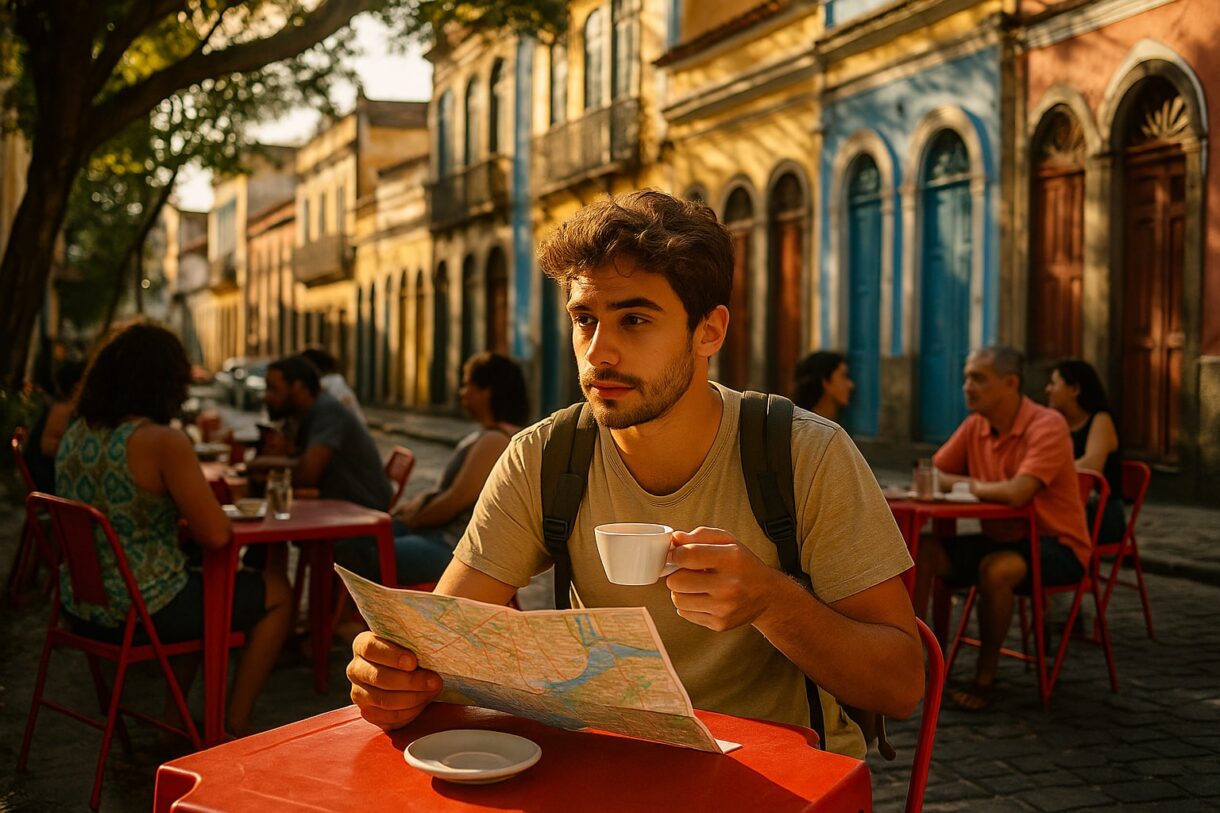
Rio can’t be understood from the Christ the Redeemer postcard. It’s understood when you’ve been there three days and already know that at five in the afternoon people applaud the sunset at Arpoador, that an “oi, tudo bem?” doesn’t expect a long answer, and that real açaí is served bitter, not like the sweet frozen dessert sold outside Brazil. The city is intense, contradictory and, yes, requires street smarts: it isn’t constantly dangerous, but it demands that you read your surroundings.
This guide is for those traveling to Rio for the first time on a mid-range budget, who want to stay a week and would rather understand the city than tick it off a list. No zip-lining over favelas or militarized jeep tours: neighborhoods, real prices in 2026, customs that prevent misunderstandings, and the things a Carioca would tell you if they had the patience to explain them.
Why Rio still deserves the trip
Rio was Brazil’s capital until 1960 and the capital of the Portuguese Empire between 1808 and 1821, when the court of João VI fled Napoleon and settled here. That imperial past explains the tiles of the downtown area, the Royal Portuguese Reading Room and much of the architecture of the historic bairro. Samba was born in the homes of the Bahian aunts at Praça Onze in the early twentieth century; bossa nova, in Ipanema apartments in the fifties. Everything that today sounds “Brazilian” in the global imagination was cooked up in a few kilometers of this city.
Safe neighborhoods in Rio de Janeiro: where to stay
The general rule: Zona Sul (the coastal strip between Leme and Leblon, plus Botafogo and Urca) concentrates the neighborhoods with the best tourist infrastructure, transport and police presence. Outside that area, use good judgment.
Ipanema and Leblon
The two most expensive and quietest neighborhoods. Leblon is residential, with upscale restaurants and less noise; Ipanema has more street life, the Sunday hippie fair at Praça General Osório and the stretch of beach between lifeguard posts 8 and 9, a meeting point for every kind of tribe. Double room in a mid-range hotel: around 80–140 USD per night.
Copacabana and Leme
More affordable, more mixed, noisier. Copacabana works well if you want round-the-clock atmosphere and don’t mind the sidewalk being a constant parade. Leme, the northern end, is calmer. Double in a decent hotel: 50–90 USD. Avoid the inner blocks beyond Rua Barata Ribeiro at night.
Botafogo and Urca
Botafogo is the interesting bet for 2026: specialty coffee shops, natural wine bars, restaurants on the Latin America’s 50 Best list and still reasonable prices. Urca, at the foot of Sugarloaf, is an almost village-like enclave, with the wall where residents drink beer looking out over the bay. Accommodation: 50–100 USD.
Santa Teresa and Lapa
Santa Teresa is the bohemian neighborhood on the hill, with colonial mansions and the tram (bondinho) that runs down to downtown. Charming by day, but be very careful walking its steep streets at night. Lapa is the nightlife: the Arches, samba at Rio Scenarium, the Selarón steps. Stay there only if you go to bed late and get up late.
Areas to avoid as a base
The historic center outside office hours, the North Zone except for a specific visit to the Maracanã, and any favela without an accredited local guide. Rocinha or Complexo do Alemão are not destinations for independent tourists.
Budget for traveling to Rio de Janeiro
The Brazilian real hovers around 5–5.5 BRL per dollar in 2026 (check the exchange rate before you leave). These are realistic ranges per person per day:
| Level | Accommodation | Food | Transport and leisure | Total/day |
|---|---|---|---|---|
| Backpacker | 15–25 USD (hostel) | 15–20 USD | 10–15 USD | 40–60 USD |
| Mid-range | 60–90 USD | 30–45 USD | 15–25 USD | 110–160 USD |
| Comfortable | 130–200 USD | 60–90 USD | 25–40 USD | 220–330 USD |
Key entries: Christ the Redeemer by train from Cosme Velho, around 30–45 USD depending on season. Sugarloaf by cable car, about 25–30 USD. A lunch at a “a quilo” buffet (you pay by weight) costs 8–14 USD; a dinner with caipirinha in Ipanema, 25–45 USD. Chopp (draft beer) on the beach: 2–3 USD.
Carioca customs worth understanding
- The beach is public space, not a VIP zone. Go light: shorts, T-shirt, flip-flops, money for the biscoito Globo vendor and mate. No heavy backpacks or cameras hanging around your neck.
- The postos are the numbered lifeguard stations that divide the beach. They serve as landmarks: “let’s meet at Posto 9” is an address.
- Physical greeting. A kiss on the cheek between women and between man and woman, a handshake between men. “Tudo bem?” is courtesy, not an interrogation.
- Flexible punctuality. Being half an hour late socially is normal; at restaurants with a reservation, it isn’t.
- Tipping. The 10% service charge (serviço) is usually included in the bill; if not, add it.
- Portuguese, not Spanish. Getting by with “portuñol” works for the basics, but the effort to say “obrigado/a”, “com licença” and “quanto custa?” is appreciated.
What to do in Rio de Janeiro without falling into the tourist circuit
Beyond Christ the Redeemer and Sugarloaf, which are must-dos:
- Sunrise at Mirante Dona Marta by taxi (about 20 USD round trip with waiting time). The view without the crowds.
- Feira de São Cristóvão on weekends: northeastern food, live forró, an atmosphere you won’t find in Ipanema.
- Jardim Botânico, founded in 1808 by João VI. Entry around 5 USD. Forty-meter imperial palms and an orchid collection.
- Museu do Amanhã in Praça Mauá, Calatrava architecture and an exhibition on the future and sustainability. 6–8 USD.
- Saturday feijoada at Casa da Feijoada (Ipanema) or Bar do Mineiro (Santa Teresa). It’s a ritual, not fast food: set aside the afternoon.
- Sunset at Pedra do Arpoador, free, with collective applause when the sun touches the horizon.
If you’re interested in how coastal cities are planned with public transport and distinct neighborhoods, the zoning logic resembles that of Sydney in five days with its coastal neighborhoods, although the urban result is quite different.
Safety in Rio de Janeiro: real advice
You don’t need paranoia, just common sense:
- No phone in hand while walking the street. Check it leaning against a wall, inside a shop or in an Uber.
- Uber and 99 work well and are safer than hailing a taxi on the street. Confirm the license plate before getting in.
- On the beach, carry only the essentials in a bum bag worn close to the body. The kiosks (barracas) will usually keep your things if you buy something.
- At night, by Uber. Even if the trip is only five blocks.
- Just enough cash. Withdraw from ATMs inside shopping centers or banks, never from the street.
- If you’re mugged (unlikely if you follow the above), hand over your belongings without argument. Nothing you’re carrying is worth an injury.
How to organize the visit
When to go. The ideal window is April–June and September–October: less heat, less rain, stable prices. December–February is the southern summer, beaches packed, high prices and 35 °C heat with humidity. Carnival (February–March depending on the year) triples prices and requires booking six months ahead.
How many days. Five full days at minimum so you’re not rushing; a week allows a day trip to Petrópolis or Ilha Grande.
Transport. The metro (lines 1, 2 and 4) covers Ipanema–Copacabana–Botafogo–Downtown; a ticket costs about 1.30 USD. Buses work but require an app like Moovit. Uber for everything else.
Flights. From Spain, the usual connection is via Lisbon (TAP), São Paulo (LATAM, Iberia) or direct with LATAM to Galeão. From Mexico and other Latin American countries, LATAM and Aerolíneas Argentinas with a stopover in Buenos Aires or Lima.
What to bring back
A bag of coffee from a Carioca roaster (Curto Café downtown, or Café Cultura in Botafogo), an artisanal cachaça from a still —not the industrial ones from the supermarket— and, if there’s room, a cotton hammock from the northeast sold at the Feira de São Cristóvão. For the return flight, pick up “Rio de Janeiro” by Ruy Castro: the best urban biography ever written about the city.
Frequently asked questions
Is it safe to travel to Rio de Janeiro in 2026?
With basic precautions, yes. The Zona Sul neighborhoods (Ipanema, Leblon, Copacabana, Botafogo, Urca) concentrate tourist activity without the serious incidents that are usual elsewhere. Problems usually come from flashing valuables, walking at night in the wrong areas or entering favelas independently. Check your country’s consular travel advisory before you travel.
How many days do I need to see Rio?
Five full days allow you to cover Christ the Redeemer, Sugarloaf, the beaches of Ipanema and Copacabana, Santa Teresa, Lapa and a downtown museum without rushing. With seven days you can add an excursion to Petrópolis, Búzios or Ilha Grande.
When is the best time to visit Rio de Janeiro?
April–June and September–October offer the best balance of weather, price and crowds. December to February is full summer with guaranteed beach weather but stifling heat and high prices. Carnival is an experience in itself but raises the cost of everything and saturates the city.
Can you pay by card in Rio?
Yes, almost everywhere: restaurants, supermarkets, Uber, beach kiosks. Carry some cash for occasional tips, street vendors and public transport. Notify your bank of the trip to avoid blocks.
§h272§§h273§Is it worth taking a favela tour?§h274§
§h275§Only with reputable operators who work with the communities (some in Santa Marta or Vidigal). Avoid safari-style jeep tours that treat the favela as a zoo. If your interest is anthropological or musical, better to attend a samba night in a neighborhood roda with a local guide.§h276§
Accommodation Tips Customs and Traditions #Alojamientos #barrios #consejos de viaje #costumbres #Río de Janeiro #turismo


 Don't get fooled: plan your trip well and avoid these scams on your holidays
 Central Macedonia, the destination Spaniards have discovered to fall in love with Greece
 Summer in Brussels: flowers, festivals and typical gastronomy
Comentarios cerrados