Lisbon in four days: where to stay, trams and a realistic budget
The short answer: four days is enough for Lisbon, but not for everything
Four days in Lisbon are enough to get to know the city: wander the historic centre at your own pace, go up to Belém, cross the Tagus to Cacilhas and set aside a day for Sintra or for less obvious areas such as Marvila or Graça. It isn’t enough to add Évora or Óbidos without cutting something important.
This guide is for you if it’s your first time in Lisbon and you want to avoid the classic mistakes: staying far from the metro, losing two hours in the queue for tram 28, or paying €18 for a mediocre bacalhau on Rua Augusta. I’ll address the city informally, since that’s how it likes to be treated.
Why Lisbon needs more than a weekend
Lisbon is not a capital you can tackle in 48 hours. It was built across seven hills, the 1755 earthquake razed the centre, and what you see today in the Baixa is the Pombaline reconstruction: an orthogonal grid, arcades, azulejo tiles. Around it, the old neighbourhoods survived —Alfama, Mouraria, Bairro Alto— with alleyways that don’t fit any regular plan.
Add the weight of the Discoveries in Belém, the contemporary scene of LX Factory and Marvila, and a food culture that goes far beyond pastéis de nata. Four days let you alternate monument, neighbourhood and table without turning the trip into a race.
Trip at a glance
| Item | Detail |
|---|---|
| Recommended length | 4 full days (5 nights ideal) |
| Best season | April–June and September–October |
| Average daily budget | €90–150 per person |
| Currency | Euro |
| Useful language | Portuguese; English widely spoken |
| Airport | Humberto Delgado (LIS), 7 km from the centre |
Where to stay in Lisbon by travel style
The neighbourhood shapes the trip more than the hotel does. Lisbon is compact but vertical: sleeping at the top of Graça with suitcases and no lift is a decision your calves will pay for.
Baixa and Chiado: the first time
If it’s your first visit and you want to step out of the hotel and be right in the postcard, choose Baixa-Chiado. You have the metro (blue and green lines), you’re within walking distance of everything, and the atmosphere is central without being seedy. Downsides: high prices and a lot of noise on Rua Augusta until late.
Price range in mid-season: €90–160 per night in a 3–4 star hotel.
Alfama and Graça: neighbourhood atmosphere
Alfama is the old quarter the earthquake spared. Tightly packed houses, weathered azulejos, washing hung out to dry and genuine fado in small taverns. Staying here is evocative but means hills and stairs: forget it if you’re travelling with a large suitcase or have limited mobility.
Graça, just above, has views and fewer tourists. Recommended for a second visit or for couples looking for quiet.
Bairro Alto and Príncipe Real: nightlife and design
Bairro Alto is the neighbourhood of bars. Until 2 a.m. there are people in the streets any night from Thursday to Saturday. Sleeping there is incompatible with early starts.
Príncipe Real, five minutes uphill, is the grown-up alternative: design shops, chef-driven restaurants, the garden with its centuries-old cedar. More expensive (€120–200 a night) but calmer.
Belém, Marvila and Parque das Nações: other options
Belém only makes sense if you’re travelling by car or want total tranquillity; staying there means commuting to the centre every day. Marvila is the emerging area with converted warehouses and craft breweries, good if you’re repeating the city. Parque das Nações is modern, orderly and dull for a first visit.
Quick neighbourhood comparison
| Neighbourhood | Profile | Price per night (mid-season) | Pros | Cons |
|---|---|---|---|---|
| Baixa-Chiado | First time | €90–160 | Central, with metro | Noisy, touristy |
| Alfama | Couples, atmosphere | €80–140 | Character, fado | Hills, not very accessible |
| Bairro Alto | Nightlife | €70–130 | Nightlife | Noise until late |
| Príncipe Real | Adults, design | €120–200 | Calm and chic | More expensive |
| Graça | Second visit | €70–120 | Views, local feel | Far from metro |
Tram 28 and the rest: how to really get around
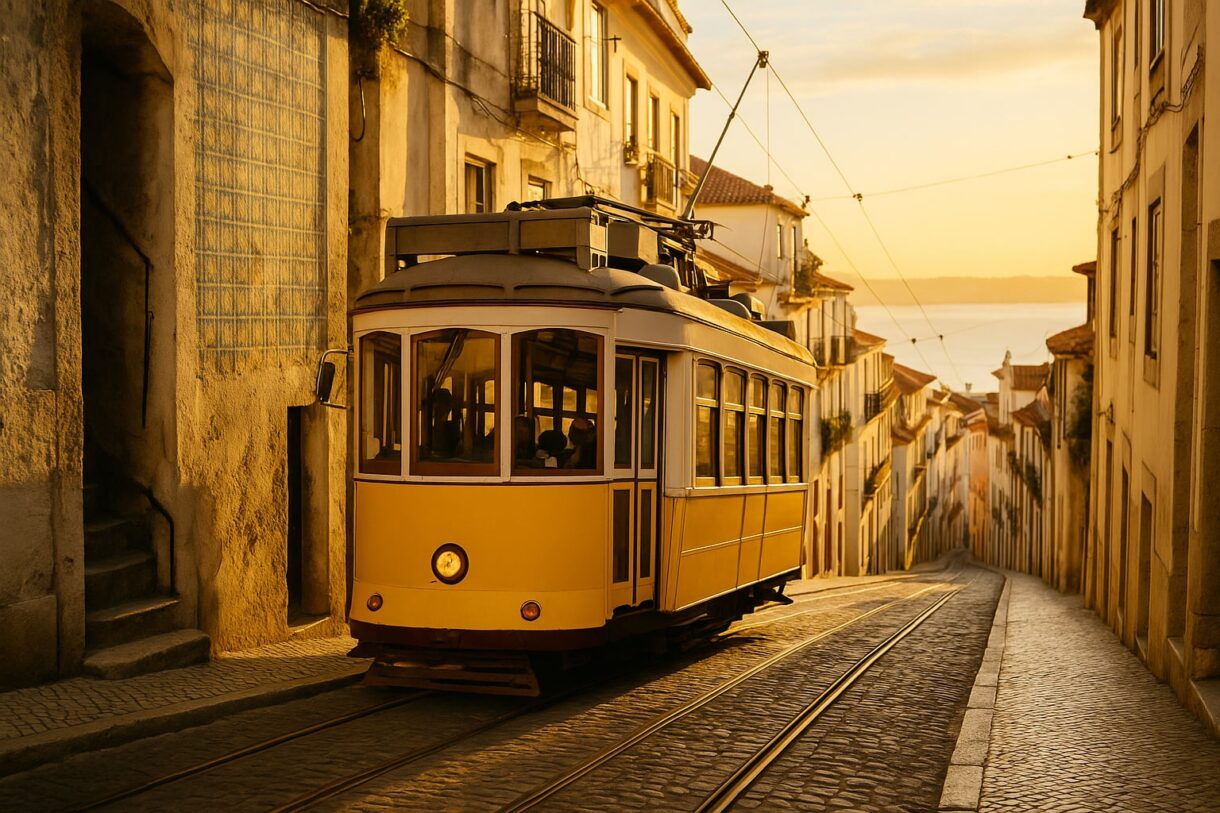
The tram 28 isn’t really a means of transport, it’s an attraction. It runs from Martim Moniz to Campo de Ourique via Graça, Alfama, Baixa and Estrela. Between 10:00 and 18:00 you’ll be packed in like sardines and pickpockets are at work. If you want to ride it, get on at Martim Moniz early (around 7:30–8:00) to get a seat, or take it midway outside peak hours.
Single ticket: €3.20 if you pay the driver. Much better to load a Viva Viagem card (€0.50 issue fee) with trips at €1.85 each or the €6.80 day pass, which covers the metro, buses, trams and Carris funiculars.
The metro covers the airport–centre–Oriente route well, but doesn’t reach Alfama or Belém. For Belém use tram 15E (modern, more comfortable than the 28) or the train from Cais do Sodré. To cross to Cacilhas, the ferry from Cais do Sodré costs around €1.55 and takes 10 minutes; the views of Lisbon from the water are worth the trip.
The tuk-tuks that hassle you at Rossio are a trap: you pay €40–60 for a ride you could take on public transport for €2.
Realistic four-day budget
Approximate figures for 2026, per person per day, excluding flights:
| Item | Backpacker | Mid-range | Comfort |
|---|---|---|---|
| Accommodation | €25–40 (hostel) | €60–90 (3* hotel) | €120–200 (4*/boutique) |
| Food | €20–30 | €35–55 | €70–120 |
| Transport | €6.80 (day pass) | €6.80 | €15–25 (some taxis) |
| Entry fees and leisure | €10–15 | €15–25 | €25–40 |
| Total/day | €65–90 | €120–180 | €230–385 |
Reference entry fees: Jerónimos Monastery €12, Belém Tower €8, São Jorge Castle €15, Oceanário €25. The Lisboa Card (24h/48h/72h: approx. €27/€44/€54) pays off if you plan to visit three or more monuments and use transport heavily.
Sample four-day itinerary
Day 1 — Historic centre: Baixa, the Santa Justa lift (worth walking up from behind to the Convent do Carmo and paying only for the viewpoint), Chiado, coffee at A Brasileira without ordering lunch, sunset at the Miradouro de São Pedro de Alcântara.
Day 2 — Alfama and Mouraria: Lisbon Cathedral (Sé), São Jorge Castle first thing in the morning, walk down through Alfama, lunch in a tasca on Rua de São Pedro, fado in the evening at a small venue (Tasca do Chico or Mesa de Frades if you book ahead).
Day 3 — Belém and LX Factory: Jerónimos first thing (opens around 9:30; the queue at 11 is brutal), pastéis at the original Belém bakery —not the one on the corner—, Belém Tower, MAAT, afternoon at LX Factory under the 25 de Abril bridge.
Day 4 — Day trip or alternative neighbourhoods: Sintra by train from Rossio (45 minutes, return around €4.80) or, if you’d rather stay, Marvila with its breweries and Graça for sunset at the Miradouro da Senhora do Monte.
What to eat and where: three concrete tips
Beyond pastéis de nata, try bacalhau à brás (shredded salt cod with egg, onion and straw potatoes), amêijoas à bulhão pato (clams with garlic, coriander and white wine) and the bifana —a sandwich of marinated pork loin— which in a place like O Trevo, on Praça Luís de Camões, costs €2.50–3.50 and makes a meal.
Avoid picture menus and restaurants with touts at the door on Rua Augusta or Rua das Portas de Santo Antão. For good seafood without the tourist trap, cross to Cacilhas: Rua Cândido dos Reis has seafood bars where you’ll eat better and cheaper than in Lisbon.
If you want to compare this kind of planning with another compact but very different European capital, see how the budget changes in Shanghai in four days.
Common mistakes and safety
The number one mistake is trying to fit Sintra, Cascais and Évora into four days: you end up seeing train stations. The second is booking a hotel “with a view” at the top of Graça without checking whether the building has a lift.
Lisbon is safe in terms of violent crime, but pickpockets on the 28, the 15E, the Santa Justa lift and at Rossio are constant. Carry your phone and wallet in front of you. At night, the Intendente area has improved a lot but still has uncomfortable stretches; Cais do Sodré is lively and well watched.
Frequently asked questions
Is the Lisboa Card worth it for four days?
If you’re visiting Jerónimos, Belém Tower, the Castle and a few more museums, and using public transport daily, the 72-hour card pays off. If you only do one or two monuments, it isn’t worth it.
What’s the best time to go?
April to June and September to mid-October: temperatures of 18–26 °C, shorter queues and slightly lower prices. July and August are hot and crowded; in August half of Lisbon shuts for the holidays.
Can I get from the airport to the centre by metro?
Yes. The red line connects the airport with Alameda (change to green for Baixa) or São Sebastião (blue). The journey takes 20–25 minutes; a single ticket with Viva Viagem costs €1.85. Taxi or Uber to the centre: €10–15.
Is Lisbon expensive for eating out?
In tourist areas, yes (menus €20–30). In neighbourhood tascas and municipal markets such as Mercado de Arroios or Mercado da Ribeira (the non-gourmet part), you can eat well for €10–15.
Do I need to book Jerónimos in advance?
In high season, yes, at least the day before online. Turning up without a booking on a Saturday in May at 11:00 means a queue of more than an hour.
Is it easy to visit Lisbon with young children?
Hills and cobbles make pushchairs difficult. The Oceanário in Parque das Nações and the trams are a hit with kids, but plan short distances and use public transport without hesitation.
Conclusion: the practical decision
If you only remember one thing: sleep in
Baixa-Chiado or Príncipe Real if it’s your first time, buy the Carris day pass, take the 28 at 8 in the morning or skip it, and leave the fourth day for Sintra only if you’re an early riser. Everything else is better improvised from a table at the Miradouro das Portas do Sol than from a spreadsheet.
Tips Places of Interest Means of Transport #barrios #consejos de viaje #Guía de viaje #Lisboa #presupuesto #transporte público


 Don't get fooled: plan your trip well and avoid these scams on your holidays
 Central Macedonia, the destination Spaniards have discovered to fall in love with Greece
 Summer in Brussels: flowers, festivals and typical gastronomy