Shanghai in four days: VPN, transport, food and where to sleep
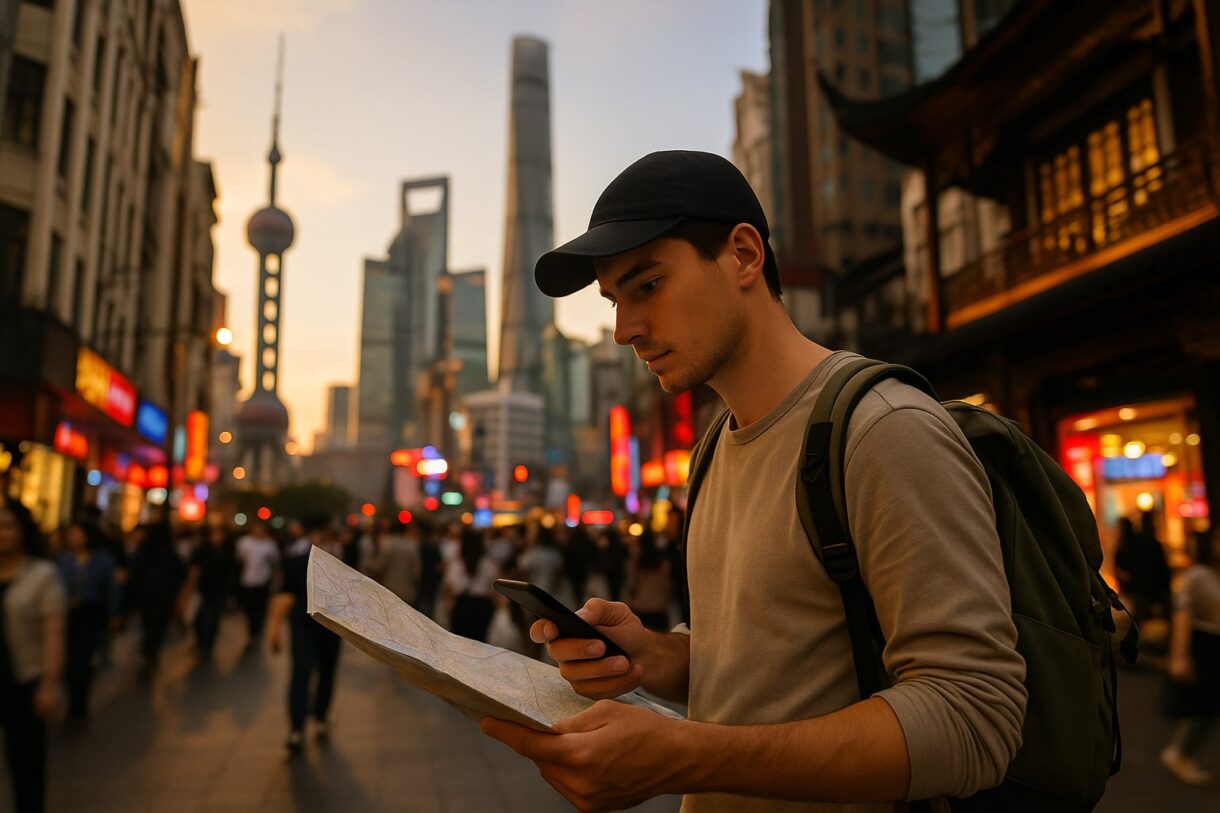
You land in Pudong after eleven hours of flying and the first thing you discover is that Google doesn’t work. No Gmail, no WhatsApp, no Maps. If you didn’t set up a VPN before takeoff, you’re cut off from the world until you leave the country. Shanghai is a city of 25 million people that runs on its own rules, and it’s worth understanding them before you land.
This guide is aimed at first-time visitors with four full days: enough to get a feel for the city without rushing, to mix the colonial Shanghai of the Bund with the alleyways of Tianzifang, and to try local cuisine without falling into the tourist traps of Nanjing Road.
Before you travel: what you need to sort out at home
Shanghai has no patience for digital improvisation. Behind the Great Firewall Google (search, Maps, Gmail, Drive), WhatsApp, Instagram, Facebook, X, YouTube and most Western media are blocked. Without a VPN installed before you enter China, you won’t be able to download one once inside the country: Chinese app stores don’t include them.
VPN: what to install before entering China
The ones that tend to work most reliably in 2026 are Astrill, LetsVPN and ExpressVPN. Astrill is the most recommended by expats for its stability, though also the most expensive (around 15-20 USD a month). Install two different VPNs in case one drops out — this is common during political conferences or sensitive dates. Configure them and test that they connect before you leave home.
Mobile payments: Alipay and WeChat Pay for foreigners
Cash has practically disappeared. Since 2023, Alipay and WeChat Pay allow you to link foreign Visa and Mastercard cards. Download them before you travel, verify your identity with your passport and add your card. Alipay includes a built-in translator, maps and QR access to the metro. In practice, it becomes your second wallet.
eSIM or local SIM: what makes sense
An eSIM from an international provider (Airalo, Holafly, Nomad) usually costs €20-40 for a week with sufficient data. The advantage: many route traffic outside China, which partly sidesteps the blocking without a VPN. If you prefer a physical SIM, China Unicom sells tourist packages at the airport for around 100-150 yuan.
Visa, 144-hour express transit and paperwork
Since 2024, Spain has been included in the visa-free entry of up to 15 days for tourism. For longer stays, or if you transit en route to a third country, the 144-hour visa-free transit remains in force. Check with the embassy before travelling, as conditions change.
How to get around Shanghai without losing your temper
From the airport to the centre: Maglev, metro and taxi
The Maglev connects Pudong with Longyang Road in 7-8 minutes at 300 km/h (50 yuan one way, around €6-7). Spectacular as an experience, but it leaves you on the outskirts: you’ll need the metro afterwards. Metro line 2 reaches the centre in about 60-70 minutes for 8 yuan. A taxi to the Bund costs 180-220 yuan and takes 45-70 minutes depending on traffic. From Hongqiao, the metro is more direct.
The metro: the network that changes everything
With 20 lines and more than 500 stations, it is one of the most extensive systems in the world. Signs are in Chinese and English, tickets cost 3-9 yuan depending on distance, and it runs from roughly 5:30 to 23:00. The most practical tip: activate the Metro Daduhui within Alipay and scan the QR code directly at the turnstiles.
Didi, taxis and shared bikes
Didi (the Chinese Uber) is integrated into Alipay in its English version. An average trip within the centre costs 20-40 yuan. Shared bikes from Hellobike and Meituan are also unlocked by QR code via Alipay: about 1.5 yuan for half an hour. Ideal for the French Concession, where distances are short and there are bike lanes.
4-day Shanghai itinerary
Day 1: the Bund, Nanjing Road and the Pudong skyline
Start early on the Bund (Waitan): the facade of 1920s colonial buildings looking out over the Huangpu. Cross to Pudong by ferry (2 yuan) instead of the tourist tunnel; it’s more authentic. Head up the Shanghai Tower (observation deck on the 118th floor, entrance around 180 yuan) at sunset. Have dinner in Lujiazui or return to the Bund to see the illuminations from below.
Day 2: French Concession, Tianzifang and Xintiandi
The former French Concession is the most walkable neighbourhood in the city: shade-giving plane trees, Art Deco villas, cafés. Stroll unhurriedly along Wukang Road, Anfu Road and Fuxing Road. Tianzifang is a maze of shikumen alleyways converted into shops and bars; it’s best in the afternoon. Xintiandi, more polished and expensive, is good for dinner.
Day 3: Yuyuan Garden, the old city and the Shanghai Museum
Yuyuan Garden (entrance 30-40 yuan) is a 16th-century Ming garden in the heart of the old town. Around it, the bazaar is touristy but worth seeing for the Huxinting teahouse building. Eat xiaolongbao at Nanxiang Mantou Dian (the queue on the ground floor is for takeaway; go upstairs, which is pricier but has no wait). In the afternoon, visit the Shanghai Museum on People’s Square (free, closed on Mondays) for bronzes and ceramics.
Day 4: Zhujiajiao or M50, depending on your taste
If you want contrast, take metro line 17 to Zhujiajiao, a canal town an hour from the centre. If you prefer contemporary art, the M50 district on Moganshan Road brings together galleries in former textile factories. Finish at the Oriental Pearl Tower or on a Bund rooftop for the final sunset.
Typical food in Shanghai: what to try and where
Shanghainese cuisine (benbang cai) is sweet, rich and heavy on soy sauce. Essentials:
- Xiaolongbao: steamed dumplings filled with broth. Try them at Din Tai Fung (a reliable Taiwanese chain) or at Jia Jia Tang Bao (Huanghe Road), which is more local.
- Shengjianbao: the fried cousins of xiaolongbao, with a crispy base. Yang’s Fry Dumplings makes them for 10-15 yuan.
- Hongshao rou: pork belly braised in soy, sugar and rice wine.
- Noodles with hairy crab (dazha xie), only available between October and November.
Avoid restaurants with English menus and laminated photos on East Nanjing Road. Eat where locals are queuing.
Where to stay in Shanghai depending on your profile
| Area | Profile | Price per night (mid-range hotel) |
|---|---|---|
| The Bund / Huangpu | First time, iconic views | €120-220 |
| French Concession | Atmosphere, cafés, walking | €90-180 |
| Jing’an | Shopping, good metro connections | €100-170 |
| Pudong / Lujiazui | Business, skyscrapers | €130-250 |
| People’s Square | Central location, museums | €80-150 |
For a first trip, the French Concession or Jing’an have more street life than Pudong, which empties out at night.
How to organise the visit
Four full days cover the essentials without stress. The best time to visit is April-May and September-October: mild temperatures and less humidity. July and August are sweltering (35 °C with high humidity); January is grey and cold but without snow. Avoid the Golden Week (early October) and the Chinese New Year (late January or February): prices soar and Chinese crowds travel en masse.
Average budget for four days, excluding flights: €500-800 per person in a mid-range hotel, eating local food and using public transport.
What to bring back
A pack of Longjing tea from the shops in Yuyuan Garden and, if you travel on to Sydney or Melbourne afterwards, take a look at our five-day Sydney practical guide: many flights between Europe and Australia stop over here, and it’s worth extending the stay.
Frequently asked questions
Do I need a visa to travel to Shanghai as a Spanish citizen?
Since 2024, Spanish citizens can enter without a visa for up to 15 days for tourism. The 144-hour visa-free transit also remains available if you stop over en route to a third country. Check the current conditions with the Chinese embassy before booking, as the programme has been modified several times.
Which VPN works best in China in 2026?
Astrill, LetsVPN and ExpressVPN are the most frequently cited for their stability. You should install and test them before entering China, because inside the country websites and download stores are blocked. Have two installed as a precaution.
Can I pay with a Visa or Mastercard in Shanghai?
In international hotels and large chains, yes. In local restaurants, markets, taxis and on the metro, no. You need Alipay or WeChat Pay with your foreign card linked. Set it up before you travel.
What is the best time to visit Shanghai?
April-May and September-October for the weather. Avoid the October Golden Week and Chinese New Year: high prices and overcrowding. Summer is humid and hot; winter is cold and grey but manageable.
Is Shanghai a safe city for tourists?
Yes, public safety is high, even at night. Common problems include scams in tourist areas (fake art students, teahouses with inflated bills near the Bund) and chaotic traffic. Always cross with caution.
Tips Gastronomy Means of Transport #ciudades #consejos de viaje #gastronomía #Guía de viaje #transporte público


 Don't get fooled: plan your trip well and avoid these scams on your holidays
 Central Macedonia, the destination Spaniards have discovered to fall in love with Greece
 Summer in Brussels: flowers, festivals and typical gastronomy
Comentarios cerrados