Best Beaches in Australia and Polynesia in 2026: Whitsundays, Ningaloo and French Polynesian Atolls
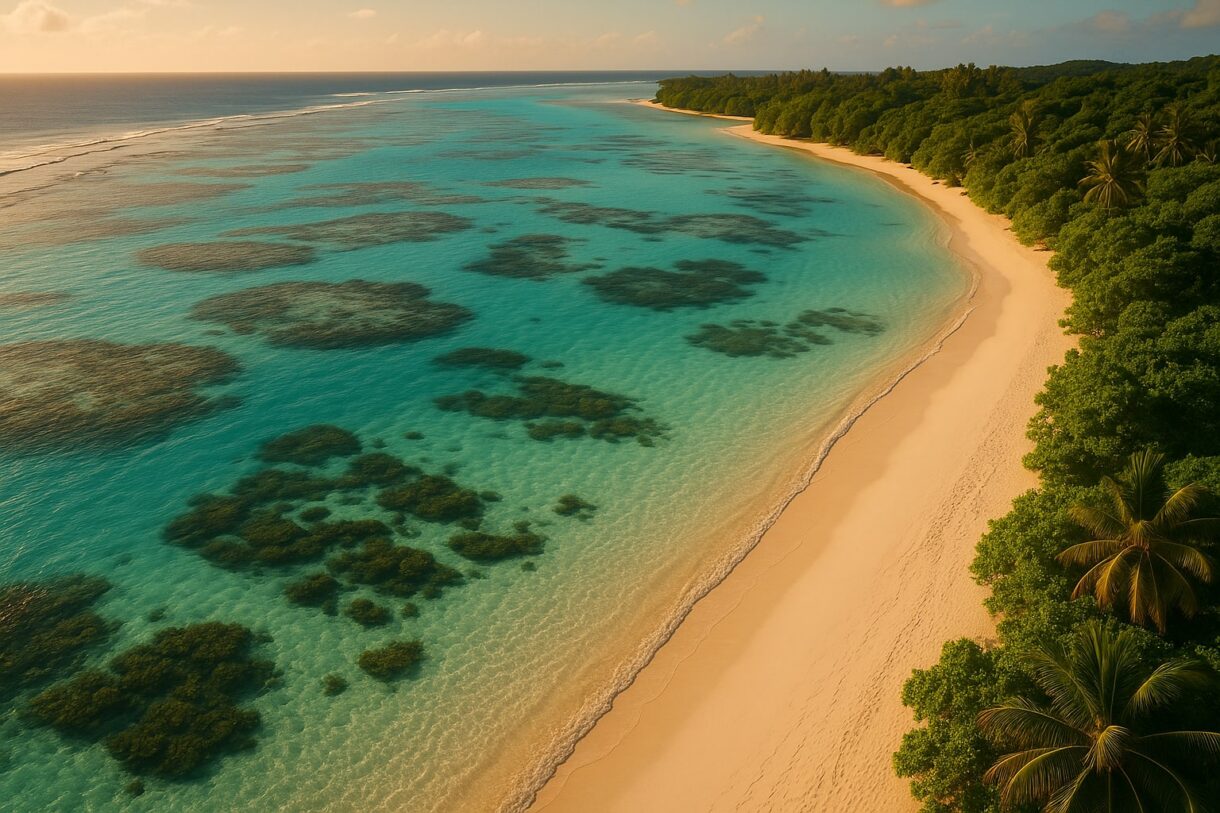
There is a moment, when you land on Hamilton Island or in Papeete, when you understand why half the world saves up for years to get here. It is not the promise of the postcard: it is the distance. The South Pacific is not traveled in one go, it is crossed in legs, and each leg asks for its own calendar, its own luggage and, above all, its own patience.
This route is designed for those who want to understand before they photograph. Three regions, three different logics: the Whitsundays in Queensland, the Ningaloo Reef in Western Australia and the atolls of French Polynesia. All share turquoise water; none is visited the same way.
Why the South Pacific still makes the difference
The South Pacific holds two of the planet’s most important coral systems and a maritime culture—Melanesian, Polynesian, Aboriginal—that has spent millennia reading tides and stars. The Australian Great Barrier Reef and Ningaloo are UNESCO-protected; the Polynesian atolls, formed on sunken volcanoes, enclose lagoons where the water rarely drops below 26 °C.
The downside: getting there is expensive, long and increasingly regulated. Visitor quotas in some marine parks have risen in recent years to curb coral bleaching. Going in 2026 means booking months ahead and accepting that “all inclusive” here doesn’t exist except at the lagoon resorts.
Whitsundays (Queensland): silica sands and sailing
The 74 Whitsunday Islands lie off the coast of Airlie Beach, in the heart of the coral reef. The undisputed star is Whitehaven Beach, seven kilometres of 98% pure silica sand, so fine that it squeaks underfoot and doesn’t hold heat: you can walk across it barefoot at midday.
The classic plan is two- or three-day sailing cruises from Airlie Beach, with stops at Hill Inlet (the famous swirl of sand and water seen from the Tongue Point lookout) and the coral gardens of Border Island. Prices hover around 450–700 AUD per person in shared cabins, depending on season and boat.
If you prefer dry land, Hamilton Island has its own airport with direct flights from Sydney and Brisbane. Hook Island and Long Island offer more discreet, eco-lodge-style accommodation. Avoid December to March: it is irukandji jellyfish season, and you must swim in lycra suits on the mainland beaches.
Ningaloo Reef (Western Australia): whale sharks from the shore
Ningaloo is the opposite of the Great Barrier Reef: 260 kilometres of reef that, in many stretches, begins less than 100 metres from the beach. You can put on your fins at Turquoise Bay, within the Cape Range National Park, let the current carry you about 300 metres and exit at the southern end of the channel, seeing green turtles, manta rays and parrotfish without having paid for a boat trip.
The highlight of the year is between March and August, when the whale shark (Rhincodon typus) comes close to the outer reef. Swim-with-whale-shark tours from Exmouth or Coral Bay cost around 400–500 AUD and most operators include guaranteed sightings or a second trip free. Between July and October the humpback whales pass by; in the austral summer, turtles nest at Jurabi.
Entry to Cape Range National Park costs about 15 AUD per vehicle per day. You reach it by flying into Learmonth Airport from Perth (around two hours) and renting a car, which is essential. The reference town is Exmouth: few streets, good coffee at Whalers Restaurant and a well-stocked supermarket for filling your cooler. To prepare the initial leg better, this practical guide to Sydney in five days is useful if you plan to combine the east and west coasts.
French Polynesian atolls: lagoons, motus and drift diving
French Polynesia is 118 islands spread across five archipelagos. For beach and lagoon, the three useful names are Bora Bora and Tahaa in the Society Islands (high islands with enclosed lagoons), and Rangiroa and Fakarava in the Tuamotu (pure atolls, with no mountain inside).
On Bora Bora, the colour of the water over Matira Beach—the only public beach accessible without a boat—justifies half the legend. The rest of the beaches belong to the stilted overwater resorts. Tahaa, 30 minutes by boat from Raiatea, offers the same motus (coral islets) at half the price and with family guesthouses (pensions de famille) from 150–200 € per night with half board.
Divers head to Fakarava, a UNESCO biosphere reserve, for the southern pass of Tumakohua: a wall of grey reef sharks at about 20 metres depth. Rangiroa is the second-largest atoll in the world, and its Tiputa pass is dived by drifting with resident bottlenose dolphins. Dry season: May to October, with water at 26–27 °C.
How to organise the trip: quick comparison
| Destination | Best time | How to get there | Budget/day (approx.) | Strong point |
|---|---|---|---|---|
| Whitsundays | Jun–Oct | Flight to Hamilton Island or Proserpine | 200–350 € | Sailing and white sand |
| Ningaloo | Mar–Aug | Flight Perth–Learmonth + car | 150–250 € | Snorkelling from the shore |
| Society Islands | May–Oct | International flight to Papeete + Air Tahiti inter-island | 300–600 € | Lagoons and motus |
| Tuamotu (Fakarava, Rangiroa) | May–Oct | Air Tahiti from Papeete | 200–400 € | Diving with sharks |
Ten days is enough for one region. Combining Australia and Polynesia in a single trip requires at least three weeks and acceptance of the flight legs (Sydney–Papeete is about 8 hours of flying, with limited frequencies). Book Air Tahiti with the Multi-Island Pass if you plan to move between more than two islands: it works out considerably cheaper than single tickets.
Sustainability and rules worth knowing
In Ningaloo and the Great Barrier Reef it is forbidden to touch the coral and to wear sunscreens containing oxybenzone; many operators require mineral sunscreen. In Polynesia, respect local tapu: there are motus reserved for families and beaches where camping is not allowed. Tipping is not expected in Polynesia; in Australia it is not compulsory either.
If you are interested in how other reefs accessible from the shore are managed, the comparison with the Red Sea beaches in Egypt and their accessible reefs is useful: model, price and type of wildlife change completely.
What to take home
From Queensland, a jar of locally roasted macadamia for the next day’s breakfast. From Ningaloo, the habit of looking at the sea before getting in: here the tides matter more than the clock. From Polynesia, a Tahaa vanilla pod—the finest in the Pacific—and the word māuruuru (thank you), which opens doors.
Frequently asked questions
What is the best time to travel to Bora Bora in 2026? From May to October, the austral dry season. Temperatures of 25–28 °C, little rain and water at 26 °C. July and August are the most expensive and busiest months.
Can you snorkel at Ningaloo without a boat? Yes. Turquoise Bay, Oyster Stacks and Lakeside are beach entries within Cape Range National Park. Check the tide tables before going in: at low tide the coral is only a few centimetres below the surface.
How much does a Whitsundays cruise cost? Two- to three-day sailing cruises from Airlie Beach range from 450 to 700 AUD per person in shared cabins. Private skippered charters start at 1,500 AUD/day for 4–6 people.
Is Fakarava suitable for beginner divers? The northern pass (Garuae) has accessible dives for Open Water level with moderate current. The southern pass, with the famous shark wall, requires Advanced level and experience with currents. There are PADI centres in the village of Rotoava.
How many days do I need to properly see French Polynesia? At least ten, ideally fourteen. Two nights in Tahiti to acclimatise, four on a high island (Moorea or Tahaa) and four on an atoll (Fakarava or Rangiroa). Less than that, and you will spend more time in airports than in the water.
Places of Interest Leisure and Culture #arrecifes de coral #Australia #Guía de viaje #islas #playas #Polinesia


 Don't get fooled: plan your trip well and avoid these scams on your holidays
 Central Macedonia, the destination Spaniards have discovered to fall in love with Greece
 Summer in Brussels: flowers, festivals and typical gastronomy
Comentarios cerrados