When to Go to Tokyo: Cherry Blossoms, Rains, Typhoons and Prices Month by Month
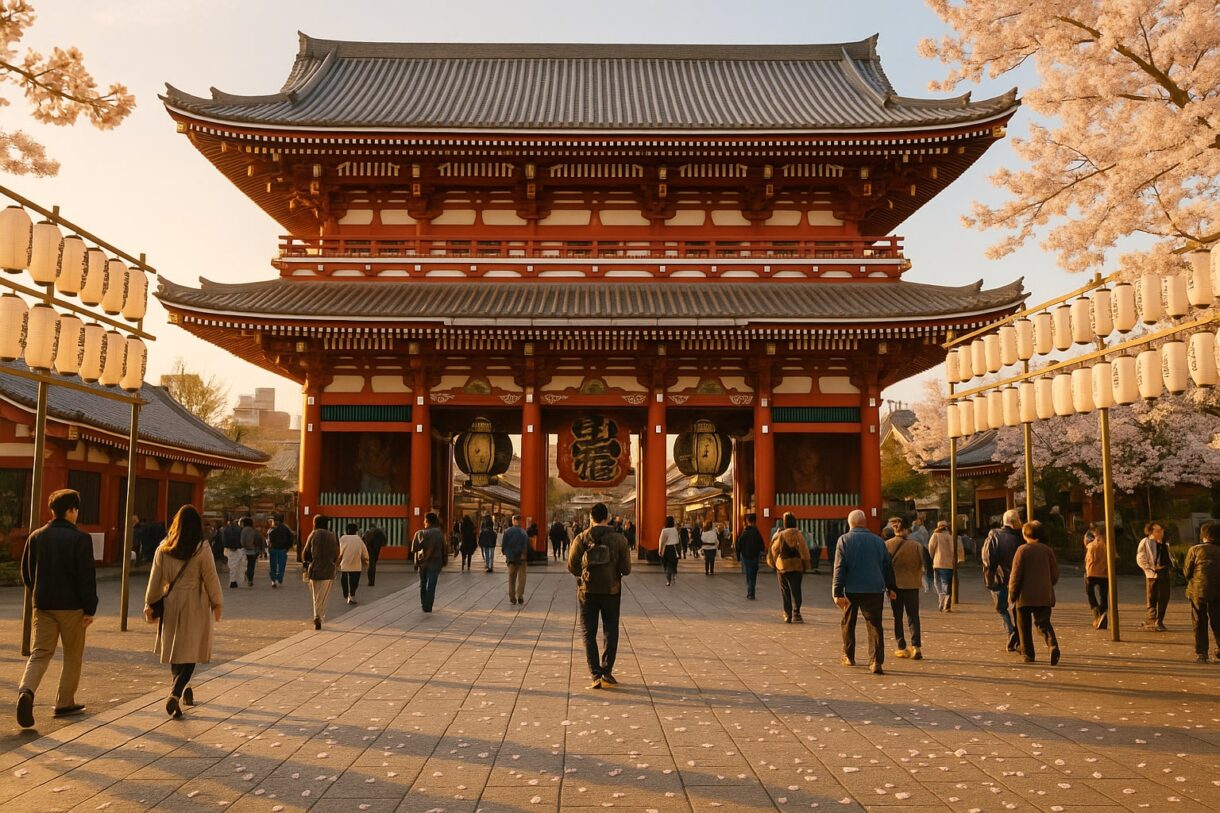
If you’re looking for a quick answer: late March to mid-April and late October to early December are the two windows in which Tokyo offers the best balance between weather, light and scenery. The first brings the sakura (cherry blossoms in bloom) and high prices; the second, the koyo (red leaves), mild temperatures and less booking pressure.
If your priority is spending less, aim for late January, early February or the first half of December: cheaper flights, hotels with availability and a city running at full capacity, even if it’s cold. August and September are the months to avoid if you don’t tolerate humid heat well or are worried about running into a typhoon.
Quick summary: when to go based on your priority
Tokyo changes a lot from one month to the next. Walking through Yanaka in April at 18 °C is not the same as doing it in August at 34 °C and 80% humidity. This table summarizes the essentials so you can decide in thirty seconds.
| Priority | Best window | What to expect |
|---|---|---|
| Cherry blossoms in bloom (sakura) | Last week of March to 1st of April | Full bloom, high prices, lots of people |
| Red leaves (koyo) | Mid-November to early December | Colors in parks, cool and dry weather |
| Low price | Late January and February | Flights and hotels at their lowest, dry cold |
| Avoiding typhoons | March-June and December-February | Very low risk of disruptions |
| Summer festivals | Late July and August | Fireworks and matsuri, extreme heat |
| Mild weather | April, May, October, November | Walking without suffering, moderate rain |
Tokyo weather month by month
Tokyo has four very distinct seasons. Data from the Japan Meteorological Agency (JMA) shows averages that won’t surprise you if you come from the Mediterranean, but it’s also worth looking at humidity and daylight hours.
Winter (December-February): dry cold and clear skies
Averages hover around 5-10 °C highs and 0-3 °C lows. It rains little (about 50-60 mm per month) and there are many sunny days. It snows once or twice each winter and rarely settles. It’s an underrated season: the light is clean, the Imperial Gardens look sharp and the onsen of Hakone are an hour away by train.
Spring (March-May): the star window
March starts cool (12-15 °C highs) and May already ends warm (23-25 °C). April is the month with the most comfortable feel. Rain increases gradually, but it rarely ruins an entire day. It is by far the most in-demand season.
Summer (June-August): tsuyu, heat and humidity
June and the first half of July are the rainy season (tsuyu): it doesn’t pour, but it drizzles frequently and the humidity is constant. From mid-July the heat spikes: averages of 30-33 °C and peaks above 36 °C, with 75-85% humidity. Nights don’t drop below 25 °C in the middle of August.
Autumn (September-November): the other great season
September is still hot and it’s when most typhoons arrive. October settles at 20-23 °C and November drops to 15-17 °C, with clear skies and leaves that start to change toward the end of the month in parks such as Rikugien or the Shinjuku Gyoen National Garden.
Cherry blossom season (sakura): actual dates and expectations
Each year the JMA publishes official bloom forecasts. For Tokyo, the opening (kaika) usually occurs between March 20 and 28, and the full bloom (mankai) between March 28 and April 5. The useful window is short: about 7-10 days from the mankai until the wind scatters the petals.
If your trip depends on the sakura, book with flexibility and check the JMA forecasts from early March onward. The most sought-after parks are Ueno, Chidorigafuchi, Meguro-gawa and Shinjuku Gyoen. The first two get seriously crowded on peak weekends; if you want a quiet hanami, try the Kanda River in Ochanomizu or the banks of the Zenpukuji in Suginami.
A practical note: hotel prices jump between 40 and 80% compared with February, and direct flights from Madrid or Barcelona can go from €700 to €1,100-1,400.
Typhoon season: what to know before going in August or September
The official typhoon season in Japan, according to the JMA and the Japan Tourism Agency (JTA), runs from May to October, with peak impact on the Kanto region (where Tokyo is) between mid-August and mid-October. September is statistically the most exposed month.
Not every typhoon affects Tokyo: many veer toward the Pacific or hit Kyushu. But when one passes nearby, bullet trains (shinkansen) and domestic flights get canceled with 12-24 hours’ notice, and the city empties for a day. If you’re traveling in that window:
- Buy train tickets with a flexible policy or use the Japan Rail Pass (which allows rescheduling at no cost).
- Leave a one-day buffer before international return flights.
- Install the NERV Disaster Prevention app (in English), reliable for alerts.
The real risk of a typhoon ruining a 10-day trip in September is not high, but it exists. In August, the most likely problem is not the typhoon but sustained heat.
Prices month by month: flights and accommodation
The following ranges are indicative for flights from Spain (Madrid or Barcelona, with one stopover) and 3-4 star hotels in central areas such as Shinjuku or Ueno. Reference data for 2025-2026; it’s advisable to double-check before booking.
| Month | Round-trip flight (€) | Hotel/night (€) | Notes |
|---|---|---|---|
| January | 650-850 | 90-130 | Expensive New Year’s the first 5 days |
| February | 600-800 | 85-120 | The cheapest month |
| March | 750-1,000 | 110-160 | Rises the last week due to sakura |
| April | 900-1,400 | 150-230 | Annual peak, book 4-6 months ahead |
| May | 800-1,100 | 100-140 | Golden Week (Apr 29-May 5) very expensive |
| June | 700-900 | 90-130 | Rains, good value for money |
| July | 800-1,050 | 110-160 | Rises in the second half |
| August | 900-1,200 | 120-180 | Obon (mid-month) makes everything more expensive |
| September | 700-900 | 100-140 | Typhoon risk, average demand |
| October | 800-1,100 | 120-170 | Rises toward the end of the month |
| November | 850-1,150 | 130-180 | Koyo, high demand |
| December | 700-1,100 | 100-160 | Cheap until the 20th, very expensive from the 28th to the 3rd |
The cheapest month, consistently, is February. December has an interesting window: until the 20th prices are low and the city starts lighting up for Christmas; from the 27th everything spikes due to the Japanese New Year (oshogatsu).
Cultural events that affect your trip
There are dates that aren’t official holidays but move prices and crowds. If they coincide with your trip, keep them in mind.
- Golden Week (April 29 to May 5): several holidays chained together. The Japanese travel en masse, hotels fill up and the shinkansen are packed. If you can, avoid it.
- Obon (August 13-16): festival of the ancestors, many people return to their hometowns. Tokyo empties somewhat, but long-distance trains are chaos.
- Oshogatsu (December 31 to January 3): temples packed at midnight, many restaurants closed on the 1st and 2nd. An interesting cultural experience if you accept it.
- Sumida River Fireworks (last Saturday of July): the oldest fireworks festival, in Asakusa.
To fit these peaks into the rest of your Japan itinerary, this guide on how many days to spend in Tokyo, Kyoto and Osaka will be helpful.
Which month to choose based on your profile
- First time in Japan, no budget rush: late March or the first week of April. You accept high prices in exchange for sakura and mild weather.
- Tight budget: second and third week of February. It’s cold (a proper coat is needed), but you’ll see Tokyo running normally and pay 30-40% less.
- Photography and landscapes: second half of November. Red leaves, clear skies, long shadows.
- Festivals and street atmosphere: late July or the first week of August. You accept the heat; in return you get matsuri, yukata and fireworks.
- Combining Tokyo with beach time in the south: May or early June, before the rains.
To choose a base neighborhood, you have this comparison of where to stay in Tokyo: Shinjuku, Shibuya, Asakusa or Ginza.
Common mistakes when choosing dates
- Booking during Golden Week without realizing. Check the Japanese holiday calendar before closing flights.
- Taking sakura for granted. If you go on April 10 the petals may already have fallen. If you go on March 20, nothing may have opened yet. Be flexible.
- Underestimating August heat. It’s not “Madrid heat”; it’s suffocating humidity that doesn’t let up at night. Bring technical clothing and plan stops in air-conditioned indoor spaces.
- Ignoring the typhoon window. You don’t have to give up September, but do adjust travel insurance and buffers.
- Traveling between December 29 and January 3 without knowing what’s closed. Many family-run restaurants shut their doors. Department stores and chains don’t.
Frequently asked questions
What is the best time to travel to Tokyo? Late March to early April for cherry blossoms, or the second half of November for red leaves and stable weather. If price matters most, February.
When do cherry trees bloom in Tokyo? According to the JMA, blooming usually starts between March 20 and 28, and the peak (mankai) occurs between March 28 and April 5. Dates vary each year and are announced from March onward.
Is it safe to go to Tokyo in September with typhoons? Yes, with precautions. The risk of a typhoon directly affecting your trip exists but is not high. Leave a buffer before international flights and use insurance with weather-related cancellation coverage.
Which month is cheapest for traveling to Japan? February, consistently for flights and accommodation. The first half of December also offers good prices before the New Year rise.
Is it very cold in Tokyo in winter? Moderate cold: lows of 0-3 °C and highs of 8-10 °C, with frequent sun. It snows little. With a normal coat and gloves, it’s not a problem.
Is it worth going in the rainy season (tsuyu)? If you don’t mind carrying an umbrella and accept humidity, yes: there are fewer tourists, the gardens are lush and prices are reasonable. Avoid plans that are 100% outdoors.
Final recommendation
If your trip is fixed and you want to play it safe, aim for the first week of April (accepting high prices) or the last ten days of November (cheaper, stable weather). If you have flexibility and budget is the priority, lock in the second and third week of February: Tokyo at 100%, no lines at teamLab or at the Tokyo Metropolitan Government Observatory, and room for a trip to Hakone without fighting anyone for the onsen.
Tips Places of Interest #clima #consejos de viaje #temporadas de viaje #Tokio #turismo


 Don't get fooled: plan your trip well and avoid these scams on your holidays
 Central Macedonia, the destination Spaniards have discovered to fall in love with Greece
 Summer in Brussels: flowers, festivals and typical gastronomy
Comentarios cerrados