Santillana del Mar without the crowds: how to visit the village of the three lies out of season
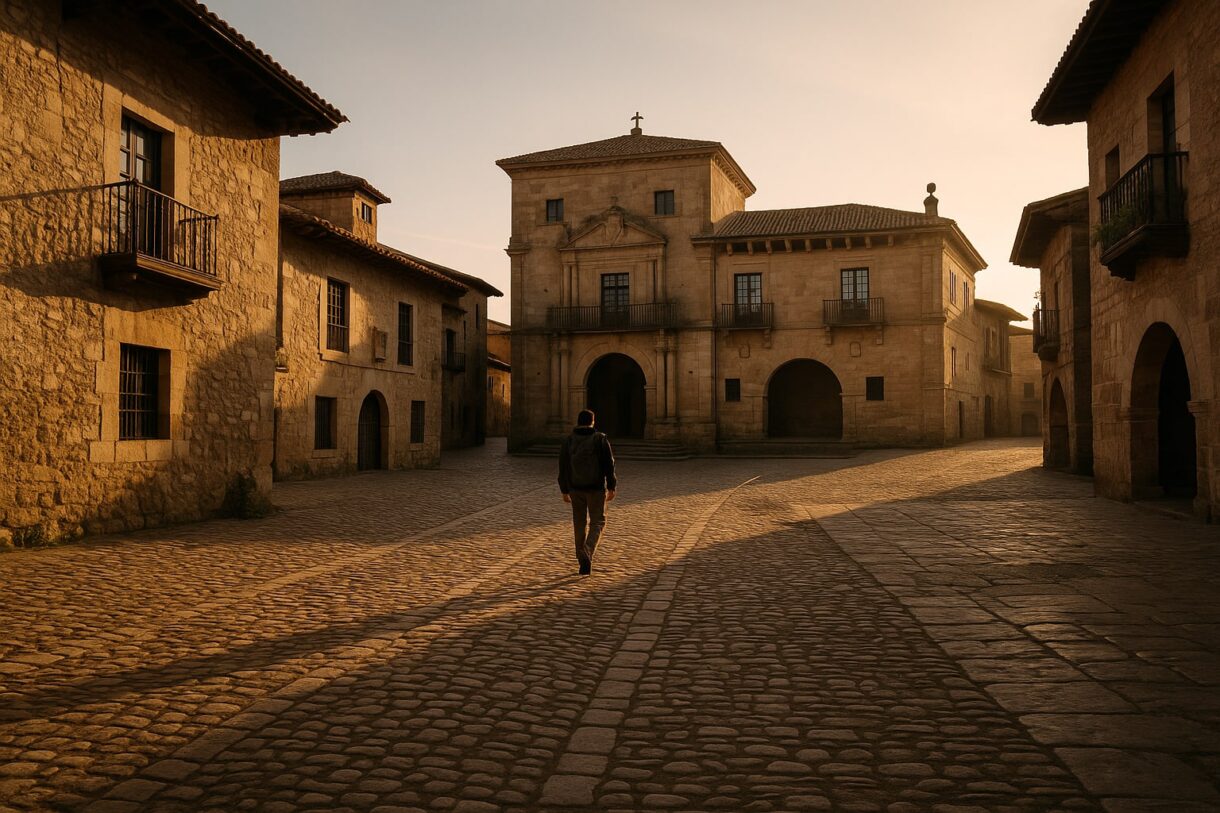
In August, Santillana del Mar is a stage set with too many people inside it. In February, with fog clinging to the Colegiata and the flagstones of Calle del Cantón wet, it looks like what it once was: a medieval Cantabrian village of ochre stone, noble coats of arms and stables that still smell of tudanca cattle. That contrast is why it’s worth coming when nobody else does.
This guide is for anyone who wants to walk without dodging groups, enter the Colegiata without a queue, and eat cocido montañés in a mesón where the waiter has time to explain what berza is. If you’re looking for a resort or a beach, this isn’t your place. If you’re interested in the medieval villages of Cantabria in their most honest version, keep reading.
Why “village of the three lies”
Every guide repeats the nickname, but it’s worth explaining it properly: it is neither holy, nor flat, nor by the sea. Holy, because the name comes from Saint Juliana (Sancta Iuliana → Santillana), not from any devout status of the town. Flat, because the urban centre has an obvious slope between the Plaza Mayor and the Colegiata. And sea, because the Cantabrian coast lies about 4 kilometres away: the village is inland.
The misunderstanding has lasted for centuries and is now part of the attraction. It also helps explain that Santillana began as a monastic settlement around the relics of Saint Juliana (brought, according to tradition, in the 9th century) and grew into a seigniorial village thanks to medieval privileges and the patronage of the Mendoza family, marquises of Santillana from 1445.
What to see without rushing
The Colegiata of Santa Juliana
This is the building that justifies the trip. Twelfth-century Romanesque, with a cloister of historiated capitals that ranks among the finest in northern Spain: confronted lions, scenes from Genesis, plant interlacing. Entry costs around €3–4 and includes the cloister. Check the opening hours before you go, as they vary by season and liturgical events.
Go first thing in the morning. In winter, on a weekday, you’ll likely be alone for a good ten minutes. That silence, with light slanting in through the arcades, is half the reason for the trip.
The Neocueva of Altamira
The original cave has been closed to the general public since the 2000s for conservation reasons (with restricted visits by weekly lottery). What you visit is the Neocueva, a precise replica of the ceiling with the polychrome paintings inside the Museo Nacional y Centro de Investigación de Altamira, about 2 kilometres from the old town. Entry is around €3, free on Saturday afternoons and Sundays. Book through the museum’s official website.
It is not “the real cave”, but the reproduction was made with laser scanning and analogous pigments: the volume of the bison can be appreciated by using the protrusions of the rock, which is what makes the Magdalenian art of Altamira unique.
Streets and manor houses
Walk along Calle del Cantón, Calle de Juan Infante and Plaza de Ramón Pelayo. Look at the coats of arms: the Barreda, the Villa, the Bustamante families. The Torre de Don Borja (Fundación Santillana) and the Torre del Merino date from the 14th–15th centuries. In a good hour you’ve covered the old town. Another hour if you step into two or three manor houses converted into small museums.
Eating without the traps
The local speciality is cocido montañés (white beans, berza, chorizo, morcilla and pork ribs) and cocido lebaniego made with chickpeas, which comes from the neighbouring valley of Liébana. Also quesucos, sobaos pasiegos and quesada. Look for sobaos with the PGI Sobao Pasiego: the industrial ones have nothing to do with it.
Avoid the places with laminated menus in four languages right on the main square. Walk two streets and you’ll find family-run mesones where the cocido costs around €15–20 and tastes of real lard. If you have a spare day, head towards the coast: on the Asturian line, Tazones still serves oricios in November and the detour is worth it.
How to plan the visit
| Concept | Practical information |
|---|---|
| Best time | November to March, on weekdays |
| Worst time | July, August and Holy Week |
| Recommended time | Half a day + Altamira (full day) |
| How to get there | By car from Santander (about 30 km, 30–40 min) |
| Parking | Park-and-ride car parks at the entrance, €5–8 |
| Accommodation | Paradores and rural inns; prices rise in summer |
In winter there are days of horizontal rain: bring a raincoat, shoes with grippy soles (the flagstones are slippery) and layers. The tourist office is on the Plaza Mayor.
What to add the next day
Set aside a morning for the Cuevas del Soplao (about 40 minutes by car) or head down to Comillas to see Gaudí’s Capricho. If you’re interested in the villages of the northern coast, Lastres, on the Asturian coast, still smells of pixín and fits well into a three- or four-day route through the north.
For reading at the hotel: Las Guerras Cántabras by Peralta Labrador, if you enjoy history, or any edition of the Serranillas by the Marquis of Santillana, who composed them in these very lands.
Frequently asked questions
How much does it cost to enter the Colegiata de Santa Juliana?
General entry costs around €3–4 and includes the cloister. There are reduced rates for pensioners and students. Opening hours change according to season and celebrations; check the website of the Diocese of Santander before you go.
Can the original cave of Altamira be visited?
Not freely. Since 2014 there has been an experimental visit programme that is very restricted: five people per week chosen by lottery from among that day’s museum visitors. What the general public sees is the Neocueva, the replica housed in the museum.
When is the best time to visit Santillana del Mar without tourists?
From November to March, avoiding bank holiday weekends and Christmas. On weekday mornings, early, is when the old town is quietest. In summer and Holy Week, excursion buses arrive and the atmosphere changes completely.
Is it worth staying overnight in Santillana or better to make a day trip from Santander?
If you can, stay one night. The village changes once the buses leave in the late afternoon: the streets empty, the lamps are lit and the domestic scale returns. There is a parador and several inns in historic buildings with reasonable prices out of season (€60–90 for a double room).
Is it accessible for people with reduced mobility?
Partially. The old town is pedestrianised but paved with uneven flagstones and has slopes. Access to the Colegiata is difficult for wheelchair users. The Altamira Museum, on the other hand, is well adapted.
Places of Interest Leisure and Culture #Cantabria #Guía de viaje #pueblos con encanto #turismo #viajes fuera de temporada


 Don't get fooled: plan your trip well and avoid these scams on your holidays
 Central Macedonia, the destination Spaniards have discovered to fall in love with Greece
 Summer in Brussels: flowers, festivals and typical gastronomy
Comentarios cerrados