Best Beaches in Brazil in 2026: Bahia, Fernando de Noronha and the Green Coast
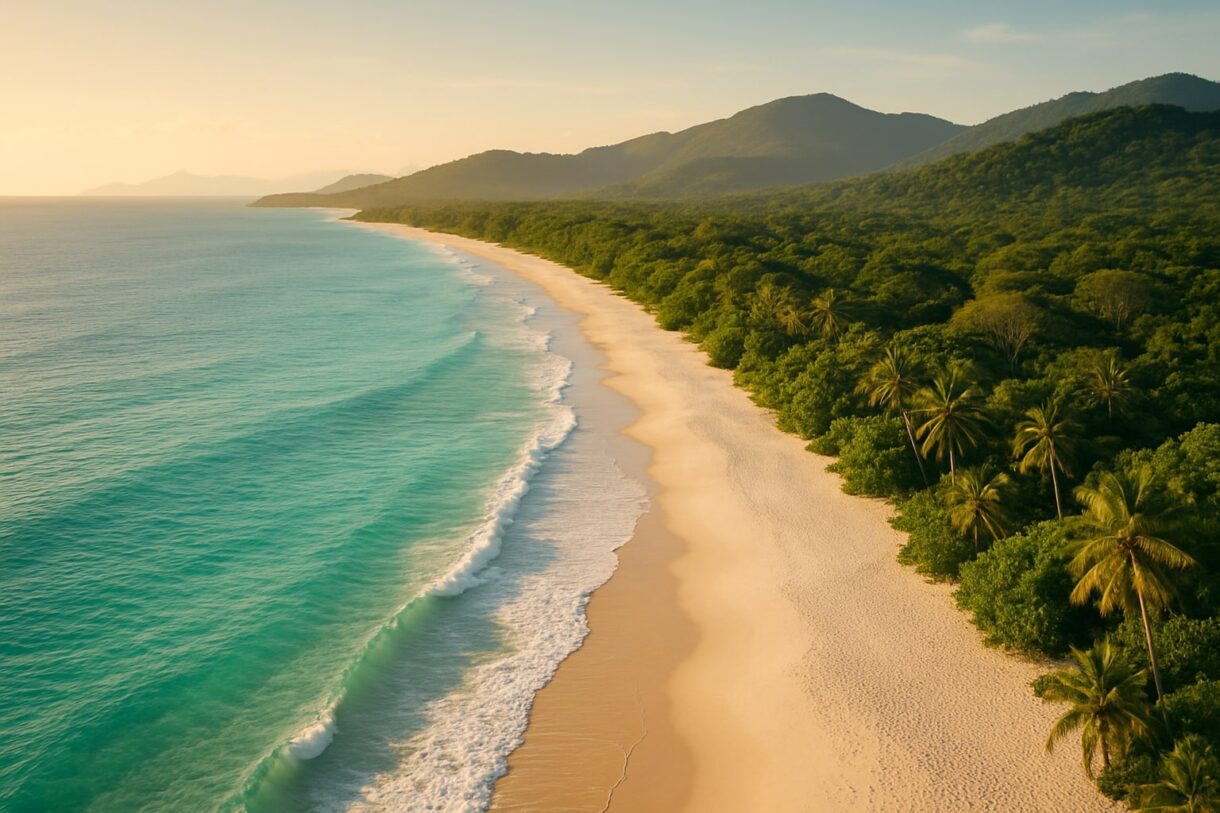
Brazil has more than 7,400 kilometres of Atlantic coastline, and reducing it to Copacabana and Ipanema is like summing up Spain as Barceloneta. Between the northeast of Bahia, the volcanic archipelago of Fernando de Noronha and the Fluminense Green Coast there are three very different ways of understanding the beach: the party with acarajé in the background, marine biology that almost nips your ankle, and Atlantic forest islands two hours from Rio.
This guide is for those who travel slowly, want to understand why a beach charges an entry fee, when it really rains and which fish to order in each place. There are no all-inclusive resorts or zip lines here: there is sand, currents and a bit of context.
Why Brazil remains a beach reference in 2026
Three concrete reasons. The first is geographic diversity: semi-arid dunes in the northeast, coral reefs in Alagoas and Pernambuco, and Atlantic forest coves in the southeast. The second is environmental regulation: national parks such as Fernando de Noronha limit the number of daily visitors and charge ecological fees, a practice that in 2026 has spread to more areas. The third is price: with the real relatively weak against the euro, the country remains affordable for European travellers, although domestic flights have risen.
It is also worth saying the uncomfortable part: overcrowding in Jericoacoara or Morro de São Paulo during high season is real, and safety in Salvador or Rio calls for common sense. It is not Switzerland, nor is it what the alarmist headlines describe.
Beaches of Bahia: Afro-Brazilian culture and warm Atlantic
Bahia is the state where beach tourism blends with African heritage. You can eat moqueca de peixe (fish stewed with coconut milk and dendê palm oil), drink coconut water at the sand’s edge and hear samba de roda at any beach kiosk with plastic tables.
Praia do Forte and the Costa dos Coqueiros
About 80 km north of Salvador, Praia do Forte is the gateway to the Costa dos Coqueiros. The village revolved in the nineties around the Projeto Tamar, a sea turtle conservation centre that is still operating and whose visit costs around 40–50 reais per adult (check opening hours before going, as they change with the nesting season). The beach has natural rock pools at low tide and a 16th-century colonial castle, the Castelo Garcia D’Ávila, ten minutes’ walk away.
Morro de São Paulo and Ilha de Boipeba
Morro de São Paulo, on Tinharé island, has become an almost mandatory stop for European backpackers. It is fine, but if you seek quiet, cross over to Boipeba: same archipelago, no cars, with beaches such as Moreré where natural pools form over corals at low tide. Access from Salvador combines catamaran and boat (about 3–4 hours in total, roughly 200–280 reais depending on the route).
Trancoso and Caraíva, southern Bahia
Heading down towards Porto Seguro, Trancoso keeps its Quadrado, the colonial square with a Jesuit church from 1586 and colourful houses that now hold expensive restaurants. Caraíva, by contrast, still has no asphalt or cash machines: you reach it by canoe across the river of the same name, and the beach stretches as far as the Pataxó Indigenous village of Barra Velha. It is Bahian contrast in twenty kilometres.
Fernando de Noronha: the archipelago with a daily quota
Fernando de Noronha is 21 volcanic islands about 350 km off the coast of Pernambuco. It has been a UNESCO World Heritage Site since 2001 and operates with two mandatory fees: the Taxa de Preservação Ambiental (TPA), paid per day of stay and rising progressively (one week costs around 700–900 reais), and the entry to the Parque Nacional Marinho, valid for ten days, around 200 reais for Brazilians and double for foreigners. Both can be paid online before the flight.
Baía do Sancho and Baía dos Porcos
Baía do Sancho regularly appears in TripAdvisor’s Travellers’ Choice rankings as one of the best-rated beaches in the world, and the descent by a metal staircase wedged between rocks is part of the experience. Baía dos Porcos, next door, has the island’s best snorkelling: green turtles, parrotfish and, with luck, harmless reef sharks.
Praia do Leão and snorkelling in the Atlantic
Praia do Leão is a turtle nesting area between January and June; during those dates some stretches are roped off. The water stays around 26–28 °C all year. Bringing biodegradable sunscreen is not marketing: the conventional kind is banned inside the park.
Green Coast: Ilha Grande, Paraty and the Fluminense bays
Between Rio de Janeiro and São Paulo, the Green Coast owes its name to the Atlantic forest that runs down to the sea. It is the Brazil of calm bays, a good base if you combine it with the Carioca capital; for the urban side, this guide to safe neighbourhoods and Carioca customs covers the city part.
Ilha Grande: Lopes Mendes and Dois Rios
Ilha Grande was a penal colony until 1994; today there are no cars and no reliable cash machines (bring cash). Lopes Mendes is a two-kilometre beach reached only on foot (about two hours’ trekking from Vila do Abraão) or by boat plus a walk. Dois Rios, on the other side, preserves the ruins of the old penal colony.
Paraty and its bay beaches
Paraty combines a cobbled colonial historic centre (17th–18th centuries, a UNESCO World Heritage city since 2019) with schooner trips around its bay of more than 60 islands. Praia do Sono is reached with a good hour’s walk from Laranjeiras; Trindade has the Piscina do Cachadaço, a natural pool of clear water.
How to organise the visit
| Region | Best time | How to get there | Approx. daily budget |
|---|---|---|---|
| Bahia | Sept–March (dry) | Flight to Salvador (SSA) | 250–500 BRL |
| Fernando de Noronha | Aug–December | Flight from Recife or Natal | 900–1,500 BRL |
| Green Coast | April–October | Bus Rio–Angra/Paraty | 300–600 BRL |
Recommended time: at least 4–5 days per region. Combining all three in under two weeks means too many domestic flights. The rainy season in the southeast runs from December to March; in the northeast, from April to July.
For comparison with other Latin American coastlines, this analysis of less crowded Caribbean beaches serves as a useful contrast.
What to bring back
A bottle of Bahian dendê oil if they let you cook moqueca, a Projeto Tamar t-shirt (the proceeds fund conservation) and the habit of ordering cold coconut water before you sit down, not after. If you have a spare day in Rio, go up Pão de Açúcar at sunset instead of Christ the Redeemer: there is less of a queue and the view includes both.
Frequently asked questions
How much does it cost to enter Fernando de Noronha in 2026? Between the TPA (calculated by days of stay) and the national park entry, one week costs around 900–1,100 reais per person for foreigners. Prices are updated every year; check the park’s official website before booking your flight.
Is it safe to travel to Bahia with children? Areas such as Praia do Forte, Trancoso or the islands of the Tinharé archipelago are calm, with calm-water beaches. In the city of Salvador, getting around Pelourinho by day is comfortable; at night, it is better to use a taxi or Uber.
What is the best time for the Green Coast? From April to October: less rain, temperatures of 22–28 °C and calm bay waters. July is national high season and raises accommodation prices in Paraty and Ilha Grande.
Can you snorkel in Noronha without experience? Yes, at beaches such as Praia do Cachorro or the natural pool of Atalaia (regulated access, daily quota). For Sancho or Porcos it is best to be a good swimmer: there is current and access to Sancho involves vertical stairs.
Do I need a visa for Brazil as a Spanish or Latin American citizen? Spanish citizens and those from most Latin American countries do not need a visa for tourist stays of up to 90 days. Brazil reactivated the electronic visa requirement for some countries in 2025; check your case with the consulate before travelling.
Places of Interest Leisure and Culture #Brasil #Costa #destinos #Guía de viaje #playas #turismo

 Don't get fooled: plan your trip well and avoid these scams on your holidays
 Central Macedonia, the destination Spaniards have discovered to fall in love with Greece
 Summer in Brussels: flowers, festivals and typical gastronomy
Comentarios cerrados