Best beaches in the Philippines in 2026: Palawan, Siargao and the Batanes Islands
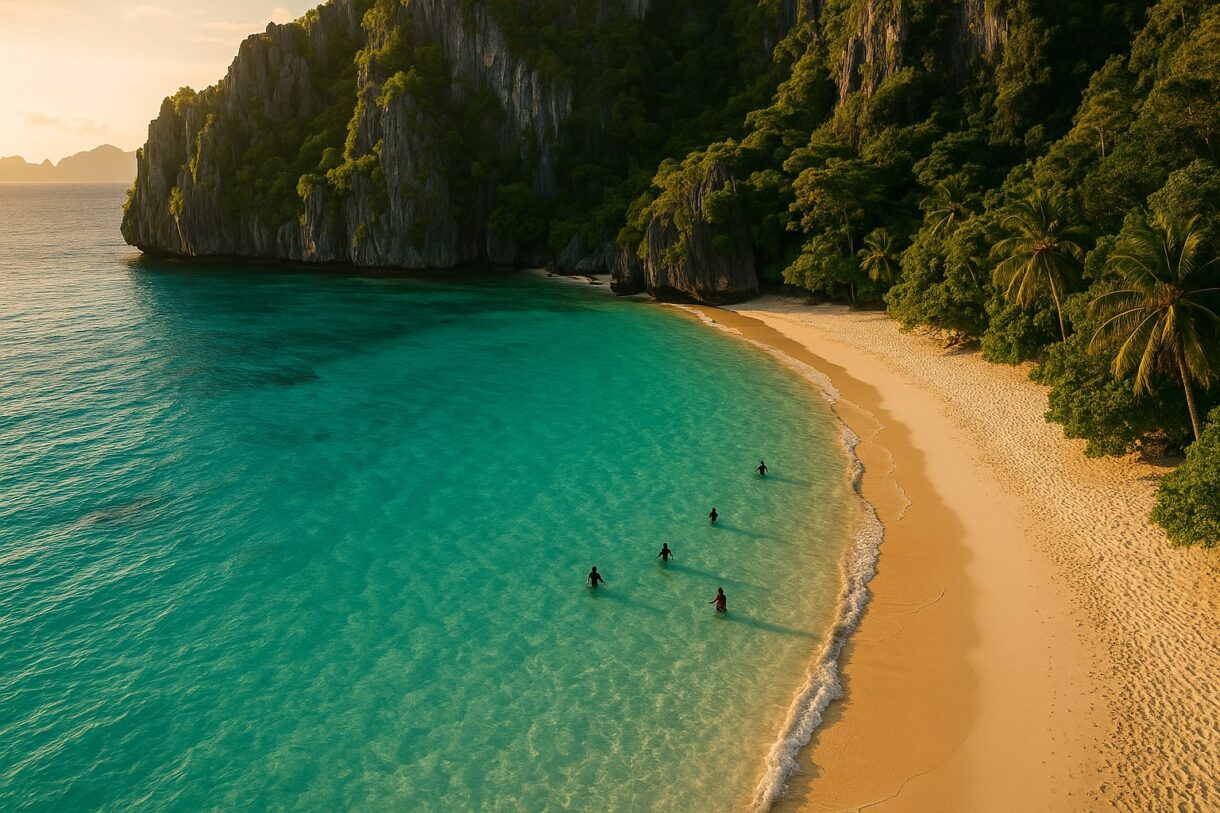
The Philippines has more than 7,600 islands, and almost any of them will let you dip your toes in the water. But if your time is limited —and it usually is, since getting there from Spain takes at least 16 hours of flying with a connection— it’s worth choosing carefully. The postcard Palawan, with its turquoise lagoons between limestone walls, is not the same as the Siargao of surfers and coconut palms, or the Batanes, a wind-battered archipelago that looks more like Ireland than Southeast Asia.
This article is aimed at anyone who wants to travel around the Philippines in 2026 without falling into the wristband resort circuit. I’ll tell you what each area offers, when to go, how to get there and which dishes are worth ordering when you climb out of the outrigger boat to eat.
Why the Philippines remains a case apart in Southeast Asia
The Philippine archipelago is the only predominantly Catholic country in Asia, with 333 years of Spanish rule (1565–1898) and almost half a century under American administration. That mix explains a lot: the Castilian surnames, adobo on the menus, pandesal in the bakeries and a functional English spoken almost everywhere. For the Spanish-speaking traveler it is an obvious advantage over Thailand or Vietnam.
Geographically, the country is divided into three large blocks —Luzon in the north, the Visayas in the centre and Mindanao in the south— and the most interesting beaches are spread across all three. The general dry season runs from December to May, but each region has its own microclimate, and that conditions any planning.
Palawan: karsts, lagoons and the El Nido problem
Palawan is the long, narrow island in the west, the one that has topped every ranking for a decade. The landscape is real: vertical limestone walls dropping into the sea, interior lagoons only reachable by swimming through crevices, fine white sand.
El Nido: what to expect and what not to expect
El Nido, at the northern tip, is the classic base. Excursions are organised as numbered tours (A, B, C and D), each with a fixed itinerary of beaches and lagoons. Tour A includes the Big Lagoon and the Small Lagoon; C takes you to Matinloc Shrine and Secret Beach. They cost around 1,400–1,800 Philippine pesos per person (about €22–30), lunch included, and you have to add the eco-fee.
Warning: El Nido in high season (January–March) is saturated. The Big Lagoon is navigated in a queue, with dozens of kayaks at once. If you go, get up early and book small local operators rather than hotel packages.
Coron and the Calamian Islands
Further north, in the Calamians, Coron is different: less beach, more diving. Here eleven Japanese ships from the Second World War lie sunk, now coral-covered wrecks. Kayangan Lake, with fresh water sitting on salt water, has a separate entrance fee (around 300 pesos).
San Vicente and Port Barton
If you want Palawan without the crowds of El Nido, look at Port Barton and San Vicente. Port Barton is a sleepy village where electricity in some guesthouses is limited to certain hours; San Vicente boasts Long Beach, 14 km of continuous sand, practically empty. Access is more complicated —it’s three to five hours by van from Puerto Princesa— and that’s why these places keep their own pace.
Siargao: the surf island that is no longer a secret
Siargao, shaped like a teardrop, lies off the northern coast of Mindanao. It became famous for Cloud 9, a powerful, hollow right-hand wave breaking over a shallow reef, which has hosted international championships since the nineties. But Siargao is more than Cloud 9.
Cloud 9 and alternatives for beginners
Cloud 9 is for experienced surfers. To get started, locals take you to Jacking Horse and Quiksilver, gentler waves near General Luna. A two-hour lesson with a board included costs around 1,500–2,000 pesos. The best wave season runs from September to November; from March to June the sea is calmer and is used for island hopping.
Naked Island, Daku and Guyam
The classic excursion trio is three small islands to the east: Naked Island (a sandbank with nothing on it, literally), Daku (large, with coconut palms and food) and Guyam (the smallest, coral everywhere). Approximate price for the full tour: 2,000–2,500 pesos per shared boat, with grilled seafood at midday. The tuna kinilaw —the Filipino ceviche, with coconut milk and cane vinegar— is eaten here like nowhere else.
Sugba Lagoon and the interior
In the interior, Sugba Lagoon is a mangrove lagoon with a jumping platform. Combine it with the Magpupungko caves, natural rock pools that only appear at low tide. Check local tide tables before going; without low water there is no pool.
Batanes Islands: the north that doesn’t look like the Philippines
The Batanes are ten volcanic islands north of Luzon, closer to Taiwan than to Manila. This is home to the Ivatan people, who live in stone houses with thatched roofs designed to withstand typhoons. The landscape —green pastures on cliffs, loose livestock, solitary lighthouses— shatters any prior image of the country.
Batan, Sabtang and Itbayat
Batan is the main island, with Basco as its capital. In a day by bicycle or motorbike you can see the Naidi lighthouse, the Vayang hills and Marlboro Country (a grassland above the Pacific). Sabtang is visited by ferry from Ivana; there are the villages of Chavayan and Savidug, with the best-preserved traditional houses. Itbayat, the northernmost, doesn’t always have a ferry: if the sea is rough, you stay put.
Beaches and coves: Morong, Nakabuang
The beaches of Batanes are not for long swims: the water is cold by tropical standards and there are currents. Nakabuang Beach, on Sabtang, has an iconic stone arch. Morong, more accessible from Basco, works well for a short dip and a photo. You go for the scenery, not for lying in the sun.
Eating in Batanes: uvud, coconut crab and turmeric rice
Uvud are meatballs made of saba banana and pork; coconut crab is a protected land crab (it is only hunted in season, so check before ordering); yellow turmeric rice accompanies almost everything. Eat at family eateries in Basco such as Casa Napoli or Pension Ivatan; the menus change depending on what the boat caught.
How to organise the visit: routes, seasons and budget
Choosing two of the three areas is reasonable in two or three weeks. Combining Palawan with Siargao is the most common option; adding Batanes requires time and favourable weather.
| Area | Best season | Domestic flight from Manila | Recommended days |
|---|---|---|---|
| Palawan (El Nido/Coron) | Dec–May | 1h 15min to Puerto Princesa or Busuanga | 5–7 |
| Siargao | Mar–Jun (calm) / Sep–Nov (surf) | 2h 30min to Sayak (IAO) | 4–6 |
| Batanes | Mar–Jun | 1h 40min to Basco | 3–5 |
Approximate daily budget, excluding domestic flights: €50–90 per person at a mid-range level (guesthouse, local food, one tour a day). It easily rises to €150 if you choose high-end hotels or private tours.
If you are travelling around Southeast Asia and comparing coastlines, you might be interested in how to plan a route through the best beaches in Vietnam in 2026, with Con Dao and Phu Quoc or the approach to the beaches of Thailand beyond Phuket.
What to take away from there: a dish and a gesture
Before going home, order a well-made kinilaw at a beach stall: fresh fish, calamansi, ginger, onion and chilli. It is cleaner than a Peruvian ceviche and more Filipino than adobo. And learn two words: salamat (thank you) and tabi tabi po (excuse me, when passing through sacred places or fields). In rural areas, especially in Batanes, it is appreciated.
Frequently asked questions
What is the best time to visit the Philippines?
In general, December to May for less rain. For surfing in Siargao, September–November. Batanes only makes sense from March to June: outside that window the inter-island ferries are often cancelled.
Palawan or Siargao if I can only choose one?
Palawan if you’re looking for spectacular scenery and navigating between islets; Siargao if you’re interested in surfing, a young atmosphere and an island you can cross entirely by motorbike. Palawan has more visual impact; Siargao is more enjoyable day to day.
How much does a domestic flight in the Philippines cost?
Routes with Cebu Pacific, Philippine Airlines or AirAsia cost between €40 and €120 depending on how far ahead you book and the season. Book with plenty of margin: in January and Holy Week prices rise sharply.
Can I go with children?
Palawan and Siargao yes, with precautions: strong sun, outrigger boats without railings and long road journeys. Batanes is more demanding because of changeable weather and limited access to medical services.
Do Spanish citizens need a visa?
Spanish citizens do not need a visa for tourist stays of up to 30 days. Check the consulate’s website before travelling, as the conditions have been updated several times since 2023.
Places of Interest Leisure and Culture #destinos #Filipinas #Guía de viaje #islas #playas
 Don't get fooled: plan your trip well and avoid these scams on your holidays
 Central Macedonia, the destination Spaniards have discovered to fall in love with Greece
 Summer in Brussels: flowers, festivals and typical gastronomy
Comentarios cerrados