Waterloo and the battle that brought about the fall of Napoleon
There are historical events that mark forever and definitively the history of a region or a city, and that is precisely what happened to Waterloo. On the outskirts of this city in the Walloon region, the so-called Battle of Waterloo took place, a battle that ended in a crushing defeat for Napoleon Bonaparte’s army and that would lead to the fall of the great French emperor. There, Napoleon would exchange his Arc de Triomphe for the humiliation of defeat.
Waterloo is a city remembered worldwide for this historical event, and as is obviously the case, it makes the most of it from a tourist point of view. Thus, visiting this city, which is quite easy to reach as it is less than 25 kilometres from Brussels, means remembering this battle that changed the course of European history.
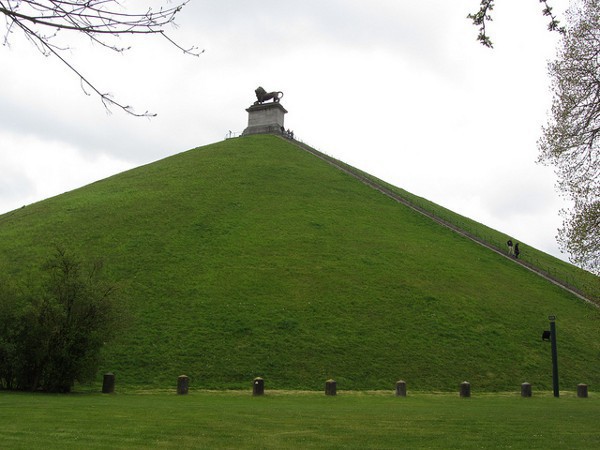
The central point of the Battle of Waterloo, where the armies of Wellington and Napoleon met, is the Lion’s Mound, which you can see in the picture, and which is about 5 kilometres from the city. A bronze lion statue stands on top of this hill, which does not reach 40 metres in height, and which can be climbed by a staircase of more than 300 steps.
Back in the city, you can visit the Wellington Museum and the Napoleon Museum, located in the houses where both generals set up their headquarters. Another place not to be missed is the Wax Museum, where the usual famous figures found in this type of museum make way for statues of the generals, adversaries and important figures of that era.
If there is a date to visit Waterloo, it is mid-June. Every year around that time the anniversary of the great battle, which took place on 18 June 1815, is commemorated with a large and extensive historical reenactment. You should arrive very early to get a good spot on the Lion’s Mound and enjoy from there the best viewpoint of this event.
More information | Commune de Waterloo
Photo | Flickr – Andrew and Annemarie