Zahara de la Sierra and its emerald reservoir: what to do when Grazalema fills up
When the village of Grazalema becomes saturated with visitors, Zahara de la Sierra offers a castle, an emerald-coloured reservoir and hiking trails with far fewer crowds. A practical guide with prices, opening hours and how to get around the natural park.
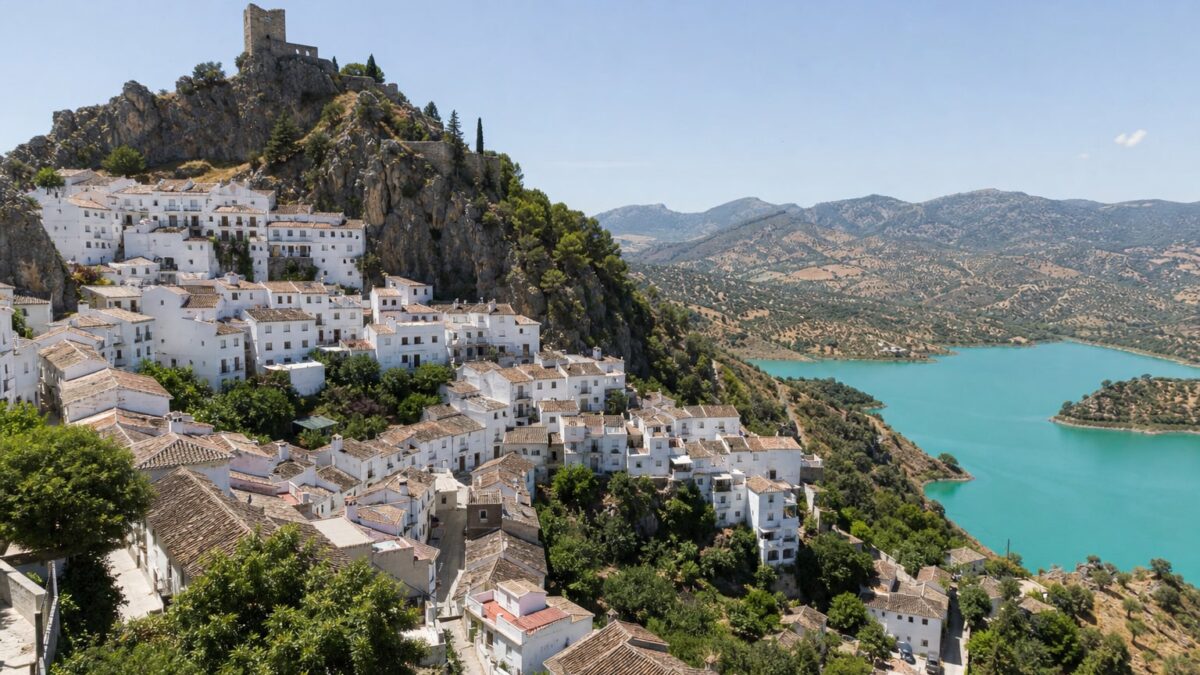
If you arrive in Grazalema on a Saturday in July and find no parking space or free table at any bar on the Plaza de España, the alternative is not far away: Zahara de la Sierra, less than 25 minutes by car along the Puerto de las Palomas road, has a castle, a reservoir and its own hiking trails, and it receives considerably less tourist pressure than its more photographed neighbour.
The short answer is this: climb to the castle at dawn or dusk, head down to the reservoir mid-morning for kayaking or paddle surfing, eat something with views over the water and, if you have time left, walk up to the Plaza del Rey viewpoint. Everything fits into one day, although if you want to add a hiking route through the Garganta Verde it is worth staying overnight.
Why Zahara matters more than it seems on the map
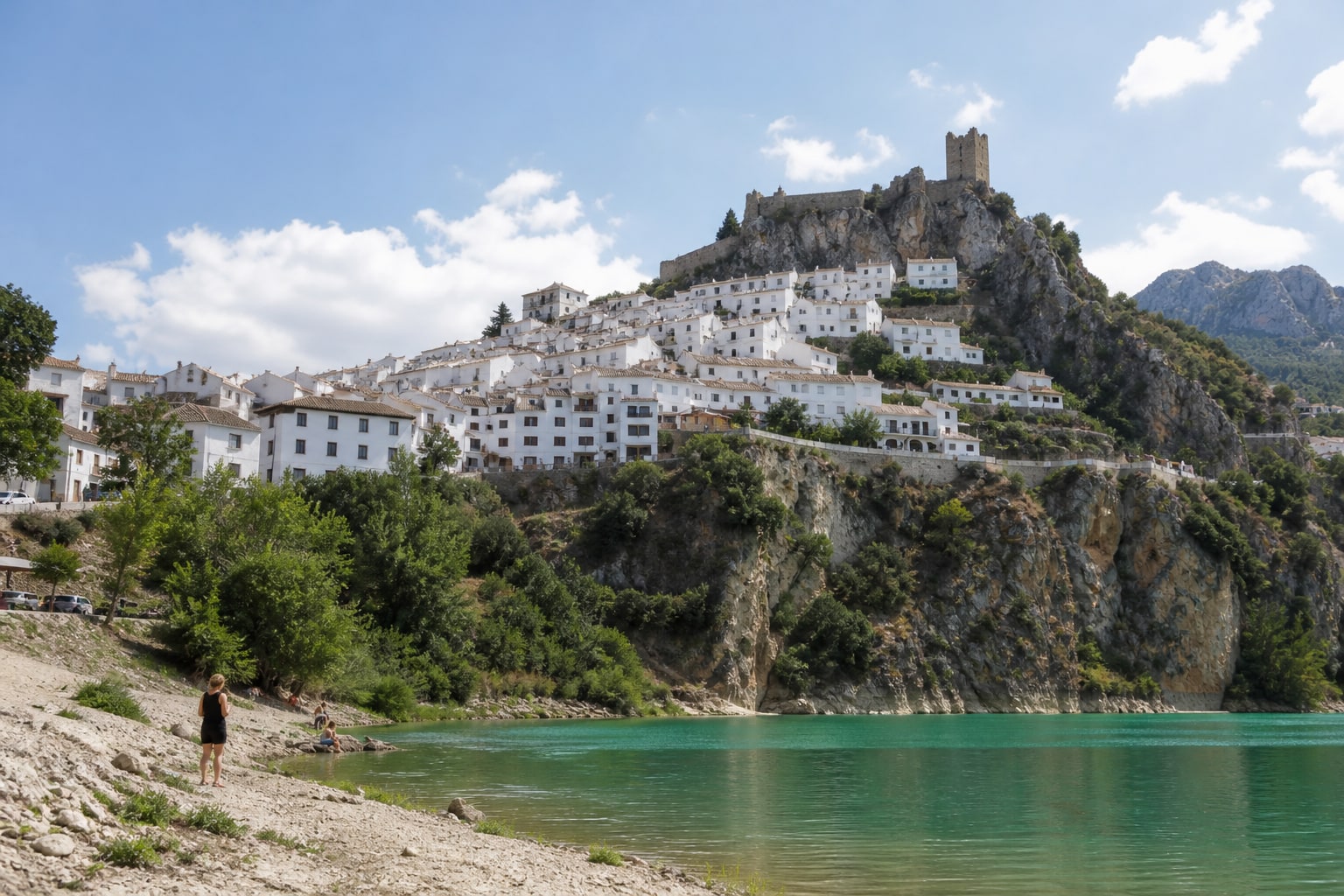
Zahara de la Sierra clings to a limestone crag at 511 metres above sea level, crowned by a Nasrid-origin keep. Its fall to the troops of Abu al-Hasan Ali in 1481 was the trigger that ignited the War of Granada; two years later, Rodrigo Ponce de León, Marquis of Cádiz, retook it for the Castilian crown. That keep, with the flag flying above the reservoir, remains the image the village is identified with in any leaflet from the Diputación de Cádiz.
The town council has held the title of Historic-Artistic Ensemble since 1983, and every year, on Corpus Christi, the streets are covered with rushes and the façades are decorated with flowers and bedspreads: it is one of the most photographed festivals in the Sierra de Cádiz, declared of Tourist Interest in Andalusia. If your visit coincides with those dates (which move, falling between late May and mid-June), the village fills up almost as much as Grazalema, so it is best to plan with some margin.
The emerald reservoir: where that colour comes from and when it fills
The Zahara-El Gastor reservoir, built in 1991 on the Guadalete river, has a capacity of roughly 57 cubic hectometres. The emerald-green tone seen from the viewpoint on the A-2300 road is not an Instagram filter: it is due to the dissolution of carbonates from the surrounding limestone and to the depth of the water, which reflects light differently from reservoirs over slate or granite.
The level varies according to the hydrological year. After a rainy winter (November to March), the reservoir is usually close to its maximum level between April and July, which is when the colour is most intense and there is more navigable surface. In drought years, as has happened in parts of southern Spain over the past decade, the level can drop markedly by late summer, leaving a band of cracked earth visible from the village. It is advisable to check the reservoir’s status on the website of the Guadalquivir Hydrographic Confederation before planning water activities if you travel outside spring.
Summary table: what to do in Zahara depending on available time
| Time available | Recommended plan | Approximate cost |
|---|---|---|
| 2-3 hours | Castle + Plaza del Rey viewpoint + stroll around the old town | Castle entry free, parking €2-4/day |
| Half a day | Castle + kayak or paddle surf on the reservoir | €10-15 per hour per person (rental) |
| A full day | Castle + reservoir + lunch with views + sunset viewpoint | €30-50 per person, lunch included |
| Two days | All of the above + hiking route (Garganta Verde or Salto del Cabrero) + night in the village | From €70 per person with simple accommodation |
The castle: opening hours, access and what to see up top
The climb to the castle starts from Calle San Juan, with stone steps that become somewhat demanding in the heat. The keep can be visited and access is usually free of charge, although the town council changes opening hours according to the time of year: in summer it is best to go up first thing in the morning or after 19:00, because the crag offers no shade and the sun beats down fully. Check updated hours at the municipal tourist office before going, especially if you travel in low season.
From the top you can see the entire reservoir, the village of Algodonales in the distance and, on clear days, much of the Sierra de Grazalema as far as the Peñón Grande. There are no railings along every stretch, so if you go with small children it is advisable to hold their hands over the final metres.
Water activities on the reservoir
At the tail end of the reservoir, near the old mill, several local companies rent kayaks, paddle boards and, in some cases, organise guided canoe routes lasting one or two hours. Prices are around €10-15 per hour per person, with discounts if you book a half day. Swimming is not officially regulated on every shore, so ask at the rental point about permitted areas before getting into the water.
The best time window for water activities is 10:00 to 13:00: after that, the sun heats the stone surface of the improvised jetties too much and more visitors arrive from Grazalema or Arcos de la Frontera looking for an alternative to the heat.
Hiking routes near Zahara: Garganta Verde and more
The best-known route in the area, the Garganta Verde, actually runs through the municipal area of Zahara–Grazalema, about 10 minutes by car from Zahara. It is a canyon with walls over 100 metres high where a colony of griffon vultures nests, and it requires prior free authorisation from the Red de Espacios Naturales de Andalucía because it forms part of a protected area of the Sierra de Grazalema Natural Park. Access must be requested in advance (check the current procedure on the Junta de Andalucía website) and the daily capacity is limited, which explains why it is usually less crowded than the viewpoints in the village of Grazalema.
Another less well-known option is the Salto del Cabrero, between Zahara and Algodonales, a medium-difficulty circular route that requires no permit and crosses a limestone gorge with views over the valley. If you already know the villages of the Alpujarra or the Aragonese Pyrenees, the landscape here is drier and Mediterranean, with holm oaks and low scrub instead of dense forest.
When to go: season, weather and crowds
Spring (April–June) is the best time: the reservoir is full, temperatures hover around 20–28 °C and the countryside is green. Summer brings dry heat that can exceed 38 °C in August, and although the reservoir remains an attraction, the village receives considerably more people at weekends. Autumn (September–October) combines still-abundant water with fewer visitors. Winter is quiet but cold, with frequent fog on the crag, and the reservoir level may be low if it has not rained.
Common traveller mistakes
The most common is arriving in Zahara without booking accommodation in high season: the village has few hotel beds and they fill quickly during long weekends and Holy Week. Another mistake is climbing to the castle at midday in summer without water or a hat. It is also common to underestimate the driving time on the Puerto de las Palomas, a winding mountain road which, although short in distance, takes more minutes than the GPS suggests because of its tight bends.
How to get there and get around
Zahara de la Sierra is about 100–110 km from Cádiz city and Seville, and about 30–35 km from Ronda, always by mountain roads (A-374 and A-2300). There is no nearby rail service; the inter-urban bus connects with Algodonales and Ronda, but with limited frequencies, so a private or rental car is the most practical option. Within the village, everything is covered on foot: the old town is small and the steep streets do not admit vehicle traffic in several stretches.
Who Zahara suits and who it doesn’t
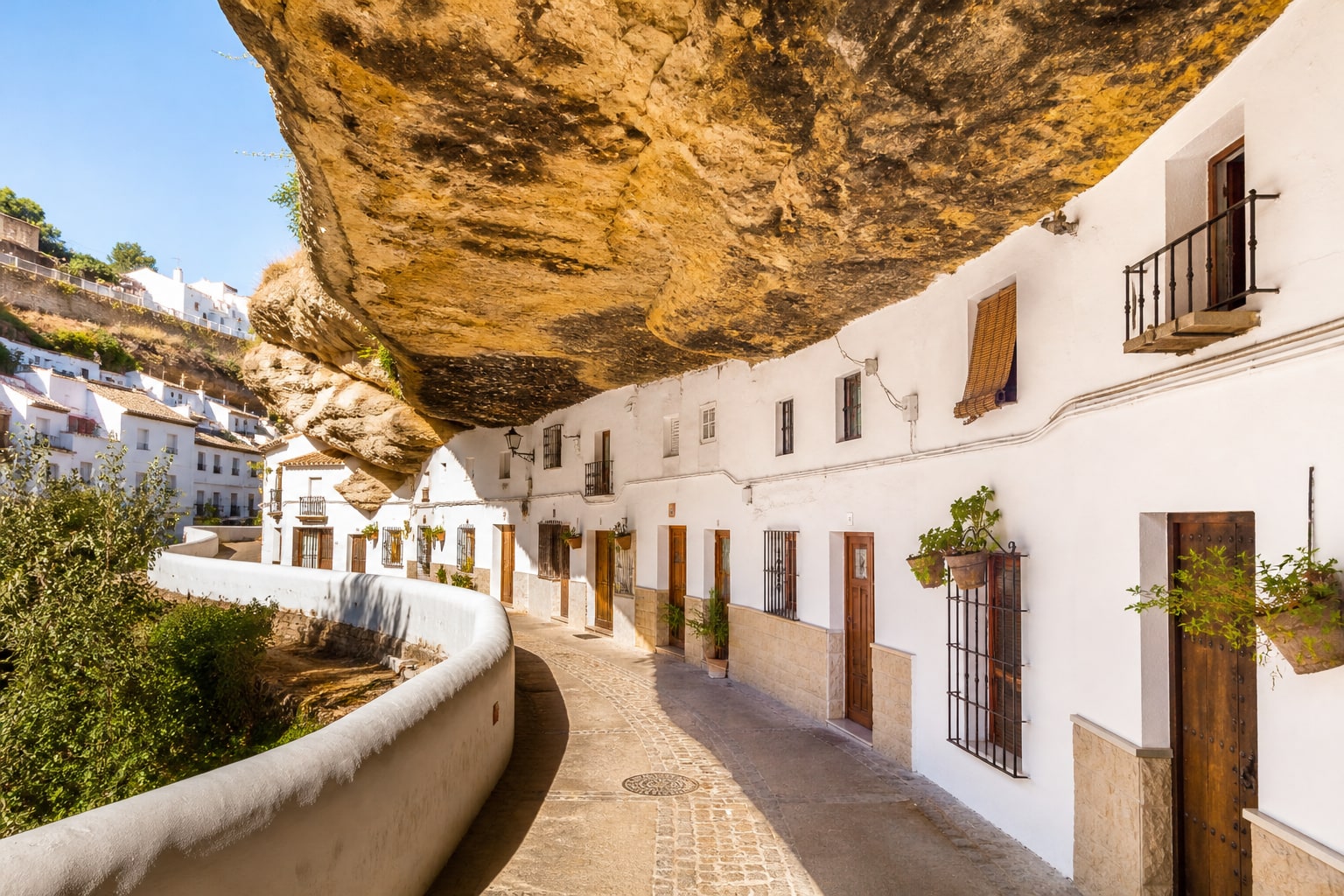
If you are looking for a white village with fewer tour buses than Grazalema or Ronda, Zahara suits you well, as does a wish to combine history (the castle), landscape (the reservoir) and some moderate physical activity. It is not the right destination if you seek nightlife, a wide gastronomic offer or full accessibility for people with reduced mobility, because the village’s slopes are steep. For those who already know Setenil de las Bodegas, Zahara offers an interesting contrast: less rock over the houses, more water and more altitude.
Safety and health
Zahara presents no notable risks beyond those inherent to the terrain: suitable footwear for the castle slopes, sun protection in summer and caution on the Puerto de las Palomas road, especially at night or in fog. No significant scams have been reported; the area lives off rural tourism and dealings with visitors tend to be direct.
FAQ about Zahara de la Sierra and its reservoir
How much does it cost to visit the castle of Zahara de la Sierra? Access is usually free, although opening hours change with the season. It is advisable to confirm them at the municipal tourist office before climbing.
Can you swim in the Zahara reservoir? On some shores yes, although it is not officially regulated across the whole perimeter. Ask at the kayak rental points about the usual bathing areas.
When is the best time to see the reservoir in its most intense emerald colour? Between April and July, when the water level is usually highest after the winter and spring rains.
Do I need a permit to do the Garganta Verde route? Yes, it requires free prior authorisation because it is a protected area of the Sierra de Grazalema Natural Park, with a limited daily capacity.
Is Zahara de la Sierra a real alternative to Grazalema? Yes, especially at weekends and during long weekends, when Grazalema concentrates more visitors. Zahara offers a castle, a reservoir and its own routes 20–25 minutes away by car.
If you only have one day in the Sierra de Grazalema and Grazalema is overrun, go up to the Zahara castle first thing, head down to row on the reservoir before the heat sets in, and leave the sunset for the Plaza del Rey viewpoint: it is the itinerary that makes the best use of the few hours of daylight without fighting for parking.
0 comments · Comment