Warsaw and Kraków: why the capital doesn't always win
Warsaw and Kraków cater to very different trips: one is the capital rebuilt after the war, the other preserves the most complete medieval old town in Poland. We tell you which one suits what you're looking for.
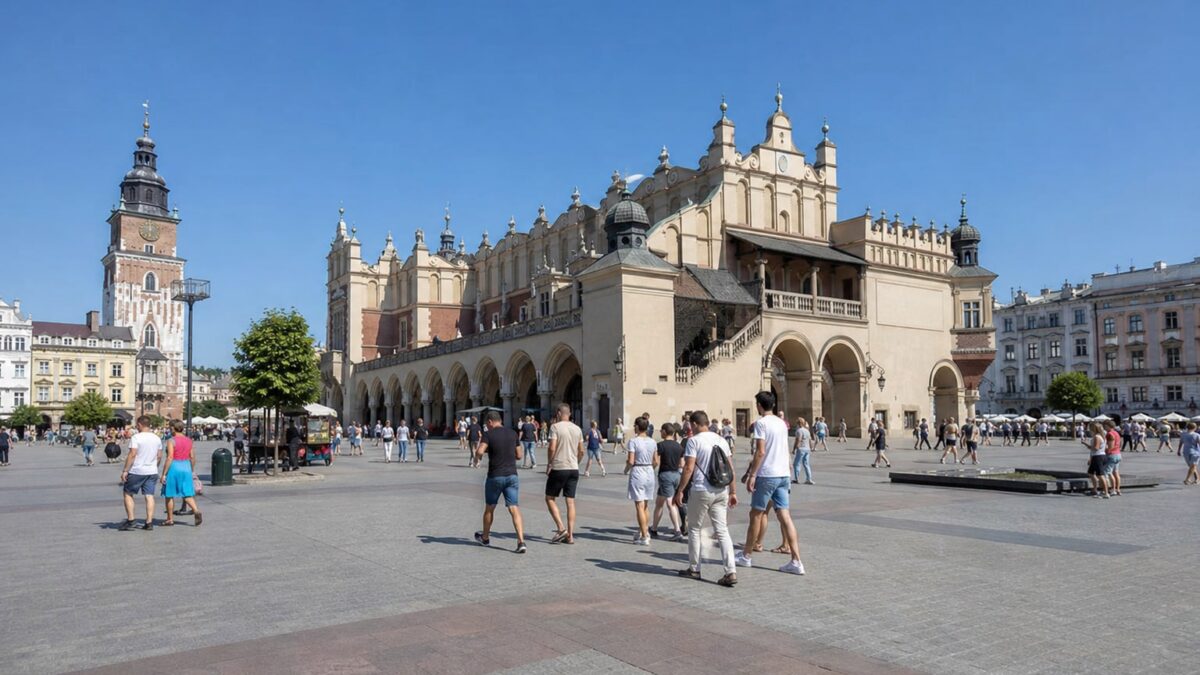
If you have to choose a single Polish city for a first trip, the short answer is: Kraków, unless what you’re after is contemporary urban life, museums of recent history, or a business trip combined with sightseeing. Kraków wins on historic centre, cultural density and value for money for the traveller visiting Poland for the first time. Warsaw wins if you’re interested in twentieth-century Poland, the reconstruction after 1944, or you want a city with more nightlife and a modern food scene.
This is not a war between cities, but two different experiences that are often confused because they share a country and a currency. If you have four or five days, the logical choice is to combine them with a fast train between the two. If you only have two or three, it’s better to choose one and do it well than to split the time halfway.
Two cities, two stories of Poland
Kraków was the capital of the Kingdom of Poland until 1596 and retains that symbolic status even though it lost the political one. Warsaw replaced it as capital and paid a terrible price: the Warsaw Uprising of 1944 and the subsequent German repression left about 85% of the city in ruins. What you see today in Warsaw’s Stare Miasto is a meticulous postwar reconstruction, so faithful that UNESCO declared it a World Heritage Site precisely for the value of that process, not for the authenticity of the materials. Kraków, by contrast, barely suffered structural damage during the Second World War, so its historic centre is entirely original, with buildings ranging from Gothic to Baroque without any postwar interruption.
Kraków: the old town that survived the war
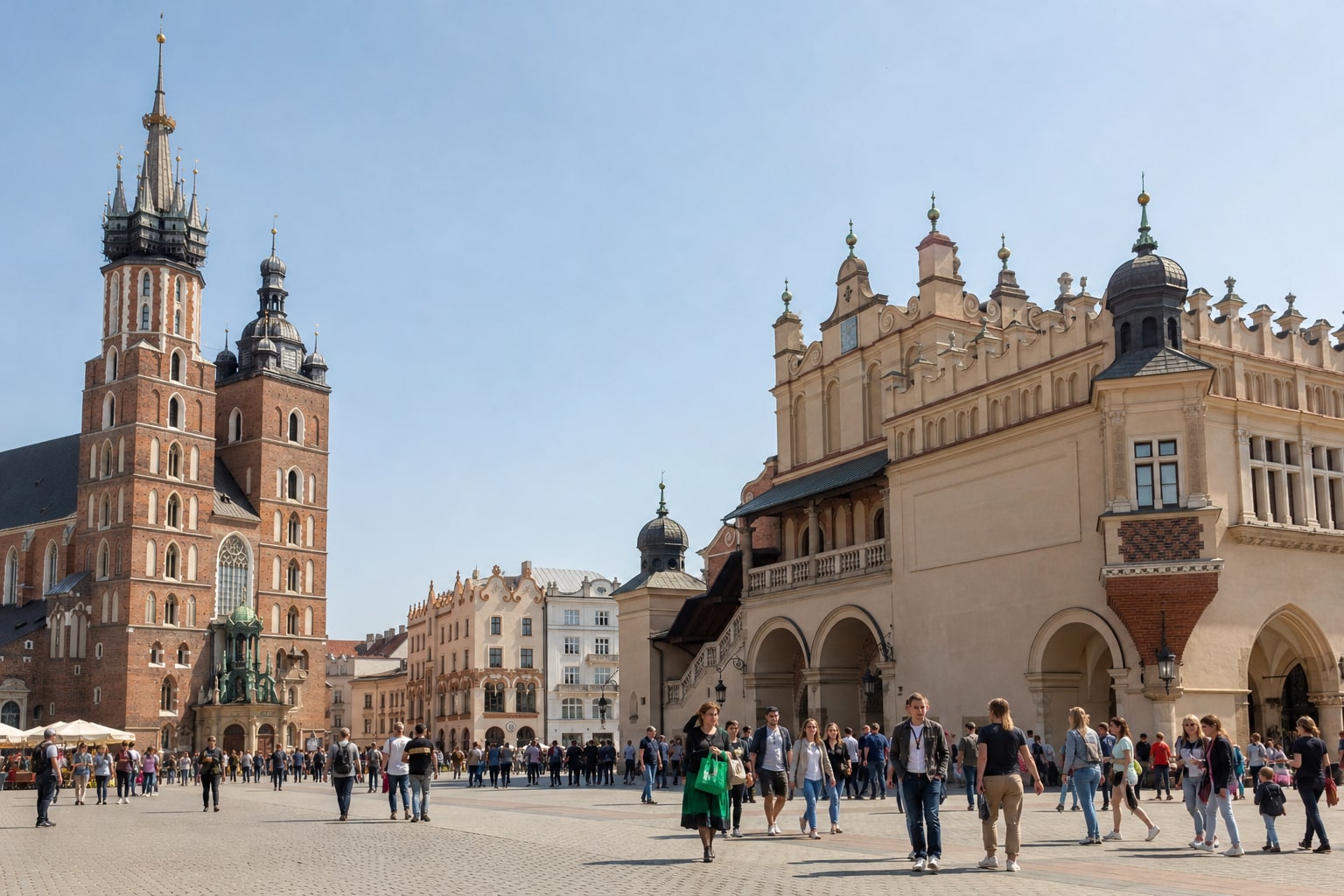
The Main Market Square (Rynek Główny), Kraków’s main square, is the largest medieval square in Europe and still serves the function it always had: market, meeting point, and stage for the trumpeter who plays the hejnał every hour from the tower of St. Mary’s Church. The Basilica of St. Mary (Kościół Mariacki) houses the Gothic altarpiece by Wit Stwosz, and it can be visited for around 15-20 zlotys (approx. €3.5-4.5, 2025 figure, check before you go).
Heading towards the river is the Wawel Castle, seat of the Polish kings for centuries, with its cathedral, royal crypt and the legend of the dragon that breathes fire beside the Vistula. And south of the centre, the district of Kazimierz was the Jewish heart of Kraków until 1941: today synagogues, alternative bars and the Plac Nowy market coexist there, famous for the zapiekanka, a kind of open pizza on baguette sold at night stalls since the 1980s.
Warsaw: the city rebuilt stone by stone
Warsaw’s Stare Miasto, with its market square and colourful façades, is in fact the work of architects and craftsmen of the 1950s who worked from paintings by Canaletto of the eighteenth century. The result is convincing, but it’s worth knowing before you step into it: you are walking through a reconstruction, not original stone.
What sets Warsaw apart is what came after that reconstruction. The Warsaw Rising Museum (Muzeum Powstania Warszawskiego) is an almost mandatory visit to understand twentieth-century Poland, with admission of around 25 zlotys (approx. €6). The Palace of Culture and Science, Stalin’s gift to Poland in 1955, divides aesthetic opinion but offers the best viewpoint over the city for around 30 zlotys. And the Łazienki Park, with its palace over the water and free Chopin concerts on Sundays from May to September, is the green counterpoint to so much postwar concrete.
Kraków or Warsaw: comparison by criteria
| Criterion | Kraków | Warsaw |
|---|---|---|
| Historic centre | Original, medieval, UNESCO since 1978 | Rebuilt after 1944, UNESCO for the value of the process |
| Atmosphere | Compact, touristy, university-town | Metropolitan, more spread out |
| Daily budget (excluding accommodation) | Approx. €35-50 | Approx. €45-65 |
| Nightlife | Bars in medieval cellars, Kazimierz | More modern scene, Praga (the district) |
| Best for | First visit, history, photography | Twentieth-century history, business, city break |
| Connection to Auschwitz | 1h-1h20 by bus or train | Not direct, requires combining with Kraków |
Food: pierogi, bigos and the difference between eating in one or the other
The dish you’ll eat in both cities is the pierogi (dumplings filled with potato and cheese, meat or fruit), but in Kraków the stalls at Plac Nowy and restaurants like Pierogi Mr Vincent, in Kazimierz, make it almost a trademark of the district. In Warsaw the reference dish is bigos, a stew of fermented cabbage with varied meats, cooked slowly for hours and better the next day, typical of the cold months.
If you go to Kraków, don’t leave without trying the obwarzanek krakowski, a circular bread with seeds sold at street stalls from early morning, with a protected designation of origin since 2010. In Warsaw, the district of Praga (on the east bank of the Vistula, nothing to do with the Czech capital) concentrates the most interesting food offer of recent years, with venues converted from old vodka factories.
Prices, when to go and how to move between the two
Kraków is, in general, between 15% and 25% cheaper than Warsaw for accommodation and dining, according to 2025 data. A double room in Kraków’s historic centre costs around €60-90 in high season (May-September), while in Warsaw that same category rises to €75-110.
The fast PKP Intercity train connects both cities in 2h15-2h45, with tickets from around €15-25 if bought in advance on PKP’s official website. The best time to visit either is May-June or September: you avoid the humid heat of July-August and the subzero temperatures of winter, although Kraków in December with the Christmas markets on the Rynek has its own appeal.
The most common mistake travellers make is spending the same number of days in both cities without knowing what to look for in each, or visiting Auschwitz-Birkenau as a day trip from Warsaw: the real distance makes it much more logical to do it from Kraków, which is 1h-1h20 away by bus or regional train.
As for safety, neither city poses notable risks for the traveller, beyond the usual pickpockets in very crowded areas such as the Main Market Square or the Warsaw metro at rush hour. The most common scam in Kraków is restaurant menus without visible prices near the main square: ask before you sit down.
Who each city suits
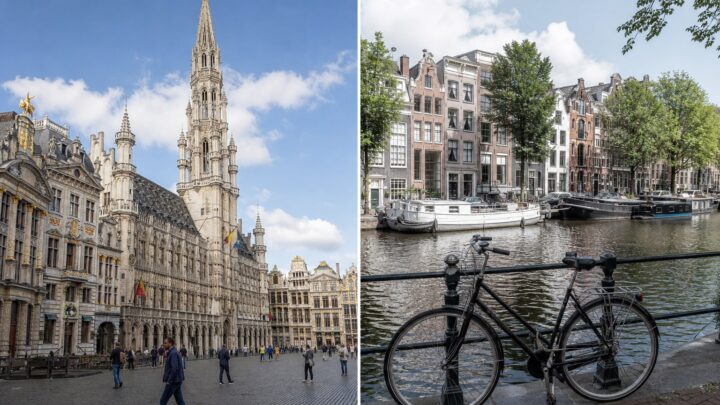
If you’re travelling to Poland for the first time and have few days, Kraków offers more heritage density per square metre and an experience that is easier to enjoy without exhaustive planning. If you’re interested in contemporary Poland, design, or combining tourism with a work meeting, Warsaw has better international air connections and a hotel offer geared more towards that profile. For couples seeking something evocative and photogenic, Kraków usually wins clearly; for solo travellers who want to mix with a city that lives for itself and not just for tourism, Warsaw has that edge. A similar comparison arises in other European city pairings, as when deciding between Brussels or Amsterdam for a long weekend: the most famous option doesn’t always win.
Frequently asked questions
Can you see Kraków and Warsaw on the same trip? Yes, with five or six days it’s feasible: three in Kraków (including Auschwitz) and two or three in Warsaw, connected by train in under three hours.
Which is cheaper, Warsaw or Kraków? Kraków, in general, between 15% and 25% cheaper in accommodation and dining according to 2025 data.
Do you need a visa to enter Poland? Not if you travel from Spain or the European Union: a valid ID card or passport is enough, as Poland belongs to the Schengen area.
How many days do I need for Kraków alone? With two full days you can see the historic centre, Wawel and Kazimierz; if you add Auschwitz, plan for a third day.
Is it worth going to Warsaw if I already know Kraków? Yes, if you’re interested in twentieth-century history: they are complementary, not repeated, accounts of the same Poland.
If you can only choose one, let your interest decide: intact medieval history and a walkable old town, Kraków; reconstruction, twentieth-century memory and contemporary urban pulse, Warsaw. And if time allows, the train between the two turns the dilemma into a complete itinerary.
0 comments · Comment