Ypres, the city of tapestries and cemeteries
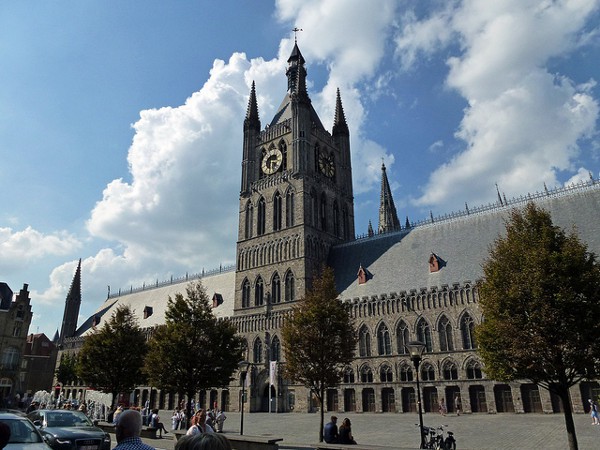
One of the most important and grandiose cities of old Flanders was Ypres, which at its peak was one of the most populous cities in Europe. Ypres enjoyed its moments of glory in the 13th century, and those moments of glory came thanks to its cloths and tapestries, highly prized in the Old Continent until Spanish and English wool from Spain put up strong competition.
That is why I like to call Ypres the city of tapestries, in remembrance of this historical moment. However, Ypres is better known in books for the bloody battles fought there during the First World War. It is said that more than 30,000 people lost their lives here, and the city is practically surrounded by cemeteries, with many graves of soldiers from all the sides involved in the conflict, many of them unnamed.
The city was practically destroyed during the Great War, but it was rebuilt as best it could be, though faithfully. The city’s main monuments have not lost their essence, and it is striking to see photos of how they looked, of how they were left after the bombings, and how they are now.
The Grote Markt, one of the largest squares in all of Belgium, is the starting point for any visit to Ypres. Right on this square you will find the Town Hall, the Cathedral of St. Martin and the Lakenhalle, which was the tapestry market and today houses the Museum of the First World War. From there, I invite you to wander the streets of this city and discover the many wonders and memories it holds.
More information | Ieper
Photo | Flickr – ThruTheeseLines