Viñales Valley, a unique ecosystem
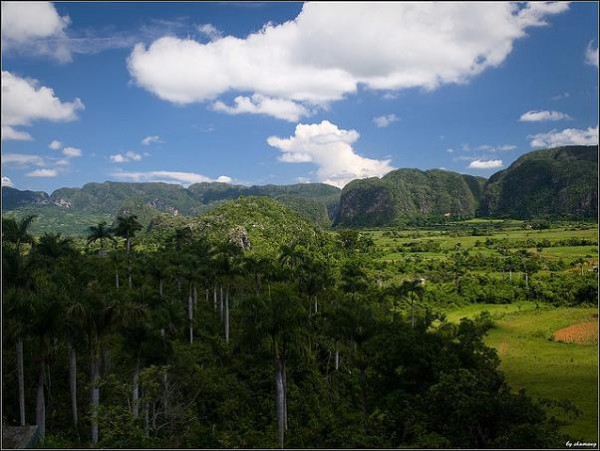 The Viñales Valley is located in the province of Pinar del Río, in western Cuba. Surrounded by mountains, the valley is a plain dotted with mogotes, limestone hills of earth that take on whimsical shapes and reach heights of up to 300 meters. It is very fertile land where tobacco is grown mainly in the traditional style.
The Viñales Valley has been a UNESCO World Heritage Site since 1999 for being an exceptional karst landscape and for preserving traditional farming methods unchanged for centuries. In addition, the region also maintains a rich vernacular tradition in its architecture, its craftsmanship, and its music.
The valley has numerous caves on its slopes that were inhabited long before the arrival of the Spanish. The cimarrones, escaped Black slaves, also took refuge in them. Several can be visited, such as the Cueva del Indio, which can be explored by boat along one of the two rivers that run through it, the Palenque de los Cimarrones, or the San Miguel Cave. You should also see the Mural de la Prehistoria, an enormous fresco painted by Leovigildo González Morillo on the Pita mogote.
Some 8,000 people live in Viñales, mainly from tobacco farming and tourism. Although many visitors come and it was the site of battles during Cuba’s armed conflicts, it has kept its authenticity and deserves a visit. You can stay in one of Viñales’s hotels or in private homes. It can be a day trip from Havana, but it is worth exploring at a relaxed pace, setting aside at least a couple of days of our trip.
Source | UNESCO
Photo | Flickr-Shaorang