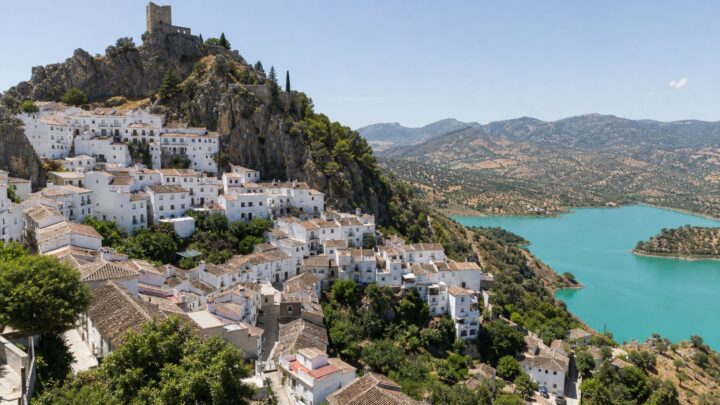
Salobreña, white houses facing the sea

Salobreña is located on the Costa Tropical, right in the middle of the coast, which gives it an exceptional location. In just an hour and a half you can reach the Sierra Nevada ski resort. If you prefer to visit the Alhambra, you can get there in forty-five minutes, or you can also visit the charming fishing port of Motril, as it is quite close.
Due to its strategic position, Salobreña has been occupied by different civilizations since its origins. The Romans conquered it as early as the 2nd century BC. Later, it was the Muslims who found in Salobreña an exceptional city in which to settle, until it was finally occupied by the Castilians. Proof of the passage of all these civilizations are the archaeological remains that have been recovered throughout history and that can be seen in the Archaeology Museum of Salobreña.
As for its gastronomy, typical are the tropical fruits such as custard apples, papayas, avocados, guavas and mangoes grown in the surrounding land. For a long time sugar cane was also cultivated. In fact, the only Sugar Factory in Europe that can be visited is still in operation, and it explains the entire production process and the history of the company through models and a small museum. On the beach promenade there are plenty of restaurants. In most of them you will have the chance to taste the best dishes in the city, where fish and seafood take center stage.
As for its old quarter, located on the mountainside, it is still possible to hear the faint echo left by the inhabitants of the Middle Ages. Whitewashed houses, windows, narrow streets, passageways and vaults are part of the neighborhoods of La Loma, La Fuente, El Brocal and Albaycín, built around the Arab Castle, which served as a fortification, prison and palace for many years. Visiting the castle is possible, and remains of its walls and its 12th-century ramparts can still be seen.
Other buildings of historical and cultural interest are the Church of Our Lady of the Rosary, dating from the 16th century and built on the site of an old mosque, the Torre del Brocal, the Bóveda de la Plaza, the Paseo de las Flores and the Miradores del Postigo. You can find information to organize your trip at Rumbo.es on Pinterest.
Source | Salobreña City Council
Photo | Flickr-Allie_Caulfield