Getting to Know the Dutch Caribbean
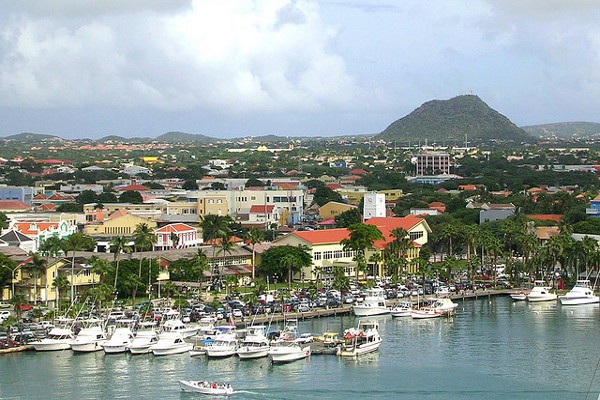
The Kingdom of the Netherlands consists of the country we know as Holland, in northern Europe, and a series of islands located thousands of kilometers from this region, specifically off the coast of South America. It is the Dutch Caribbean region, made up of 6 islands. To visit them, you can organize your trip through Rumbo on Facebook.
We won’t go into political and administrative details now, because each island has its own way of functioning administratively. Instead, let’s get to know this group of islands a little better, a paradisiacal destination.
Aruba
Aruba is an autonomous country, although it is part of the Dutch Caribbean, or former Netherlands Antilles. It is an island that does not reach 200 square kilometers and has around 100,000 inhabitants, with its capital in Oranjestad. The southern and western areas of the island are the most touristy, as this is where the best beaches and resorts are located.
Curaçao
Curaçao or Curaçao is another autonomous territory, almost twice the size of Aruba, although with about 150,000 inhabitants. Willemstad is the capital of this region, being its largest city and the most important seaport. Furthermore, this city was recognized as a World Heritage Site by UNESCO, and its Carnival is world-renowned.
Sint Maarten
Sint Maarten is a rather particular region, as it belongs to two countries: France and the Netherlands. The Dutch part barely has 35 square kilometers and its capital is in Philipsburg. Curiously, most of the population is of Dutch origin and not native to the island or to other Caribbean regions.
Bonaire
Bonaire is a very peculiar island, as it hides its greatest beauty beneath the sea. That is, it is one of the best places for diving, recognized worldwide as such. Apart from its beaches, which attract most of the tourism, the interior of the island is dotted with small lakes and trails that cross several National Parks.
Saba Island
With barely 13 square kilometers, Saba Island is one of the smallest in the region. It is a small pristine and immaculate paradise, which, although it makes tourism its way of life, has a great concern for the cleanliness and conservation of the environment. Its lace, also known as Spanish Lace, is very famous.
Sint Eustatius
Finally, we turn to Sint Eustatius, which is the smallest of all. Despite its size, it is an island with several hotels that attracts a lot of tourism, whether for its unspoiled beaches, its diving in its waters, or Mount Scenery. Indeed, excursions to this volcano that occupies much of the island are one of the island’s greatest attractions.
Photo | Flickr – Roger Wollstadt
2 comments · Comment
2 comments