The Great Hungarian Plain, the Puszta
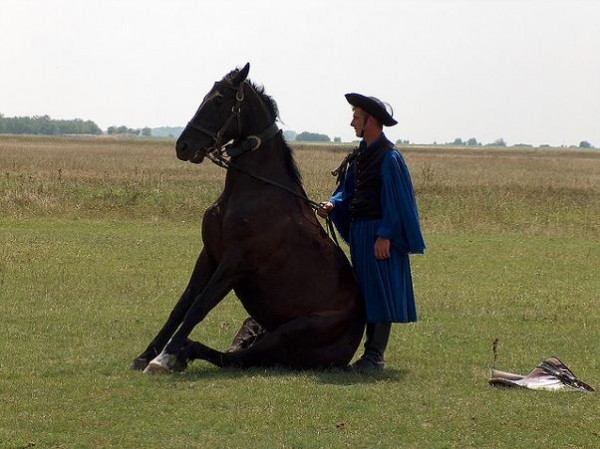
One of Hungary’s great scenic attractions is the Great Plain, the Puszta. Part of it, the Hortobágy National Park, has been listed by UNESCO as a World Heritage Site since 1999. Occupying the southern part of the country, east of the Danube, the Puszta is the place to find authentic traditional Hungarian culture. For more than two millennia, this vast expanse of plains and marshes has been used by herders to feed their animals. Horses, sheep, oxen and cattle graze across the wide meadows.
Hortobágy covers an area of 82,000 hectares. There are settlements to the south, east and west of the park, the main ones being Tiszafüred on the River Tisza and the city of Debrecen. Both are linked by a historic route. In the 16th and 17th centuries it was used to transport the Hungarian grey cattle for export and to distribute salt from Transylvania. Along the way, inns called “csárda” arose, of which 5 still remain.
The fertility of this land was due to the flooding of the River Tisza, but with its canalisation and the control of its flow, the frequency of rainfall and the temperature changed, and alkaline soil spread. Despite efforts to restore the Puszta, it will never again be what it was. Even so, it is the place in Hungary where the sun shines the most hours, and it has numerous sources of thermal and medicinal waters.
You can visit the Puszta as an optional excursion during your trip to Hungary, or spend a longer stay there. The most typical experience is watching a horse show on a traditional farm and riding a cart pulled by five of these animals. But here you can also go on cycling tours, enjoy water activities on Lake Tisza, observe unique species and, in general, enjoy eco-tourism.
Source | Visit Hungary
Photo | Flickr-kovacsistvan
2 comments · Comment
2 comments