Padua, the City of Culture
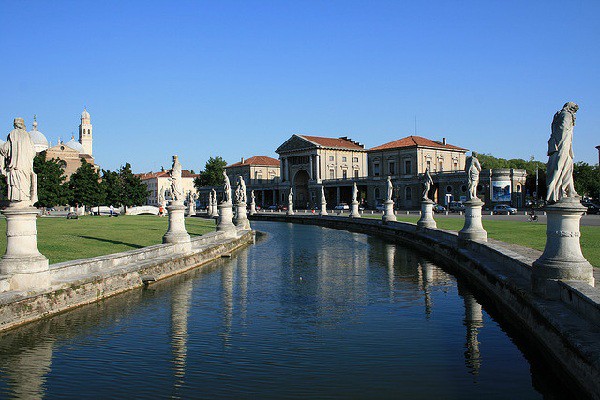
Padua (Padova in Italian) is the third largest city in Italy with the greatest historical and cultural heritage. It is located in the north of the country, 40 kilometers from Venice, and it is crossed by two rivers: the Bacchiglione runs through it and the Brenta surrounds it. Both contributed to its economic growth by supplying its mills or facilitating communication with Venice, and also shaped the city’s layout and form.
During the Roman Empire it became one of the most important cities in the region, especially during the 1st century BC, although with the fall of the empire it went through a period of decline. However, from the 11th century onwards, and above all from the 14th century, it regained all its economic and, especially, cultural splendor thanks to the renowned University of Padua. This university attracts thousands of students thanks to the great reputation it earned since its founding in 1222.
There, great scholars such as Galileo and William Harvey gave their lectures. Today it has more than sixty thousand students. This university, the third oldest in Italy, also has the oldest Botanical Garden in the country, a place well worth a stroll among nature for just four euros, the price of admission.
In every street and every square we can observe the cultural richness of this city, which boasts beautiful reminders of past times. Among them we can highlight several places of interest, such as the Castelo di Moncelice with an opera house inside, the Prato della Valle, a square from the Napoleonic era, interesting museums, and religious architectural elements of great value, such as the Basilica of Saint Anthony from the 13th century, dedicated to the city’s patron saint. To organize your trip to Padua you can check Rumbo on Pinterest.
Source | Padova
Photo | Flickr-PongAccia
1 comment · Comment
1 comment