Augsburg, a city steeped in antiquity in Germany
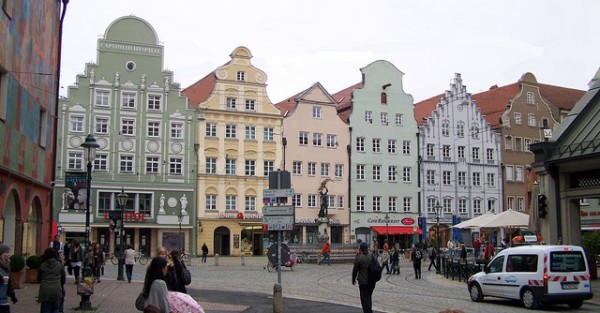
In the southwest of Bavaria we find the town of Augsburg (in German, Augsburg), one of the oldest cities in Germany and historically known as Augusta Vindelicorum, when it was part of the Roman province of Raetia. Augsburg is rich in history and tradition dating back to Roman times.
Moving into the medieval period, Augsburg already stood out as a city of remarkable wealth and splendor compared with other cities in Europe. Impressive architectural landmarks such as Augsburg Cathedral, whose bronze doors are more than 1,000 years old, or the Basilica of St. Ulrich and Afra, the city’s patron saints, house numerous goldsmith works that today can be visited by tourists from all over the world in museums and exhibitions.
The entire city shows traces of the Renaissance, Baroque and Rococo periods. Beautiful fountains and guild houses surround the Renaissance town hall, adding to the splendor of the area. Augsburg also played a part in the Industrial Revolution, with monuments built in its honor, such as the Schüle cotton mill (Schülesche Kattunfabrik) or the Crystal Palace, a textile factory founded in 1905.
Another artistic style that stands out greatly in Augsburg is Jugendstil (Art Nouveau), with striking architectural works such as the Church of the Sacred Heart of Jesus, the former Municipal Baths and the Synagogue, built around 1917 and considered the most important Art Nouveau synagogue in Europe. And we cannot forget Augsburg’s representative museums, among which we highlight the Schaezlerpalais, located on Maximilianstrasse, which reopened its doors in 2006 after a meticulous restoration, and the Puppet Museum and Theatre, with more than 60 years of history and 6,000 puppets to admire.
As in almost every town in Germany, the Second World War also left its mark on this town, hosting, on its outskirts, a Nazi concentration camp that served as a satellite of the Dachau concentration camp during the war.
Among the most notable figures born in this town are personalities such as Rudolf Diesel, inventor of the diesel combustion engine, former footballer of Real Madrid and Barcelona Bernd Schuster, and the playwright and poet Bertolt Brecht, who for a long time was not accepted by the inhabitants of his city but who ultimately received well-deserved recognition with a magnificent exhibition at his birthplace.
In addition, you can find very good hotels in Augsburg, such as the Dorint An der Kongresshalle, 2 kilometers from the city center, or the Jakoberhof hotel, a long-established hotel in the city with a very family-friendly atmosphere, located 400 meters from the town hall. You can find more information on Rumbo.es on Twitter or, if you prefer, on Rumbo on Facebook.
Via | germany.travel
Photo | flickr-holger baschleben

3 comments · Comment
3 comments