German Cuisine: Its Basic Ingredients
Although we have already talked, in a previous post, about the virtues of German cuisine, we are going to explore it in a little more depth. Through a series of articles, we will learn what ingredients they use, what types of drinks are most common, and what the typical cuisine of each of the German states is. Ready? Let’s start with its basic ingredients.
Within what are called basic ingredients, we are going to learn about the types of meat, fish, shellfish, vegetables, dairy products, bread, desserts, and side dishes. A curious stroll to get a closer look at how Germans cook, and to make our mouths water at times.
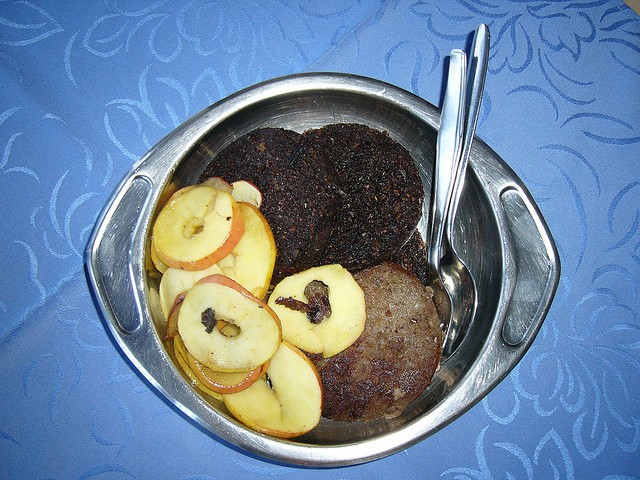
Pork, beef and poultry are the most widely used in German cooking, while traditional cuisine makes use of game meats such as wild boar and rabbit. The most usual way of preparing meat is in the form of sausage: minced meat with various spices that can be eaten raw, scalded, or roasted. For meat lovers, a new way to indulge their tastes.
As for fish, it is along the coast of northern Germany (the North Sea) where we find a great variety, such as herring, salmon, seelachs (a fish similar to cod), or turbot. In the northern areas near the rivers, it is traditional to cook smoked eel and trout. Pickled, smoked, salted, or bathed in special sauces, we find different ways of trying fish in German cuisine. As for shellfish, they are also more developed in the north, not only in their catching but also in their consumption. For example, we have lobster and a tiny type of shrimp called Krabben or Granat, which is very similar to prawns and is eaten at breakfast.
As for vegetables, which can be cooked or served as side dishes, we have carrots, spinach, horseradish (as an accompaniment to meats), asparagus, kohlrabi (similar to cabbage), beans, or turnips, of which there are varieties such as Steckrüben or Teltower Rübchen. We take this opportunity to talk about side dishes with meals. Among the vegetables themselves, the most common for garnishing and accompanying dishes are potatoes, onions, and cabbage. Beyond vegetables, we find a very popular pasta called Spätzle and Klöbe (the name may vary depending on the region), which is another kind of pasta but with a varied filling.
In dairy products, Germany offers one of the greatest varieties in Europe. Among the most notable are different types of cheese, such as Harzer Käse (made with sour milk and with a strong smell), Quark (fresh cheese), or Dickmilch (cheese made from curdled milk). Other dairy products are yogurt and Buttermilch (milk made from butter, also called buttermilk).
The variety of bread is also striking. We highlight Pumpernickel black bread, Roggenmischbrot wheat and rye bread, Weissbrot white bread, bread with sunflower seeds (Sonnenblumenkernbrot) or pumpkin seeds (Kürbiskernbrot), or Zwiebelbrot onion bread, among others.
To conclude this first tour of German cuisine, what better way than with a sweet taste in the mouth. The tradition of tarts and cakes is legendary, the latter often made with fruits such as cherries or strawberries. Among tarts, we highlight Käsekuchen, made with cottage cheese and meringue, and Black Forest cake, a chocolate sponge soaked in cherry brandy and covered with cream and chocolate shavings.
Via | Wikipedia
Photo | flickr-north_brook


4 comments · Comment
4 comments