The Eagle's Nest in Berchtesgaden (Kehlsteinhaus)
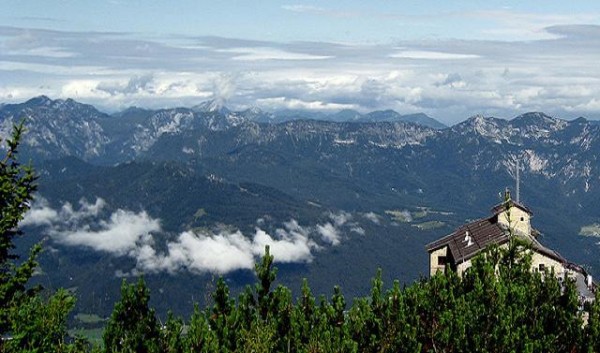
Different figures have left their mark on history, sometimes for good and sometimes, unfortunately, for bad. One of the figures of the 20th century is undoubtedly Adolf Hitler. We are not going to talk about him in our post, but about a place that belonged to him for a time: the Eagle’s Nest.
In the Bavarian Alps lies the town of Berchtesgaden, near the border with Austria, 30 kilometres from Salzburg and 180 south-east of Munich. This area is striking for its excellent landscapes and its countless mountains. One of the most prominent peaks it has is the Kehlstein mountain, at 1,835 metres above sea level, where the famous Eagle’s Nest or Kehlsteinhaus is located.
The Kehlsteinhaus was a gift for Hitler’s 50th birthday, paid for with Nazi Party money. A retreat for him high in the mountains, reached by a lift that was covered in gold. Berchtesgaden became the place of residence of many important Nazi leaders.
Its construction lasted around 13 months, finishing in 1939. A 6.5-kilometre road leads up to the mountain house. This road cost, at the time, 30 million marks (about 150 million euros). The lift we mentioned earlier covers the final 124 metres up to the interior of the chalet.
Although it was thought it would be a resting place for the Nazi leader, the reality is that Hitler barely stayed there on ten occasions. Mainly he used it for meetings with dignitaries and diplomats who visited him. Hitler stayed no more than 30 minutes on each of his appearances at the Kehlsteinhaus. He visited the village more than his own residence.
Perhaps that is a good reason not to regard the Eagle’s Nest as a building or place entirely related to the Nazis and their leader, especially so that it can keep its current appeal as a tourist attraction that draws many people throughout the year, especially English and North American visitors.
It has become a restaurant, but above all it is visited for the historical interest it represents and arouses in many people. The Kehlsteinhaus can be reached from the village, on a 2-hour walk, or by bus. At the foot of the access road, a reminder can be read about Hitler’s wicked actions in those years. Informal tours are offered to tourists in languages other than German, supposedly to avoid conflicts with present-day Nazi sympathisers. The rooms of the Kehlsteinhaus can be examined, including Hitler’s study, which has become a wine cellar for the café. It can be visited from May to October.
Source | Wikipedia
Photo | flickr-iamkaspar
2 comments · Comment
2 comments