Tokyo with kids: neighborhoods, theme parks and logistics that actually work
A practical guide to traveling to Tokyo as a family: where to stay, Disneyland or DisneySea, how to get around with young children and what budget to plan. Concrete data, no filler.
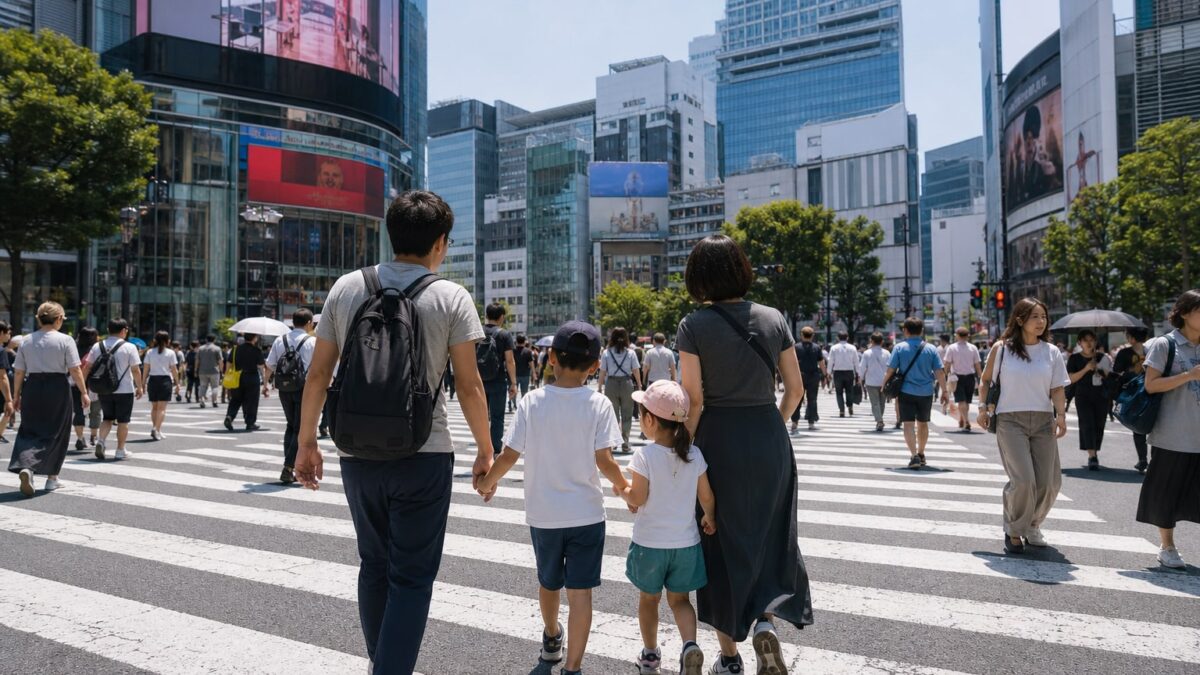
If you’re going to Tokyo with kids, the decision that most shapes the trip isn’t which theme park to choose, but where you sleep. Stay near a direct subway line (Marunouchi, Ginza or Toei Oedo) and in a neighborhood with parks and supermarkets within reach: Asakusa, Kiba, or the Tokyo Disney Resort area if you’re dedicating two days to Disney. Avoid Shibuya and Shinjuku as a base if you’re traveling with children under 6: they’re spectacular neighborhoods for strolling, but exhausting to return to at nine at night with a stroller.
This guide works just as well for a couple with an eight-month-old baby as for a family with teenagers who want Akihabara and Pokémon Center. It changes the pace, not the logic: Tokyo is an extraordinarily easy city with kids—elevators at all stations, nursing rooms in department stores, general quiet on public transport—but it requires planning your routes, because the real distances (not the kilometers on the map, but the minutes walking inside enormous stations like Shinjuku) can defeat any improvised plan.
Why Tokyo works better with kids than you’d expect
Japan has a culture of public space designed for children that is not just rhetoric: the eki (stations) almost always have elevators, public restrooms include changing tables, and many chain restaurants—Gusto, Saizeriya, Coco Ichibanya—have high chairs and kids’ menus without you having to ask twice. On top of this is real safety: a ten-year-old can take the subway to school alone and nobody gives them a second look. The downside is the language: outside tourist areas, written English is limited, so carrying the name of your hotel in Japanese (a photo on your phone is enough) saves more than one headache.
Where to stay in Tokyo with kids: neighborhoods that work
The question isn’t “which neighborhood is pretty,” but “which neighborhood gets you back to the hotel in under 30 minutes when the child has fallen asleep in the stroller at seven in the evening.” With that in mind, these are the areas that work best and why:
| Neighborhood | Best for | Approximate price/night (2026) | Why |
|---|---|---|---|
| Asakusa | Families with young children and a mid-range budget | €90-160 (family room, 2 bedrooms or suite) | Calm atmosphere, Senso-ji temple to stroll at a leisurely pace, good selection of apartments with kitchens |
| Tokyo Disney Resort (Maihama) | Families dedicating 2 days to Disney | €150-350 in official hotels; €80-130 in hotels in the Urayasu area | You save the tiring return trip; Disney monorail included in some packages |
| Nishi-Shinjuku | Families with older children who want quick access to everything | €100-180 | Oedo Line and JR Yamanote a short walk away, but an office district with less neighborhood life at night |
| Kiba / Monzen-nakacho | Families who prefer to avoid tourist areas | €70-120 | Kiba Park with a huge children’s area, local atmosphere, less spoken English |
| Ginza/Nihonbashi | High budget, short stays | €180-350 | Department stores with nursing rooms (Mitsukoshi, Takashimaya), but adult nightlife |
For a first visit with children aged 2 to 10, Asakusa is the option with the best balance of quality, calm and price. For those who plan to do Disney seriously (two consecutive days, from park opening to closing), sleeping in Maihama or Urayasu saves up to an hour of travel per day.
Disneyland Tokyo or DisneySea: which to choose with kids
Tokyo Disneyland is the classic park, with the castle, Fantasyland and rides designed for children under 8. Tokyo DisneySea—unique in the world, it doesn’t exist at any other Disney—has a more scenic and maritime approach, with areas such as Mediterranean Harbor or Arabian Coast, and it tends to appeal more from age 7-8 onward and to adults without children.
If you can only choose one park and your children are under 6, Disneyland is the safest option: fewer queues at children’s rides, daytime parades designed for young ages, and a Fantasyland that fills a good part of the day without needing to move around much. With children aged 8 and up, DisneySea offers an experience you won’t find replicated on any other trip.
Tickets use dynamic pricing: the usual rate for an adult is around €55-85 depending on the day and season, with a discount for children aged 4 to 11. It’s best to buy tickets with a reserved entry date and time on the park’s official website several weeks in advance, because capacity runs out on Japanese holiday dates (Obon in August, Golden Week from late April to early May).
Other parks and spaces designed for families
Beyond Disney, Tokyo has alternatives with far fewer queues and, in some cases, a better fit for young children:
- TeamLab Planets (Toyosu): interactive light and water installations, no minimum age, but bring a change of clothes because some areas have water up to the ankles. Approximate adult entry €22-30, child discount available.
- Ueno Zoo: Japan’s oldest zoo, with giant pandas, very affordable entry (around €6, free for school-age children) and Ueno Park around it for picnics.
- Kidzania Tokyo (Koto): a city of occupational roles for children aged 3 to 15, morning or afternoon sessions with fixed schedules; advance booking required.
- Shinagawa Aqua Park: aquarium with a dolphin show indoors, useful on rainy days.
- Yoyogi Park (Shibuya): the largest park in the city for an afternoon on a budget, with space to run and, on Sundays, street music groups.
How to get around Tokyo with kids
The subway and the JR Yamanote are the backbone of the trip, and they are friendlier to children than any Western subway guide would suggest: children under 6 ride for free, those aged 6 to 11 pay half, and from 12 onward it’s the full fare. To get around, the rechargeable Suica or Pasmo card (bought at any station machine, with a refundable deposit in some versions) avoids buying a ticket for every journey, which is appreciated when you have a stroller and luggage.
The main obstacle isn’t the subway itself, but the transfers in enormous stations like Shinjuku or Tokyo Station, where switching lines can mean 10-15 minutes walking through underground corridors. For those arriving by plane, it’s worth deciding the route from the airport in advance: details on prices and times depending on whether you land at Narita or Haneda are covered in this comparison of options for getting to central Tokyo, which saves more than one surprise with tired kids after a long flight.
Taxis exist but are expensive (the flag fall is around €4-5, and long journeys can add up to €20-30 in traffic), and most don’t have an officially approved child seat, so if you need one you must request it when booking in advance.
Itinerary with kids: how many days and how to split them
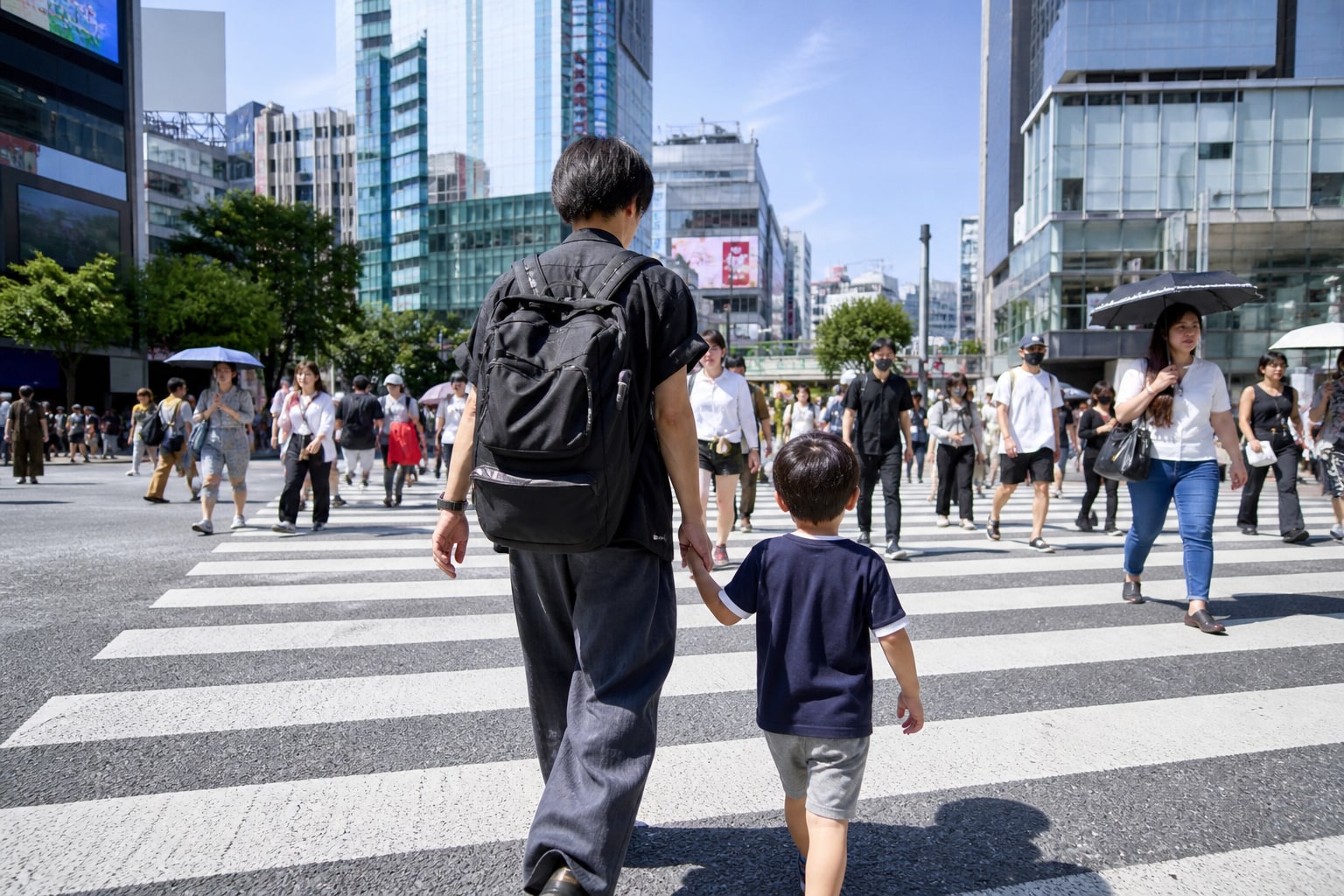
For a first family visit, 6-7 days in Tokyo allow a relaxed pace: two days for Disney (if it’s part of the plan), two or three for the city split between Asakusa/Ueno, Shibuya/Harajuku and one day at a park or interactive museum, and one day of buffer for unexpected events or a short excursion. If the trip includes other cities (Kyoto, Osaka), reducing Tokyo to 4-5 days forces you to choose between Disney and a day trip, not both.
On the subject of day trips, with children it’s wise to be selective: Kamakura is the most child-friendly (temples, beach, short train ride), while Hakone with the cable car and the boat on Lake Ashi works very well from around age 5-6. The full breakdown of times and what suits best by age is in this guide to day trips from Tokyo.
Tokyo with babies: what changes in logistics
With a baby under 2, Tokyo is surprisingly comfortable: almost all the large department stores (depato) have a floor with a nursing room, free hot water and changing tables, and convenience stores (Lawson, 7-Eleven, FamilyMart) sell formula and Japanese-brand diapers without any problem. The stroller is more practical than a baby carrier over long distances, but at temples with steps (Senso-ji, Meiji Jingu) it’s worth bringing both options.
The weak point is the humid heat of July and August, not recommended with babies because of the risk of dehydration on long journeys between stations with weak air conditioning in the corridors. Spring (April) and autumn (October-November) offer far more manageable temperatures.
Where to eat with kids in Tokyo
The family restaurant chains (famiresu) are your best ally: Gusto, Saizeriya or Jonathan’s have kids’ menus, high chairs and prices from €6-9 per main dish. For something more characteristic of the trip without the risk of children refusing it, katsudon (breaded pork over rice with egg) or yakisoba (stir-fried noodles) usually work better than raw sushi with the youngest ones. In Asakusa, Nakamise street, on the way to Senso-ji temple, has stalls selling ningyo-yaki (small cakes filled with anko), a good first introduction to Japanese confectionery.
Common mistakes when traveling to Tokyo with kids
The most common is overloading the itinerary by calculating distances on the map rather than in actual minutes inside giant stations. The second is not booking Disney tickets far enough in advance, relying on buying them the same day. The third is underestimating the humid summer heat and not carrying water and sun protection on the walks between outdoor attractions. The fourth, more a matter of etiquette than logistics, is not lowering your voice on the subway: Japanese people are extremely tolerant of a baby crying, but not of children shouting or running in the carriage.
When to go to Tokyo with kids
April (cherry blossoms, though with more crowds) and October-November (stable weather, less humidity) are the best windows. August combines intense humid heat with the Obon period, when long-distance trains fill with Japanese families traveling to their grandparents’ hometowns; within the city, on the other hand, there are fewer foreign tourists because of the heat. Golden Week (late April to early May) is the worst time for Disney with kids: queues of more than 90 minutes for popular rides.
Real budget for a family in Tokyo
For a family of four (2 adults, 2 children) over seven days, a tight but realistic budget comes to around €2,800-4,200 in total excluding flights, split between accommodation (€100-160/night in an apartment or family room), local transport (Suica, around €5-8/day per person over 6 years old), food at famiresu or street stalls (€30-45/day for the four) and park tickets (Disney, TeamLab or Kidzania can add €150-250 on a day with two adults and two children).
Safety and health with kids in Tokyo
Tokyo is one of the safest cities in the world for traveling with minors: street crime is very low and losing sight of a child in a shop rarely ends badly. The real risk lies in very specific nightlife areas, not on family routes; the details of what to avoid and why are in this guide on nighttime scams in Kabukicho and Roppongi, areas that in any case are not part of a family itinerary. As for health, pharmacies (Matsumoto Kiyoshi) stock painkillers and basic products, although it’s worth bringing from home any specific medication you need, since Japanese dosages may differ.
FAQ
How many days do you need in Tokyo with kids? Between 6 and 7 days allow you to combine the city, a theme park and a day trip without rushing. With fewer than 5 days, it’s best to choose between Disney and a day trip, not both.
Is Disneyland or DisneySea better with young children? Disneyland, because it has more attractions designed for children under 8. DisneySea wins from age 7-8 onward thanks to its atmosphere and more elaborate rides.
Is traveling to Tokyo with kids expensive? Not more than other major European capitals if you avoid the tourist center when choosing accommodation. Transport and food at family chains are cheaper than in London or Paris; theme parks are the expense that stands out most.
Can you go to Tokyo with a baby? Yes, with good logistics: nursing rooms in department stores, diapers and formula at any konbini, and elevators at almost all stations. The main challenge is the humid summer heat, best avoided with babies.
Which neighborhood is best for staying with kids in Tokyo? Asakusa for a first visit with young children thanks to its calm atmosphere and good selection of family apartments; Maihama/Urayasu if Disney takes up two days of the trip.
Do you need to speak Japanese to travel with kids? It’s not essential, but it helps to carry the hotel name and key addresses written in Japanese, since outside tourist areas written English is limited.
The specific recommendation
Book accommodation in Asakusa first or, if Disney is the centerpiece of the trip, in Maihama, and then buy Disneyland or DisneySea tickets with a fixed date on the official website before finalizing the rest of the itinerary: it’s the piece that conditions all the others, and the one that sells out first in high season.
As an Amazon Associate, I earn from qualifying purchases.
0 comments · Comment