History of La Plata
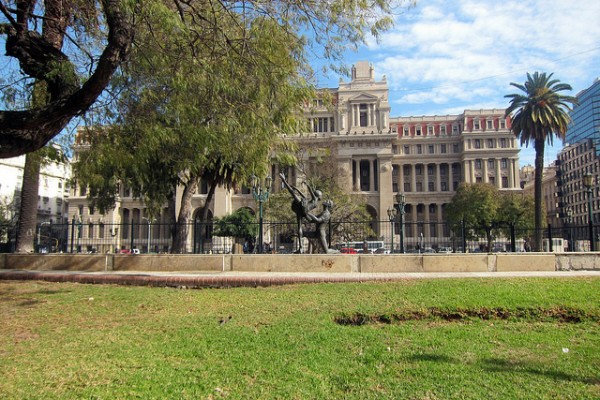
Today the City of La Plata, capital of the Province of Buenos Aires, celebrates its 130th anniversary, so we thought it would be interesting to share a bit of its history with you.
“We have given the new capital the name of the magnificent river that bathes it, and we bury beneath this stone, hoping that rivalries, hatreds, resentments, and all the passions that have held back the prosperity of our country for so long may be buried here forever.” This was pronounced by Dardo Rocha, its founder, when he laid the foundation stone on November 19, 1882.
La Plata was a place intended to achieve a goal that was difficult for that era: to establish a national union in order to build a more prosperous and peaceful future.
In 1880, the country’s authorities decided on the importance of creating a Buenos Aires provincial capital, after the city of Buenos Aires had been declared the Capital of Argentina. The difficult task of carrying out the founding work fell to Dardo Rocha, who undertook it with great enthusiasm and commitment.
Initially, it was considered to build it closer to the national capital; the Buenos Aires neighborhood of Belgrano was thought to be a good option, although placing it in a much more distant location, such as the present-day city of Chascomús, was also evaluated.
In April 1880 it was determined that the ideal site was in the municipality of La Ensenada, so the government of Buenos Aires was entrusted with the founding of La Plata. The origin of the name is quite uncertain, although many historians believe it was suggested by the author of José Hernández’s book Martín Fierro.
The city was designed by a team of modern urban planners, led by Pedro Benoit. To this day its form remains intact: a perfect square, with diagonals crossing it to form rhombuses. Within it, woods and squares can be found located exactly every six blocks.
Source | La Ciudad
Photo | Flickr – Wallyng