First-time mistakes in Tokyo: etiquette, trains and customs worth knowing
The most common slip-ups of first-time visitors to Tokyo, from etiquette on the metro to the tip you should never leave. A practical guide with concrete facts to avoid the typical pitfalls of the first-time traveler.
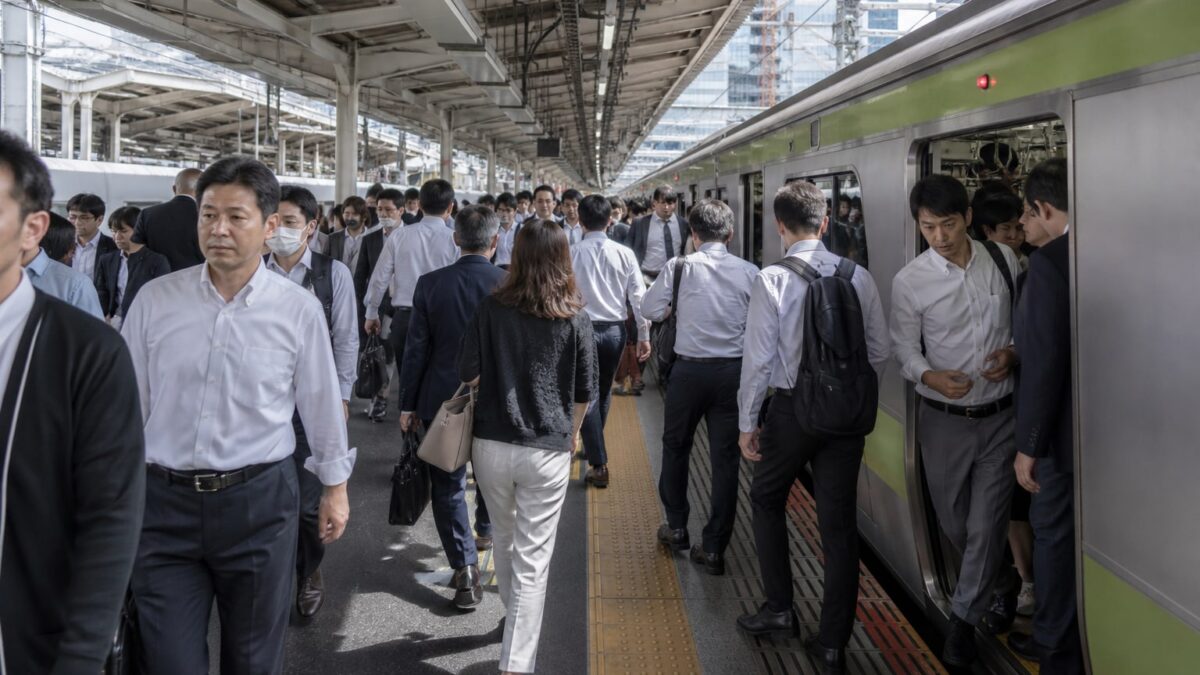
Arriving in Tokyo for the first time is nothing like arriving in any other Asian capital. It is not the chaos of Bangkok or the density of Hanoi: it is a city of 14 million people that runs with an almost silent precision, and that very precision is what gives away the tourist who has not done their homework. The most common mistake is not getting lost or overspending; it is unknowingly breaking a social code that Japanese people take for granted.
This guide gathers the real slip-ups first-time visitors make: on the metro, at the table, at the temple, on the street. They are not rules written on any tourist sign, but they are noticed, and knowing them before you arrive spares you uncomfortable stares and avoidable misunderstandings.
Why Tokyo requires a different kind of learning from the rest of Asia
Japan has spent decades building a social contract based on meiwaku, the idea of not bothering others. That explains why the Tokyo metro moves millions of people every day almost without noise, why nobody talks on the phone in a train car, and why a tip can be read as an out-of-place gesture rather than a kindness. Understanding this underlying logic helps more than memorizing a list of prohibitions.
Etiquette mistakes that give away the first-time tourist
Speaking loudly and gesturing in public spaces
Volume of voice on the street, on the metro or in a shop tends to be low in Tokyo. Speaking loudly, laughing out loud or arguing in public —even in English or Spanish, where nobody understands— is perceived as a lack of consideration for those around you. It is not censorship, it is custom: the city works better at a low tone.
Shaking hands instead of bowing
The Japanese greeting is a slight nod of the head or torso, the ojigi. Nobody expects a foreigner to master its nuances (there are different degrees depending on formality), but attempting a handshake usually causes a moment of confusion. The most natural thing is to return the bow with a brief gesture, without overdoing it.
Pointing with your finger or touching without asking
Pointing directly at a person with your index finger is considered rude. To indicate something or someone, Japanese people usually use an open hand. Touching a stranger’s shoulder, even to ask for help, is not customary either: a clear “sumimasen” (excuse me) is enough.
Eating or drinking while walking down the street
In Tokyo you eat standing next to the place where you buy the food, not while walking. If you buy an onigiri at a convenience store or a sweet at a market, the normal thing is to consume it right there or wait until you sit down. It is as much a practical matter as one of etiquette: the city has few street bins, so eating without a place to throw the wrapper afterwards creates problems.
Tips: why you should never leave them
Leaving a tip at a restaurant, a taxi or a hotel is not read as generosity but as confusion. Service is already included in the price, and leaving coins on the table may lead the waiter to run after you to return them. If you want to thank someone for good service, a “gochisousama deshita” (thank you for the meal) as you leave serves that purpose.
Mistakes on Tokyo’s metro and trains
Confusing JR Yamanote, Tokyo Metro and Toei
Tokyo does not have a single train network but several companies that coexist: the circular JR Yamanote line (the most useful for moving between neighborhoods), the Tokyo Metro (Tokyo Metro) and the Toei Subway. Each has its own fare and, in some cases, you must exit and pass through the gates again when changing companies, even if the platform looks the same.
Not topping up the IC card properly (Suica or Pasmo)
The Suica and Pasmo cards work on almost all Tokyo transport and also in many convenience stores and vending machines. They are bought and topped up at station machines, with amounts from about 500 yen, and greatly simplify life compared with buying ticket by ticket. For price details and how to get from the airport, it is worth checking beforehand the options for getting from Narita or Haneda airport to central Tokyo.
Talking on the phone inside the train car
This is probably the rule that surprises most. Answering a call on the Tokyo metro is considered a serious breach of manners; there are even announcements reminding people. The usual practice is to put your phone on silent and, if you need to talk, get off at the next stop or wait until you are outside.
Boarding the wrong car at rush hour
During the busiest hours, some lines reserve exclusive cars for women, identified by a pink sign on the platform. A man who boards by mistake usually doesn’t face serious trouble, but it is best to pay attention to the signage so as not to inconvenience anyone.
Not keeping your ticket or card until you exit
Unlike other metros where you only validate when entering, in Japan you must also tap your card when leaving, so the correct fare for the journey is calculated. Losing your paper ticket or not having enough balance on your IC card forces you to go through the fare adjustment window, with the resulting queue.
Japanese customs worth knowing before you arrive
Silence as a social norm, not as coldness
The low general volume, discretion in gestures and lack of prolonged eye contact do not mean disinterest. It is the way Tokyo manages the coexistence of so many people in so little space.
Taking off your shoes at the right moment
In the genkan (entrance) of a home, in many traditional restaurants, in ryokan and in some temples you must take off your shoes. There is usually a step or a change of floor that marks the boundary, and sometimes special bathroom slippers are provided that must not leave that room.
Onsen and tattoos
Traditional hot springs (onsen) often prohibit entry to people with visible tattoos, due to their historical association with the yakuza. Some establishments more oriented to tourists allow them or provide patches to cover them; it is worth checking before booking.
Separating rubbish without finding bins
Japan separates waste into several categories (burnable, non-burnable, PET, paper) and, paradoxically, there are hardly any bins on the street. The practical solution is to carry a small bag for the day’s wrappers and dispose of them at your accommodation or in a convenience store.
Queues as an institution
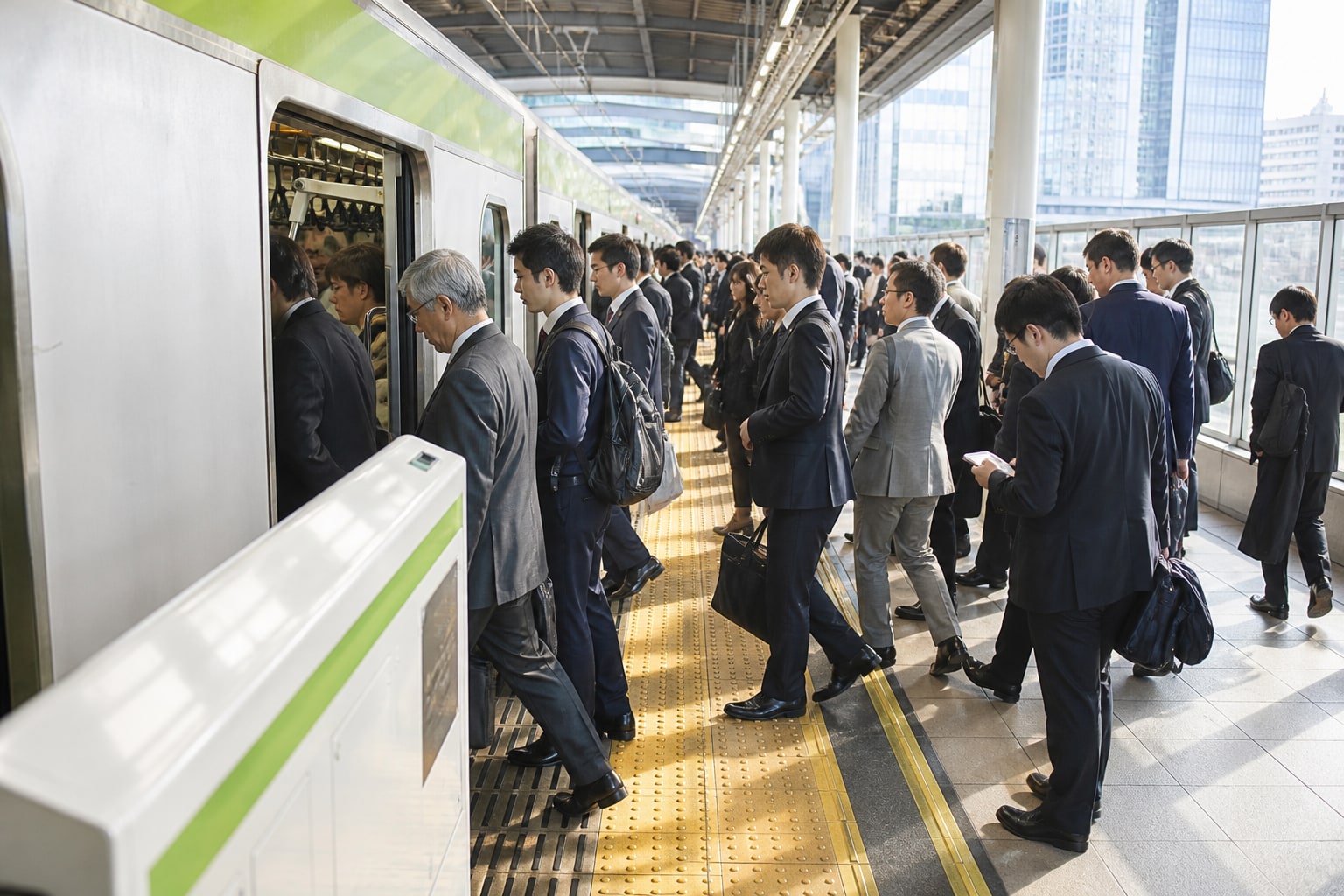
Queuing on the platform, at the entrance of a restaurant or to board a lift is automatic and respected without exception. Cutting in or standing to the side, even unintentionally, is noticed immediately.
Behaviour in Japanese restaurants
- Saying “itadakimasu” before eating and “gochisousama deshita” when finishing are brief phrases that are appreciated, although nobody requires them from a foreigner.
- Never stick chopsticks upright in a bowl of rice: it recalls a funeral ritual and is considered in poor taste.
- In most places you pay at the counter on the way out, not at the table, and splitting the bill per dish is rarely accepted.
- Requesting major modifications to a dish (without this, with more of that) is not usual outside tourist-oriented restaurants; in a small traditional place, the norm is to eat what is on the menu.
Logistical mistakes that complicate the first trip
- Not booking restaurants in advance. Small venues with few tables, especially well-known sushi or ramen spots, fill up days ahead.
- Carrying little cash. Although cards are increasingly accepted, many small restaurants, temples and machines only work in yen. It is worth planning how much to carry and where to withdraw it, something detailed in this guide on cash and card in Tokyo.
- Underestimating distances within the city. Shinjuku, Shibuya and Asakusa can be 30–40 minutes apart by train; it is not a city to cover on foot from neighbourhood to neighbourhood.
- Not booking day trips in time. Trips to Nikko, Kamakura or Hakone require planning train schedules in advance, especially in high season.
Below is a summary of the most repeated mistakes and how to avoid them:
| Common mistake | Why it happens | How to avoid it |
|---|---|---|
| Leaving a tip | Automatic Western habit | Service is already included; a verbal thank-you is enough |
| Talking on the phone on the train | Lack of information about the rule | Silence the phone and wait to get off |
| Confusing the train companies | Several networks (JR, Metro, Toei) coexist | Top up the IC card properly and check the operator before entering |
| Sticking chopsticks in the rice | Innocent gesture in other cultures | Leave them on the rest or the edge of the bowl |
| Not carrying enough cash | Assuming everything is paid by card | Carry yen for small venues and temples |
| Eating while walking on the street | Common habit in other countries | Consume next to the stall or seated |
Frequently asked questions about first-time mistakes in Tokyo
Is it serious to make any of these mistakes as a tourist? There are usually no serious consequences or visible anger; Japanese people are generally very tolerant of visitors. Even so, knowing them avoids awkward moments and shows respect for local customs.
Do I need to speak Japanese to avoid these slip-ups? It is not essential. With basic phrases like “sumimasen” or “arigatou gozaimasu” and by paying attention to the behaviour of those around you, most situations can be handled.
Can you always pay by card in Tokyo? Increasingly, but not always. Many small restaurants, temples and vending machines only accept cash, so it is wise to carry yen.
What happens if I board the women’s car without realising? There is no penalty, but it is better to watch for the pink signage on the platform at rush hour and change cars if you politely ask.
How many days does it take to get used to these rules? Most travellers absorb them within two or three days of observing and adapting. If it is your first time in Japan, it is also worth checking how many days to devote to Tokyo, Kyoto and Osaka so you don’t travel in the rush that causes these oversights.
If you were to keep just one idea before landing at Narita or Haneda, it would be this: observe before acting. On the platform, at the table, at the entrance of a home, Japanese people rarely correct a foreigner out loud, but the behaviour of those around you will usually show you exactly what to do.
As an Amazon Associate, I earn from qualifying purchases.
0 comments · Comment