Ciudad Real and its natural and cultural curiosities
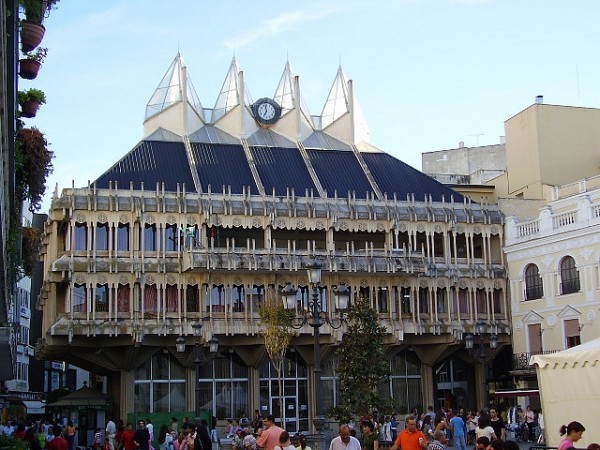
In the autonomous community of Castilla La Mancha we find ourselves in the town of Ciudad Real. Its founding dates back to 1255 and its current population is close to seventy-five thousand inhabitants. Ciudad Real stands out for its geographical location and for its cultural offer. Let’s see what we are talking about.
Ciudad Real is located in the natural region of Campo de Calatrava, which is why its distinctive landscape can be observed, as well as its propensity for volcanic phenomena. This particular terrain alternates plains with gentle undulations and small volcanic hills, including also some mountain ranges with quartz components.
Curiously, the south-central part of the city itself, is built over two maars or low, wide craters, whose crater floors are located in the Plaza del Pilar and at the fountain of the General Hospital. There are also others, such as the Laguna de Posadilla, in the province of Ciudad Real, which has been declared a Natural Monument.
Other geographical phenomena that we can find in Ciudad Real and its province are springs or sources of sour waters (also called ferruginous waters, with a high iron content), bubbling springs (thermal springs in which the water is charged with gas, giving a sensation of bubbling) and thermal baths.
Among the most interesting places to visit for their cultural value, in Ciudad Real we find the Cathedral of Nuestra Señora del Prado, whose origins lie in a Romanesque hermitage, although it is Gothic in style. Begun in the 15th century, its completion extended into the 16th century, with the construction of the vault roofs, and reached the 19th century, when the current tower was erected.
The city’s gardens and parks are also a delightful route. The Jardines del Prado, right at the foot of the Cathedral, the Parque de Gasset, with numerous fountains scattered throughout the park, or the Parque de Atocha, located near the University, are some of the places where you can stroll and admire a beautiful landscape.
Just across from the Jardines del Prado, on Calle Caballeros, we find the building of the former Gran Casino of Ciudad Real. This building dates from 1887, is Neoclassical in style, and its notable features include its moldings, its famous “chandeliers,” and the Tertulia Hall with mythological motifs. Today it is open to the public and hosts music concerts, exhibitions and even civil ceremonies. Its opening hours are Monday to Friday, 9:00 to 14:00 and 17:00 to 20:00.
Other buildings, among the countless ones we can find in Ciudad Real, include the Casa del Arco, which was the city’s first town hall; the Museo del Quijote, dedicated to the figure of the character created by Miguel de Cervantes; and the Puerta de Toledo, a monument representative of the military architecture of the 14th century.
Finally, a stop at one of the city’s restaurants to enjoy a good plate of migas, some Almagro peppers, a magnificent pisto manchego, or a tojunto stew, a typical dish cooked in a clay pot with meat (rabbit or veal) and vegetables. Check Rumbo on Slideshare before organizing your trip.
Source | Wikipedia
Photo | Flickr – borya