Dam Square, the centre of Amsterdam
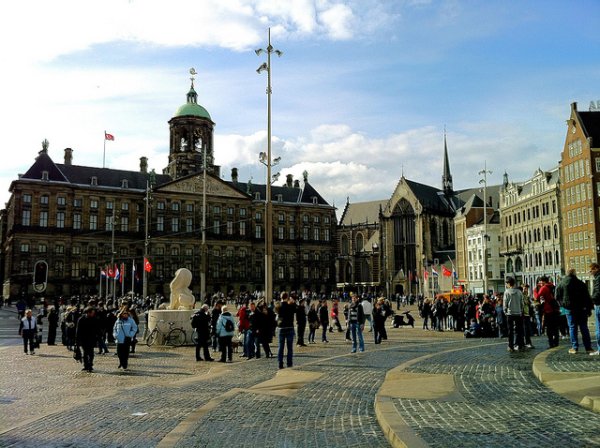
In Dutch, “Dam” means “dam”, and that is precisely the origin of Dam Square: a dam built over the Amstel river, which gave the square its name. Dam Square is the centre of Amsterdam, its heart, and in itself the origin of the city of Amsterdam. It is the meeting point par excellence; thousands of people pass through it every day, whether to go sightseeing or simply to reach the various places it connects.
Once the city’s old market, a common gathering place for demonstrations and riots that have, throughout history, even written dark pages, Dam Square is today a bustling yet calm place compared with what it once was, full of pigeons and, as I have said, full of people coming and going, and people stopping to admire some of the attractions that make up this rectangular space.
One of those attractions is the Royal Palace. Formerly the city hall, it has been a royal residence since the 17th century, but the Dutch monarchs only use it for official receptions, since their usual residence is in The Hague. Thus, it is a palace open to tourist visits.
This Royal Palace is the most significant building on this square, together with the National Monument. This monument is a large white pillar that was erected in 1956 in memory of the victims of the Second World War. Every 4 May, the day on which the Liberation Day is celebrated in this country, a tribute to the victims is held beside this monument, attended by the Royal Family and various public figures.
In Dam Square you can also visit the New Church, a 15th-century Gothic church, or the Madame Tussauds Wax Museum, one of the most famous in the world. There are also tourist information points, bicycle rental and guided tour services, and it is an almost obligatory thoroughfare for those heading to Central Station, to the south, or to the Red Light District, to the north.
Photo | Flickr – Keriluamox
4 comments · Comment
4 comments