The Surrender of Breda, a historical episode immortalized by art
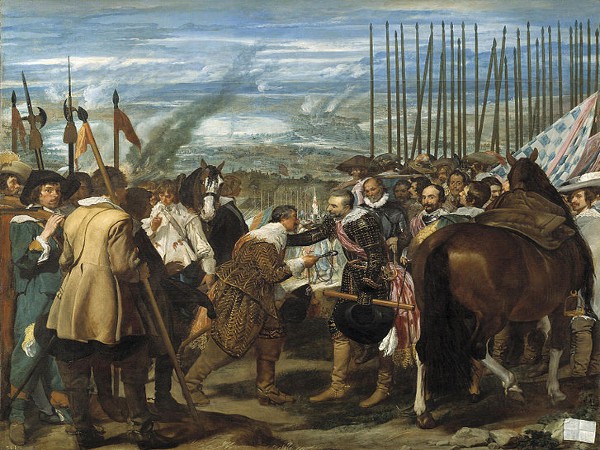
Known as the painting of The Lances, “The Surrender of Breda” is one of the most famous paintings in Spanish art, painted by the Sevillian Diego Velázquez in the 17th century, and which you can see at the Prado Museum in Madrid.
The Surrender of Breda is also a historical episode from the history of the Netherlands, although Holland did not exist as such at that time. At that time, the Dutch, led by William of Orange, were in the midst of a war of independence, and their enemies were the Spanish tercios.
The story of this painting begins with the rise to power in Spain of King Philip IV, who decided to end the truce between the Spanish and the Dutch that had lasted for a little over ten years. And to restart hostilities, the first objective of the national armies was the city of Breda, recovered by the Dutch at the beginning of the century.
The Spanish army, which numbered 40,000 men, besieged and surrounded the city for almost a year until its defender, Justin of Nassau, decided to surrender it to the Spanish. And it is that moment that Velázquez’s marvelous painting captures, with Justin of Nassau handing over the keys of the city to General Spinola, in a surrender that was not humiliating at all, but between equals.
Today, in Breda there are still memories of the Spanish occupation, which lasted until the year 1637, by the way. The Castle of Breda, a symbol of what this fortified city once was, the Breda Museum, where you will find a copy of Velázquez’s painting, or the Museum of War and Peace are very interesting visits that have some connection to this topic.
Photo | Wikimedia