Kaposvar, the City of Seven Hills
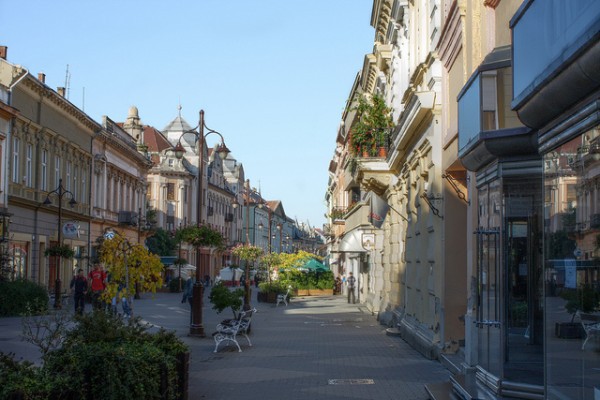
In Somogy County we find the city of Kaposvar, which is peculiar above all for its geography. A series of gentle hills surrounds it on the outer edge of the region, to the north, and a cliff leading down to the forests of the area known as Zselic flanks it to the south, giving its landscape a great originality.
Life in this town dates back to 5000 B.C. According to various documents, it was founded on seven hills, just like the city of Rome. It was recognized as a city in the 11th century, but its growth took place in the 19th century, when it became an important industrial area and a crossroads of major roads that was fundamental to its development.
In Kossuth Square, the central and most important square in the city, we find Kaposvar City Hall and the Church of Our Lady, which serves as the cathedral of the diocese. All of this is set within a framework of a variety of restaurants where you can taste the city’s typical drinks and food.
Among the most outstanding places in this Hungarian town is the Rippl-Rónai Museum. This museum (whose name honors the famous painter born in this city) is dedicated above all to Hungarian artists, some of them closely linked to the city itself, and focuses on modern works, specifically in the Impressionist and Surrealist styles.
The Csiky Gergely Theatre was inaugurated in 1911 and is located on the former Buza Kaposvar square. Its interior has a capacity for just over eight hundred and fifty people, and it was one of the first to use reinforced concrete for its ceilings. The theatre’s company gained great fame from the 1970s onward, with actors from other prestigious companies in the country joining it. Throughout the year, theatrical and musical performances (also for children) can be seen at this theatre.
For lovers of painting and photography, there is the Vaszary Art Gallery. In it, besides seeing works by this famous Hungarian painter, who blended social messages with Expressionism, you will find works by various artists from around the world, as well as permanent collections and exhibitions that are constantly renewed.
Other interesting places to visit are the Chapel of Saint Donatus (Baroque style from the early 18th century), the Ruins of the Benedictine Monastery of Kaposszentjakab (combining Romanesque and Gothic architectural details), or the Golden Lion Pharmacy, built in 1774, which was the first pharmacy in the city.
Source | Wikipedia
Photo | Flickr – kataaca
2 comments · Comment
2 comments