Cantavieja and the Maestrazgo of Teruel: Templar villages off the map
A practical guide to exploring Cantavieja and the Templar villages of the Maestrazgo of Teruel in 2 or 3 days: what to see, where to stay, when to go and what to eat in one of Spain's least-travelled regions.
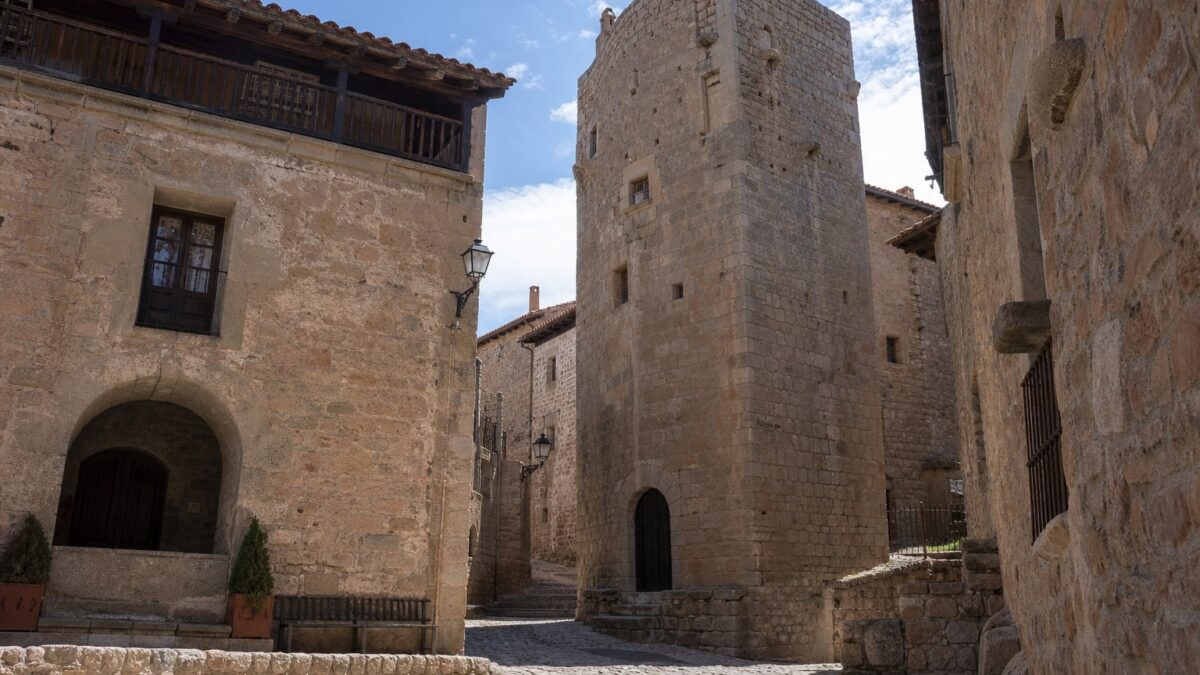
If you’re wondering whether it’s worth detouring to Cantavieja and the Maestrazgo of Teruel, the short answer is yes, as long as you go with plenty of time and your own car. It’s not a place you pass through: it sits wedged between the Gúdar mountain range and the Mediterranean, at almost 1,300 metres above sea level, and getting there means nearly two hours of winding mountain roads from Teruel or Castellón. In return, you’ll find a cluster of medieval villages that have barely changed since the Order of the Temple and, later, the Order of the Hospital fortified them in the 13th century.
This article is for you if you’re looking for a 2 or 3-day escape through the interior of Teruel with real historical weight, little mass tourism and good mountain cooking. It’s not a beach holiday or a theme-park plan: it’s stone, wind, lamb and silence.
What the Maestrazgo of Teruel is and why it matters
The Maestrazgo is a region straddling Teruel and Castellón whose name comes from the “maestre” (grand master) of the military orders that dominated the area after the Reconquista. In Teruel, the territory fell under Templar control from 1212 and passed to the Order of Saint John of the Hospital after the Temple was dissolved in 1317. That legacy is still visible today in castles, fortified churches and town layouts designed for defence.
On top of that medieval layer comes the one left by the Carlist Wars of the 19th century: Cantavieja was a Carlist stronghold under Ramón Cabrera, the “Tiger of the Maestrazgo”, and much of the military architecture you see today dates from those sieges. Understanding this before you go completely changes how you read the villages.
Quick facts about the region
| Detail | Value |
|---|---|
| Location | Northeast Teruel, bordering Castellón |
| Average altitude | 1,000-1,300 m |
| Population of Cantavieja | About 700 inhabitants |
| Best time | May-June and September-October |
| Recommended days | 2 or 3 |
| Access | Car essential |
Cantavieja: what to see and how long you need
Cantavieja sits on a rocky spur overlooking two ravines. The old town can be explored in a long morning, but it’s worth staying overnight to see it without day-trippers.
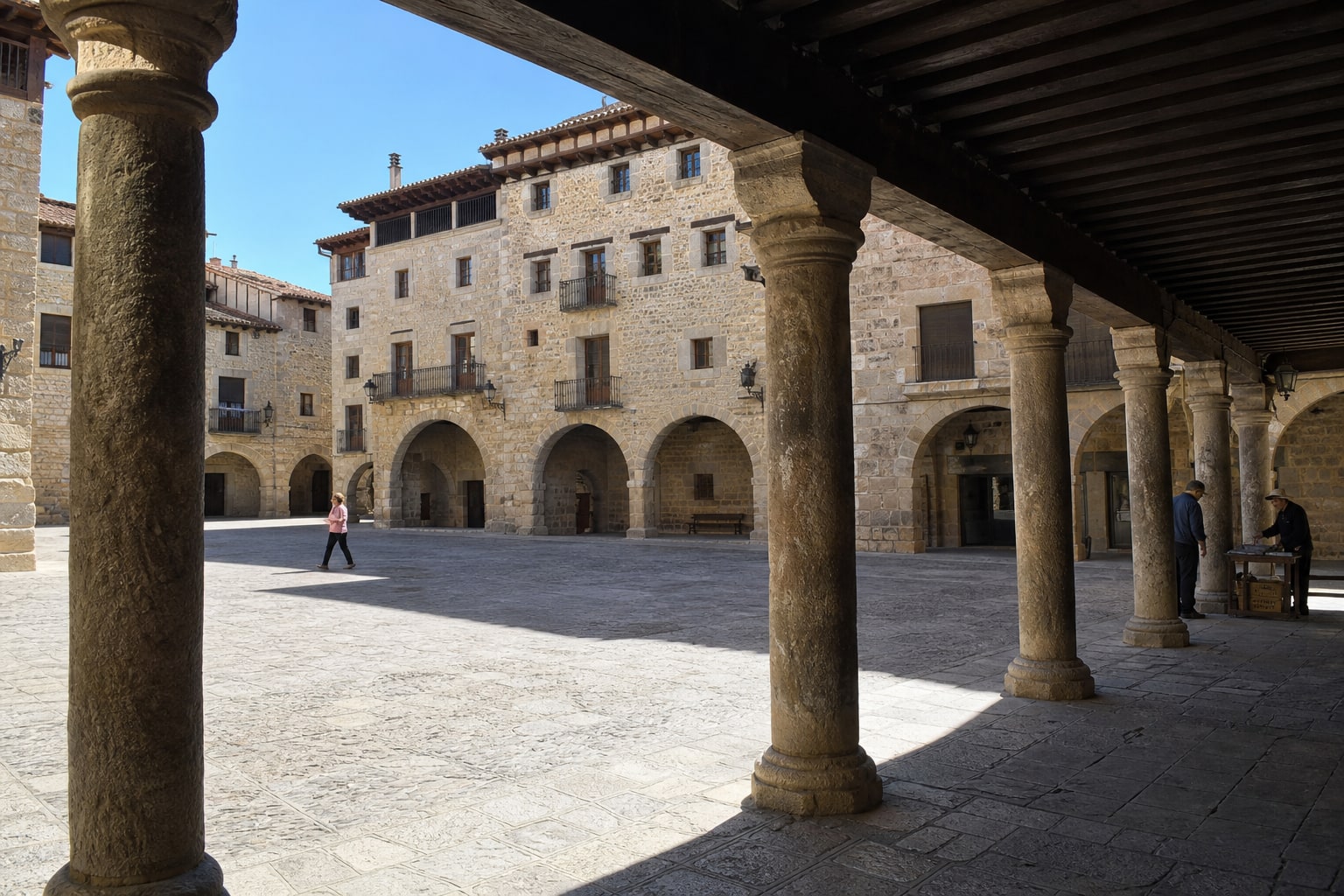
The centre is the Plaza de Cristo Rey (formerly Plaza Mayor), arcaded, with the Gothic town hall from the 15th century and the parish church of the Assumption, Baroque, built over an earlier Templar temple. A few metres away is the church of San Miguel, also 15th-century, with a Gothic portal.
The Museum of the Carlist Wars, housed in the former town hall, is a must if you want to understand why this village carried so much military weight. It usually opens morning and afternoon with a weekday closure; it’s worth checking opening times with the tourist office before you go, as they change in the low season.
What many guides leave out: head up to the viewpoint at the castle, at the top of the village. Little of the original Templar castle remains standing after the 19th-century demolitions, but the views over the Barranco de San Juan justify the ten-minute climb.
A 2 or 3-day route through the Templar villages
With Cantavieja as your base, you can link several villages without covering more than 30-40 km a day. The roads are narrow and winding: plan for average speeds of 40-50 km/h.
Day 1: Cantavieja and Mirambel
Morning in Cantavieja. In the afternoon, drive up to Mirambel, about 15 km away. It’s one of the best-preserved villages in Aragon, declared a historic-artistic ensemble and awarded the Europa Nostra Prize in 1981. You enter through the Portal de las Monjas, with 17th-century plaster latticework, and walk along an almost complete city wall. Allow a good hour for the visit.
Day 2: La Iglesuela del Cid and Villarluengo
La Iglesuela del Cid, 11 km from Cantavieja, has an unusually high concentration of 15th- and 16th-century palatial houses for its size. The Matutano-Daudén palace houses the town hall and can be visited during office hours. A useful local fact: its name comes from the fact that El Cid passed through here on his way to Valencia.
In the afternoon, head towards Villarluengo and the Órganos de Montoro, vertical rock formations visible from the A-226 road. It’s the most spectacular stretch of the trip for pure scenery.
Day 3: Castellote and Mas de las Matas
If you have a third day, head down to Castellote, where the Templar castle keeps towers visible at the top of the village, and the Museo del Maestrazgo provides regional context. From here you can link up with the route out via Alcañiz towards the Ebro valley.
Getting there and getting around
Cantavieja has no train service and no nearby operational airport. The realistic options:
- From Teruel: about 95 km via the A-226, between 1 h 45 min and 2 h.
- From Castellón: about 110 km via the CV-15, just over 2 h.
- From Zaragoza: about 180 km, around 2 h 30 min.
- From Valencia: about 180 km, 2 h 30 min.
A regional bus does exist but runs very infrequently (one a day or fewer on some routes). If you’re not driving, getting between villages is practically unfeasible. Refuel in Teruel or Alcañiz: there are few petrol stations in the region and they close early.
Where to stay by profile
Accommodation is mostly rural houses and small hotels. There are no chains. Indicative prices for a double room (2025-2026 range):
| Profile | Option | Approx. price/night |
|---|---|---|
| Couple, comfort | Boutique hotel in Cantavieja or Mirambel | €80-120 |
| Family | Whole rural house (4-6 people) | €120-180 |
| Tight budget | Guesthouse or pension in small villages | €50-70 |
| Group | Rural apartment in La Iglesuela or Tronchón | €100-160 |
Book well in advance for May bank holidays, August and Easter: availability is limited and fills up quickly. In January and February, by contrast, many places close.
What to eat: lamb, truffle and cheese
The cooking of the Maestrazgo is mountain cuisine: hearty, spoon food in winter and charcoal-grilled the rest of the year. Dishes with their own names worth seeking out:
- Ternasco de Aragón PGI, roasted in a wood-fired oven.
- Cordero a la pastora, stewed with potato and paprika.
- Migas del pastor with grapes and chorizo.
- Black truffle of Teruel (Tuber melanosporum): the Sarrión area, to the south, is one of Europe’s major producers. In season (December-March) it’s shaved over scrambled eggs and meat.
- Tronchón cheese, mentioned by Cervantes in Don Quixote. You can buy it directly at the village’s cheese dairy.
- Jamón de Teruel PDO, the only Spanish ham with a protected designation of origin from white pigs.
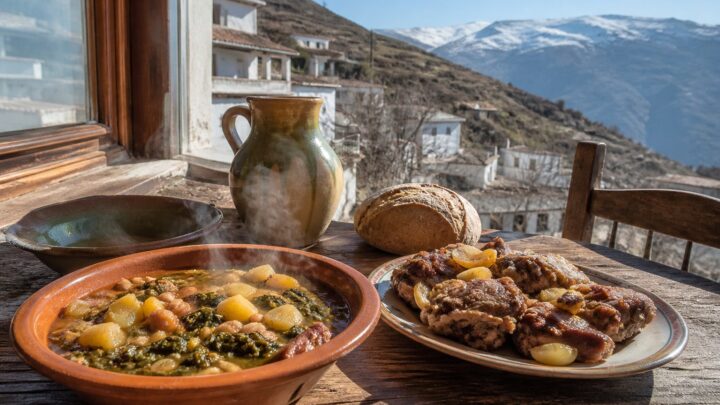
For dessert, almendrados (almond biscuits) and mantecado de Cantavieja (a shortbread-style sweet) are sold in local bakeries. If you enjoy this kind of food-focused trip through quiet regions, you might also enjoy the winter cooking of the Alpujarra, with Alpujarran dish and choto al ajillo.
When to go: weather and crowds
Cantavieja sits at almost 1,300 m. That shapes everything.
- Winter (December-February): real cold, minimums below freezing, possible snowfall. Several places to stay and restaurants close. It’s worth it if you’re coming for the truffles.
- Spring (April-June): the best season. Mild temperatures, green fields, few people.
- Summer (July-August): warm days but cool nights (15-18 °C). August brings most visitors, especially from Valencia fleeing the coastal heat.
- Autumn (September-October): the second ideal window. Mushrooms, soft light, villages empty on weekdays.
Avoid long holiday weekends if you want quiet: the villages have so little capacity that crowds are noticed immediately.
Common mistakes
- Trying to do it in a single day from the coast: the journey eats the visit. Stay at least one night.
- Trusting GPS for alternative routes: it will send you down forest tracks. Stick to main roads (A-226, A-227).
- Not carrying cash: there are cash machines in Cantavieja, but in villages of 100 people many bars and cheese shops only take cash.
- Expecting to do it by public transport: it isn’t realistic.
- Forgetting warm clothing in summer: nights at 1,300 m cool down quickly.
Safety and services
It’s a very quiet area with no notable safety concerns. What is worth keeping in mind:
- Patchy mobile coverage between villages.
- Basic medical services in Cantavieja; the main hospital is in Alcañiz (1 h 30 min away).
- In winter, carry snow chains or winter tyres if snow is forecast.
What’s nearby if you want to extend your trip
From the Maestrazgo you can link up with Morella (Castellón, 30 km from Cantavieja), with its complete city wall and the Balma sanctuary; with Alcañiz and its Calatravan castle; or with the area around Albarracín, on the other side of Teruel, to round off a week through the interior of Aragon. If you prefer thinking in terms of villages with strong character of their own, the exercise is similar to what we do with Setenil de las Bodegas and its houses under the rock.
Frequently asked questions
How many days do I need to see Cantavieja and the Maestrazgo?
With 2 days you can cover Cantavieja, Mirambel and La Iglesuela del Cid at a relaxed pace. With 3 days you add Villarluengo, the Órganos de Montoro and Castellote. A single day feels too short because the journey alone takes several hours.
Is it worth going in winter?
Yes, with caveats. If you’re interested in black truffles, hearty stews and empty villages, it’s a different kind of experience. Expect cold, some closed accommodation and possible snow. Confirm bookings by phone.
Can you visit without a car?
In practice, no. Regional buses run at minimal frequencies and don’t connect the villages well. The only real alternative is renting a car in Teruel, Castellón or Zaragoza.
Which Templar castles survive?
The most visible remains are at Castellote and on the Cantavieja hill itself. In both cases the Carlist Wars and the passage of time have left more of a mark than the Middle Ages, but the site and the stretches of wall let you picture the original defensive setup.
Is it a destination for children?
It works well with children from around 6-7 years old who can walk cobbled streets without trouble. There’s space to run around, short routes and small museums that are manageable. For babies or pushchairs, the old town centres are uncomfortable.
Where can I book a table to try truffle?
In December and January, restaurants in Cantavieja and Mora de Rubielos include truffle menus. Book several days ahead: they’re small places and fill up on weekends with customers from Valencia and Zaragoza.
If I had to leave you with one concrete recommendation: book two nights in Cantavieja between late May and mid-June, head to Mirambel early on the second day, and eat roasted ternasco in one of the local wood-fired ovens. That way you’ll have understood the Maestrazgo of Teruel, not just seen it.

0 comments · Comment