Budapest in four days: thermal baths, ruin bars and neighborhoods to stay in
Day-by-day itinerary for Budapest with thermal baths, ruin bars in District VII and recommended neighborhoods to stay in, with prices in HUF and EUR and practical tips.
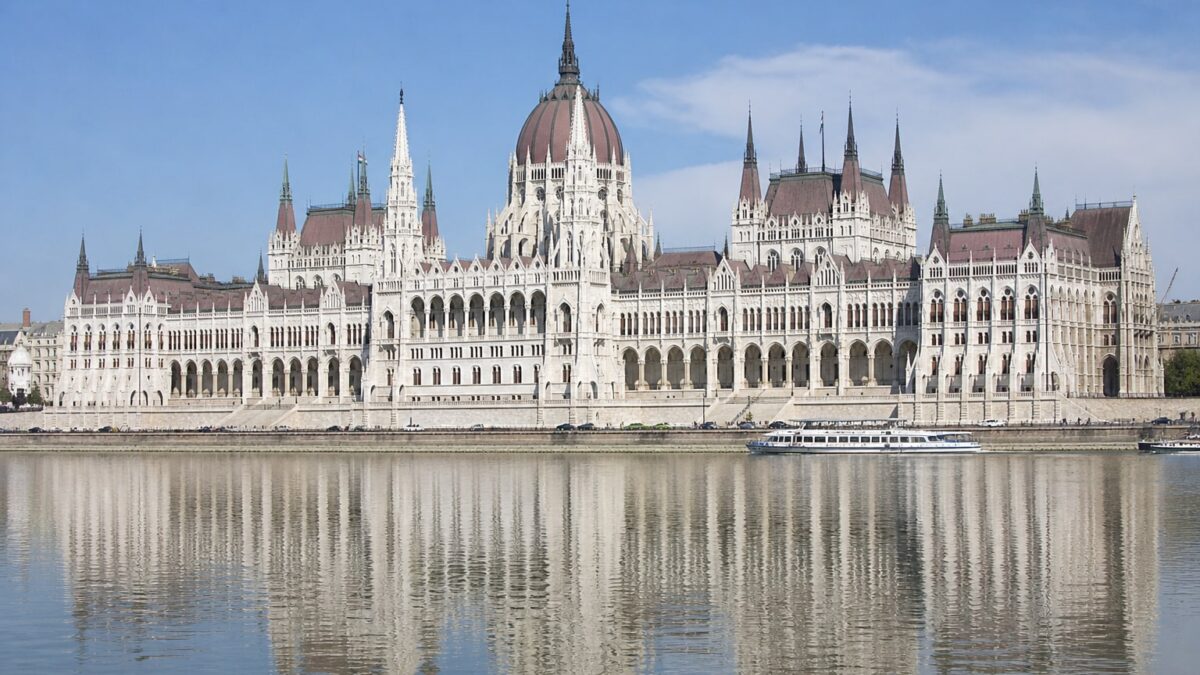
Four days is the time Budapest needs so you don’t end up treating it as a postcard. It lets you separate Buda from Pest without rushing, fit in two afternoons at the baths, a long night through the ruin bars of the Jewish Quarter, and still have room for an excursion to the Danube Bend or a climb up to the castle in the late afternoon light. Less than that turns the trip into a race; more, unless you use the city as a base, starts to repeat itself.
This guide is for you if you’re going for the first time, travelling as a couple or with friends, and want to combine heritage, baths and nightlife without doing the circuit blindly. Prices are in forints (HUF) with approximate euro equivalents at the end of 2026; it’s worth checking the exchange rate before you leave because the forint fluctuates.
Why Budapest deserves four days and not two
Budapest is, in reality, two cities stitched together by the Danube: Buda, the castle hill and the quiet residential districts, and Pest, the nineteenth-century grid with the great boulevards, the Opera House and the Jewish Quarter. The unification with Óbuda came in 1873, and since then the city has worked with that double personality: the monumental bank and the bank where people actually live.
On top of that there is a thermal bathing tradition of more than four centuries, inherited from the Ottomans, and a nightlife scene that began in the early 2000s in the abandoned buildings of District VII. Four days allow you to touch all three layers—imperial, thermal and alternative—without reducing any of them to a quick snapshot.
Budapest quick facts
| Detail | Value |
|---|---|
| Currency | Hungarian forint (HUF). 1 € ≈ 390-410 HUF |
| Language | Hungarian; functional English in the centre and hospitality |
| Best season | April–June and September–October |
| Key districts | V (central Pest), VI (Terézváros), VII (Jewish Quarter), I (Castle) |
| Public transport | Single ticket ≈ 450 HUF; 24 h ≈ 2,500 HUF |
| Recommended days | 4 full days |
Day-by-day itinerary
Day 1: Monumental Pest and first bath
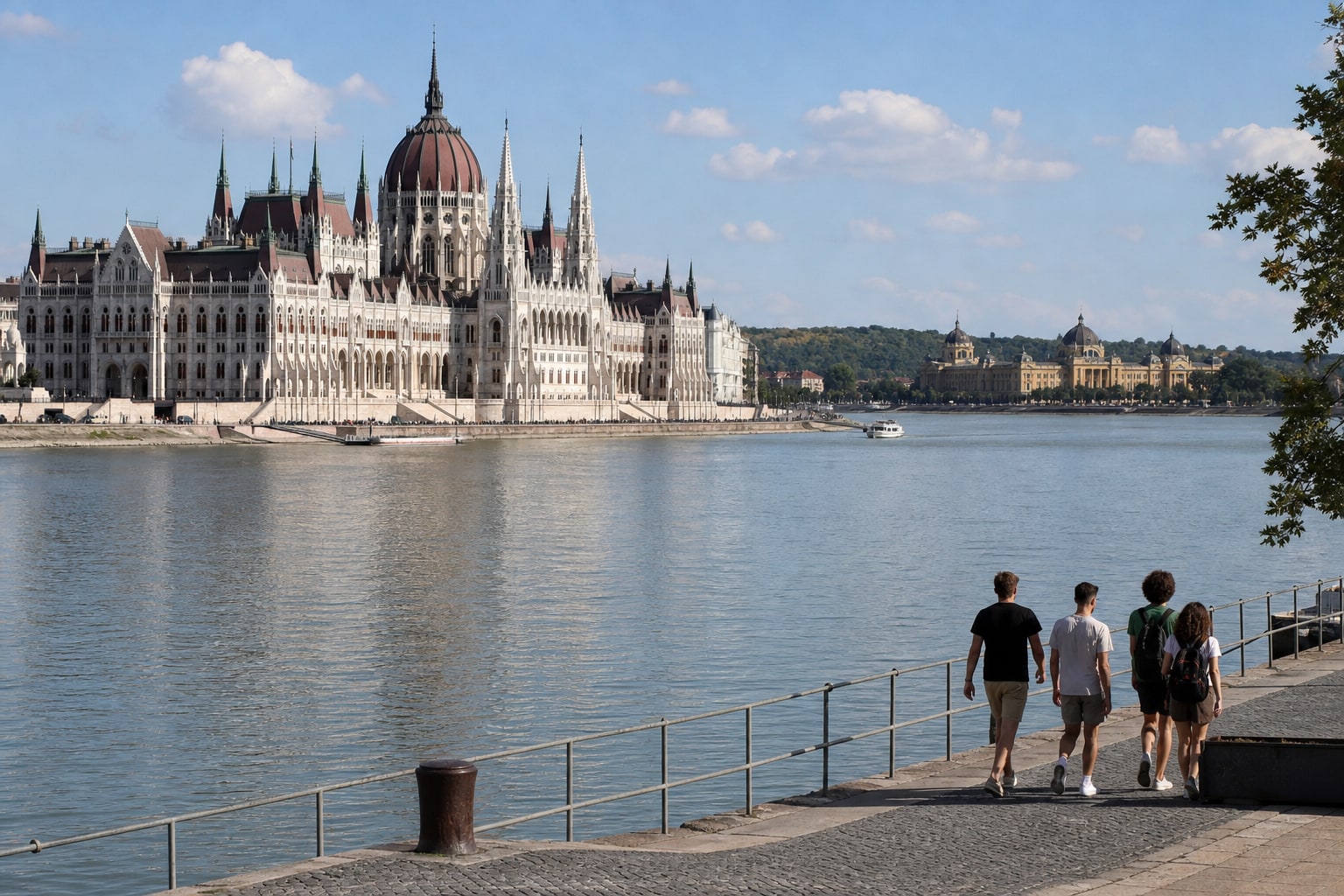
Start at St. Stephen’s Basilica (entry to the nave is free, dome climb around 2,000–2,500 HUF). Walk down Zrínyi utca to the Danube, cross to the Parliament —the guided tour costs around 5,000–9,000 HUF depending on language and should be booked days in advance on the official website— and walk to the Shoes on the Danube Bank on the riverside, a memorial to the Jews murdered in 1944–45.
In the afternoon, head to the Széchenyi Baths, in City Park (Városliget). They are the most photographed, yellow, enormous, with outdoor pools even in winter. Entry is between 10,000 and 13,000 HUF (€25–32) depending on the day and time slot. Book a good two hours.
Day 2: Buda, the castle and Gellért
Climb up to the Castle District (District I) on foot by the steps from Várkert Bazár or by the funicular (Sikló, around 2,000 HUF one way). There you’ll find the Royal Palace, Matthias Church (entry around 2,500 HUF) and the Fisherman’s Bastion, whose upper terraces charge a symbolic fee early in the morning.
Walk down towards Tabán and eat at a neighbourhood étterem. In the afternoon, the Gellért Baths, in Art Nouveau style from 1918, are the elegant alternative to Széchenyi: fewer crowds, more mosaic, similar entry price (11,000–13,000 HUF).
Day 3: Jewish Quarter, Great Market and ruin bars
Dedicate the morning to District VII (Erzsébetváros): the Great Synagogue on Dohány Street, the second largest in the world, with a combined ticket with the Jewish Museum at around 11,000–14,000 HUF. Continue along Kazinczy utca, with its inner courtyards and the Orthodox synagogue.
Cross into south Pest and enter the Nagyvásárcsarnok (Great Central Market Hall), dating from 1897. Ground floor for sausages and paprika, upper floor for lángos: the fried dough with sour cream and cheese costs around 2,500–3,500 HUF. It closes early on Sundays.
At night, return to the Jewish Quarter for the ruin bars. A comparison follows below.
Day 4: Margaret Island, Óbuda or an excursion to the Danube Bend
The last day allows three readings. If you want to stay in the city, Margaret Island is good for a morning on a bike or a walk, with the ruins of the Dominican convent and the musical fountain. If archaeology appeals to you, Óbuda keeps the amphitheatre and the Roman baths of Aquincum (entry around 2,000 HUF).
If you prefer to get out of town, the HÉV suburban train from Batthyány tér takes you to Szentendre in 40 minutes (return for around 2,000 HUF): a Serbian-Hungarian town of cobbled streets, galleries and the Blagovestenska church. It is the easiest excursion along the Danube Bend.
Thermal baths: which one to choose according to your profile
| Bath | Style | Approx. price | Suits you if… |
|---|---|---|---|
| Széchenyi | Neo-baroque, huge, outdoor | 10,000–13,000 HUF | It’s your first time and you want the yellow photo |
| Gellért | Art Nouveau 1918, mosaic | 11,000–13,000 HUF | You’re after architecture and fewer crowds |
| Rudas | Ottoman 16th c., dome | 6,000–12,000 HUF | You’re going at night or want views from the rooftop pool |
| Király | Small, Ottoman, austere | 4,000–6,000 HUF | You prefer local over touristy |
Bring flip-flops, a swimming cap if you’re going to the lap pools, and some cash for the locker deposit at the ticket office.
Ruin bars: where the origin is and where the copies are
The phenomenon began in 2004 with Szimpla Kert (Kazinczy utca 14), a derelict building in District VII converted into a bar with salvaged furniture, bathtubs used as sofas and linked courtyards. It remains a must-visit, although from Thursday to Saturday it fills with stag and hen parties.
For something calmer, try Instant-Fogas (Akácfa utca 51), a complex of several floors; Csendes Vintage near Ferenciek square, more of a local hangout; or Mazel Tov, which is more gastro than ruin but keeps the courtyard spirit. Avoid the bars that offer you girls on the street in the Király utca area: it is one of the city’s classic scams, with inflated bills when you leave.
Where to stay depending on what you’re looking for
| District | Profile | Double price/night |
|---|---|---|
| V (Belváros-Lipótváros) | First visit, right in the middle of everything | €90–160 |
| VI (Terézváros, Opera) | Cafés, Andrássy, atmosphere | €70–130 |
| VII (Erzsébetváros) | Nightlife, ruin bars | €60–120 |
| I (Castle) | Tranquillity, views | €100–180 |
| IX (Ferencváros) | Price and transport | €50–90 |
If you sleep in District VII and are a light sleeper, ask for an interior room: at weekends the street doesn’t stop until four in the morning.
Transport, money and common mistakes
The metro, tram 2 (the line with views of Parliament) and buses all use the same ticket. A 72-hour pass costs around 5,500 HUF and pays off from the second day. From Ferenc Liszt Airport, bus 100E reaches the centre for around 2,200 HUF in 40–50 minutes; the official Főtaxi taxi costs around 10,000–13,000 HUF.
Pay in forints whenever you can. Euronet ATMs with high fees are everywhere in the centre: look for bank ATMs (OTP, K&H, Erste). Refuse on-screen conversion (DCC) when paying by card. And be wary of unmarked taxis waiting at Deák Ferenc tér: order one through an app (Bolt, Főtaxi).
The most common mistake is trying to see Buda and Pest on the day of arrival: you end up rushing. The second is booking two baths on the same day; your body notices by the third.
If you’re coming from another Eastern capital, you might want to compare priorities with this read on Warsaw and Kraków and which wins for a first visit.
Frequently asked questions
How much does a 4-day trip to Budapest cost? With flights not included, budget €350–550 per person at mid-range: accommodation in VI or VII, two dinners with wine, two baths, public transport and the main entries. It can drop to €250 if you’re strict or rise without a ceiling.
Is Széchenyi or Gellért better for a first time? Széchenyi if you’re going with friends and want the outdoor pool atmosphere; Gellért if you’re travelling as a couple and value architecture. Rudas at night is the third option if you can only do one and want something different.
Do I need to book Parliament? Yes. Tickets for foreigners sell out days in advance, especially the English- or Spanish-language slots. Buy it on the official Országgyűlés website as soon as you have your dates.
Can I pay in euros? In some tourist spots they accept euros, but the exchange rate is poor. Withdraw forints from bank ATMs or pay by card in HUF.
Is Budapest safe at night? Yes, by European standards. The typical problems are inflated bills in bars in the Király utca area, pickpockets on tram 4–6 and unofficial taxis. Walking through District VII or V in the early hours is usually not a problem.
Is it worth going in winter? Yes, especially for the outdoor baths with steam rising off the water. December adds the Christmas markets of Vörösmarty tér and the basilica, although prices go up.
If you only take away one recommendation: book accommodation in District VI or VII, buy the 72-hour transport pass on arrival and leave the first two afternoons free for the baths. The rest of the itinerary almost fits itself.
0 comments · Comment