London Underground (II)
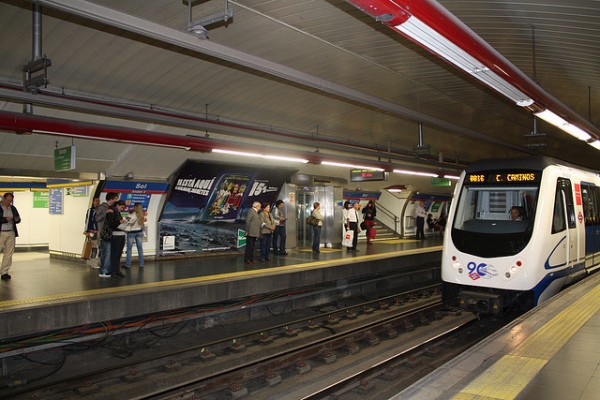
We will continue to tell you about the incredible and interesting history of the London Underground. In 1933 a public corporation called the London Passenger Transport Board was created. This organization was the forerunner of today’s Transport for London.
With careful planning and the passing of time, the Underground network began to expand, extending existing lines and starting to take control of other lines that did not belong to the Combine. All plans were suspended with the outbreak of the Second World War.
As a consequence of the bombing of London by the German air force in the 1940s, Underground stations were used as air-raid shelters, where, in addition to medical centres, food distribution centres were set up.
When the war ended, the Underground grew considerably, and the project became more ambitious than originally planned. A new plan was created to reduce congestion, and for this purpose a study was carried out on the Victoria line, which runs diagonally beneath the city from northeast to southwest. Meanwhile, the Piccadilly line reached Heathrow Airport in 1977. The Jubilee line opened in 1979. Extensions to this last line, reaching Stratford, were made until 1999.
Each of the Underground lines has a colour that differentiates it, and this colour is used both in the table below the trains and in the map representations. In addition, for each line you will find information about the opening date of the first section and the type of tunnel through which the carriages run. The Underground has 11 lines.
The rolling stock used on this Underground was built between the 1960s and 2005. It is characterised by being one of the few in the world that uses a four-rail system. The additional rail carries an electrical return.
Source | Wikipedia
Photo | Flickr – El Centinela


1 comment · Comment
1 comment