The festival of Purim, Israel's carnival
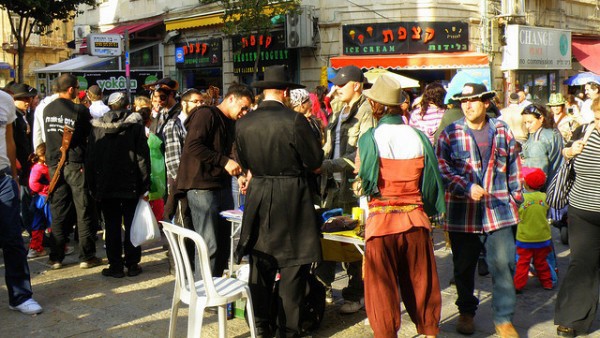
As we pointed out in our post on Germany’s Carnival in Düsseldorf, every country has its own traditions and customs regarding this festival. This rule also applies to Israel. They too have their own carnival tradition, although they don’t celebrate it the way we know it in Spain.
For some, holidays are just another time of the year. For others, the celebrations or events are important to their lives. But the Festival of Purim is celebrated by all Jews, as a festival connected to the very existence of the Jewish people, commemorating their unity so that extermination would not reach them all at a particular moment in their history.
The festival lasts two days and always begins at sunset on a Saturday, ending at sunset the following Monday. In this year 2013, it will be celebrated from February 23 to 25. In the Jewish calendar, it falls on the 14th or 15th of the month of Adar (the sixth month of the modern Hebrew calendar and the twelfth according to the Bible). Its origins are based on commemorating the miracle of the Jews being saved from annihilation at the hands of the Persian King Ahasuerus, all of which is recounted in the Book of Esther.
Although it may seem like a festival dominated by joy and fun, the reality is that Israelis must observe certain rules laid down for it. Fasting and prayer must be carried out on the eve of the festival, as a tribute to the Jews who survived the Persian annihilation.
The Book of Esther, or as it is more popularly known during the festival, the Megillah, must be read in front of everyone. While this reading takes place, everyone attending must make noise with whatever they have whenever a certain name (Haman) is pronounced. This gesture is made so that the name can be definitively erased from memory. The act of making noise and creating a commotion means that children also take part in it.
But not everything is of this character. After the fast, there is a great banquet, where it is customary to drink wine and sing, as well as to give gifts to friends and dress up children so they can enjoy the celebration. This is something that comes a bit closer to the typical carnival we know. And to sweeten it a little more, special sweets called “Haman’s Ears” are enjoyed, a kind of cookie that can have different fillings inside (fruit purée with orange peel or chopped walnuts and honey).
Although it is not the typical Carnival festival we know in our country or elsewhere in the world, it is never a bad idea to compare our customs with those of other countries where they have a very distinctive way of celebrating certain festivals.
Via | Wikipedia
Photo | Flickr – RonAlmog

1 comment · Comment
1 comment