Wuppertal, center of climate research and the city of the cable car
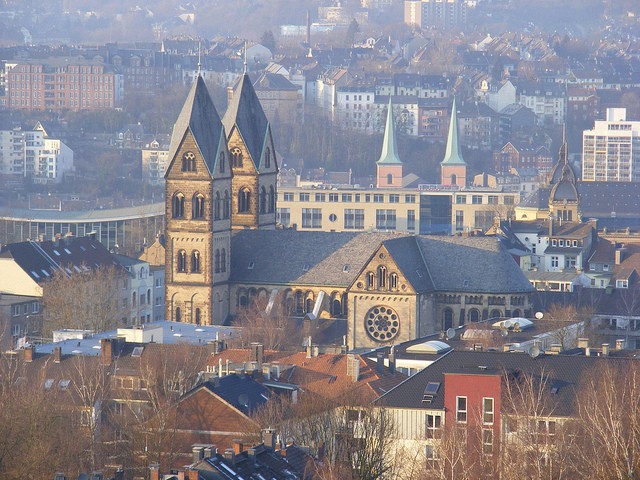
In the German state of North Rhine-Westphalia, we find one of Germany’s youngest cities: Wuppertal. The city was founded as such in 1929 through the merger of several surrounding settlements, although studies show that it was inhabited as early as the Iron Age.
Its name, Wuppertal, translates as “Wupper Valley”, due to the river (Wupper) that runs through the city. Although nearly 40 percent of the city was destroyed by Allied bombing during World War II, historic neighborhoods from that era have survived, such as Ölberg or “Olive Hill”, a working-class district, and the Briller Viertel, which has a more bourgeois character.
If we had to highlight Wuppertal above all else, it would be for its climate studies and its cable car. In Wuppertal is the Institute for Climate, Environment and Energy of the same name, one of the leading centers for climate research in the European Union. Founded in 1991, it is dedicated to research and development of models and instruments suitable for sustainable development at the international, national and regional levels.
One of the most striking attractions is the suspension railway, or cable car, Schwebebahn. This means of transport dates from 1901 and, over 13 km, runs suspended above the Wupper River. In an upcoming post we will look more fully at the history and curiosities of this famous suspension railway.
But Wuppertal does not live on climate and the cable car alone. The city also boasts the Pina Bausch Dance Theatre (named after the famous German dancer, choreographer and dance teacher), its zoo, its botanical garden, the Stadthalle concert hall and the Von der Heydt Museum, with works by artists from the 19th and 20th centuries.
Finally, other notable attractions in the city of Wuppertal include the Tony Cragg Sculpture Park, featuring contemporary sculptures by this British sculptor, and the Museum of the Early Industrialization which, together with the house of Friedrich Engels (German philosopher and revolutionary, collaborator of Karl Marx), are two sites that show the beginnings of the Industrial Revolution.
An interesting little town. Small perhaps in size, but not in importance or in quality for showing visitors who want to get to know it. A place whose tourist offering, especially on the cultural level, has nothing to envy from other, more famous places in Germany.
Via | Wikipedia
Photo | Flickr – sludgegulper

2 comments · Comment
2 comments