El Rey National Park
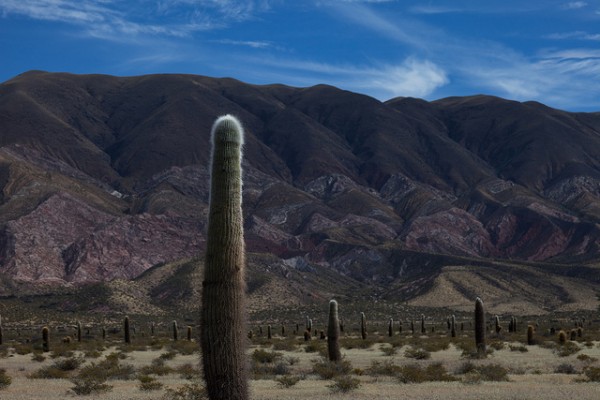
The El Rey National Park is located within the department of Anta, in the Province of Salta and about 200 kilometers from the capital. The park was created in the mid-1950s and covers an area of 44,162 hectares. Its purpose was to preserve the transitional environment of the area.
Since 1990 the park has been considered a strict nature reserve. It lies in the so-called Subandean Ranges, a subtropical forest zone where the climate does not exceed 25 degrees and rainfall is abundant.
In El Rey National Park you can see montane meadows, altitudinal belts, and forested areas with thousands of trees such as quebracho, yuchán, horco, molle, cebil, and guayabo; at the highest elevations there are conifers and deciduous trees such as alder and cerro pine.
The local fauna is very diverse. You can find species such as pumas, peccaries, and tapirs (considered the heaviest mammal in South America). The region is also home to the cai monkey, the greater grison, the giant anteater, peccaries, forest foxes, ocelots, and jaguars.
The site was originally inhabited by indigenous groups. Archaeological finds have been made in the area, including orange and gray pottery with zoomorphic handles and polished stone axes. Today, certain indigenous groups who descend from earlier peoples still live there.
During the 18th century the Finca El Rey was a stronghold on the eastern frontier of Jujuy and Salta. Like many places in the region, this territory depended on the Viceroyalty of Upper Peru. In 1767, when the Jesuits were expelled, the property was acquired by Merced Real, Colonel Fernández Cornejo y Rendón.
Source | Wikipedia
Photo | Flickr – Jikatu

2 comments · Comment
2 comments