Dusseldorf, the city with a Japanese flavour
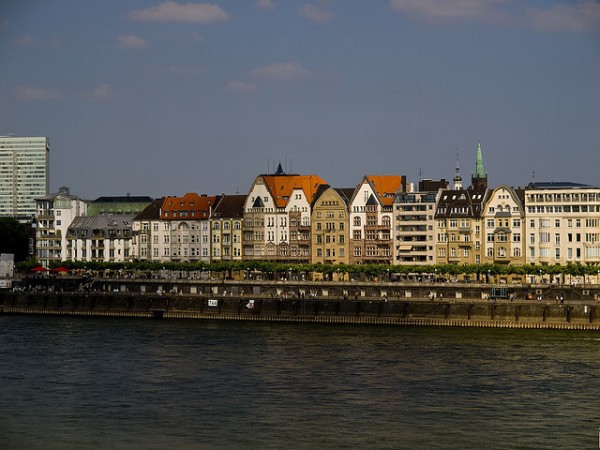
In the German state of North Rhine-Westphalia we find the exotic city of Düsseldorf, a town of around 600,000 inhabitants, crossed by the River Rhine and which today boasts the economic might of West Germany. A cosmopolitan city that is home to the largest Japanese community in all of Europe.
An exotic yet luxurious city where bankers, entrepreneurs, designers and artists share their lives, lending economic splendour to the town. But if Düsseldorf stands out for anything, it is for what we mentioned earlier about its Japanese population. Some 7,000 Japanese people live their lives in Düsseldorf, so much so that it has come to be known as “Little Tokyo”.
“Little Tokyo” is the Japanese nerve centre of the city. A large Oriental marketplace, grocery and bookshops, and various restaurants serving typical Japanese cuisine mean that this name was not given in vain. Besides everything related to commerce, you will also find the largest international Japanese school in all of Europe, and the alternation of German and Japanese festivities that decorate the banks of the Rhine.
But Düsseldorf does not live on Japan alone. One of the city’s most commercial streets is the Königsallee, where the style of its products blends the exotic, the elegant and the high prices. But it was not always so. In another era, Düsseldorf depended on heavy industry until it became what it is today, one of the largest service cities in the world.
In business terms, the city centre is home to most of the headquarters and offices of the city’s companies. Many entrepreneurs from all over the world have chosen Düsseldorf as their official base, starting precisely with Japanese companies.
Beyond the economic splendour brought by outsiders, Düsseldorf is also a place with an appealing cultural offering. Famous for its carnivals, it is even twinned with our Santa Cruz de Tenerife since 1972, so that a delegation from each city takes part in its carnival spectacle. It is also rich in theatre, dance and cultural exhibitions that delight visitors to the city. Worth noting is the Düsseldorf Academy of Fine Arts, which dates from 1762.
With a wide variety of hotels, cheap and expensive, spread throughout the city, and an excellent transport network, Düsseldorf becomes a very attractive destination for holidays in Germany. A place where the blend of customs and luxury makes it very appealing when choosing a destination for our holidays.
Source | dw.de
Photo | flickr-Sebastiandooris

5 comments · Comment
5 comments
“ciudad bávara”Dusseldorf?,vamos que al lado esta Munich..
Estimado Raúl
Disculpa mi torpeza geográfica. Quise decir germana cuando se me escapó bávara.
Mil disculpas