Manzana de las Luces
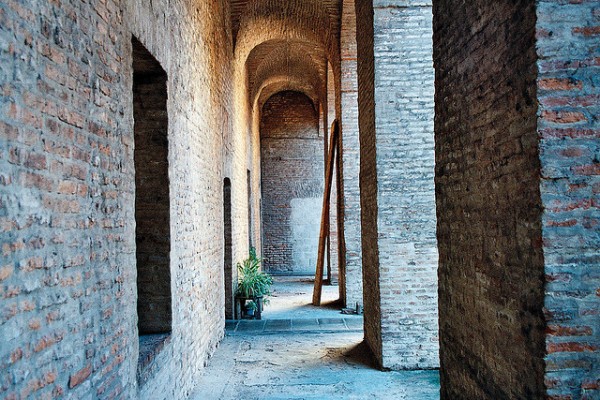
The Manzana de las Luces is a place where culture and history are present, allowing visitors to experience and feel it from its walls to its interior. It is surrounded by the streets Moreno, Bolívar, Perú and Alsina. Since its creation it has been the seat of several institutions, all of them very important, linked to the history, culture, education and religion of the country.
It is also one of the most mysterious places in the city. Around it, thousands of legends and myths have been created that are directly linked to a network of tunnels and their use. The underground network was built between the 17th and 18th centuries. The network connects different churches, public administration buildings and the Fort. These tunnels lie five meters below the surface and were excavated directly into the tosca limestone, using picks and spades.
Many of its mysteries refer to the use these tunnels had during the colonial era and the reason for their construction. Some historians have outright denied the existence of these tunnels, while others have been able to visit and study them.
One of the most fascinating sites within the Manzana de las Luces is the Sala de Representantes (which in its time served the same role that the National Congress occupies today). This chamber operated from May 1, 1822 until the end of the 19th century. Two of the most important events that took place within its four walls were the swearing-in of the first president, Bernardino Rivadavia, and the assumption of office by Juan Manuel de Rosas as Governor of the Province of Buenos Aires.
The building later served as the Consejo Deliberante de la Ciudad de Buenos Aires and afterwards as the Aula Magna of the Faculty of Architecture of the University of Buenos Aires, until 1972.
Today, a variety of shows linked to art and culture are held there.
Source | Manzana de las Luces
Photo | Flickr – M Castan
1 comment · Comment
1 comment