The Magere Brug in Amsterdam, its history and its romantic tradition
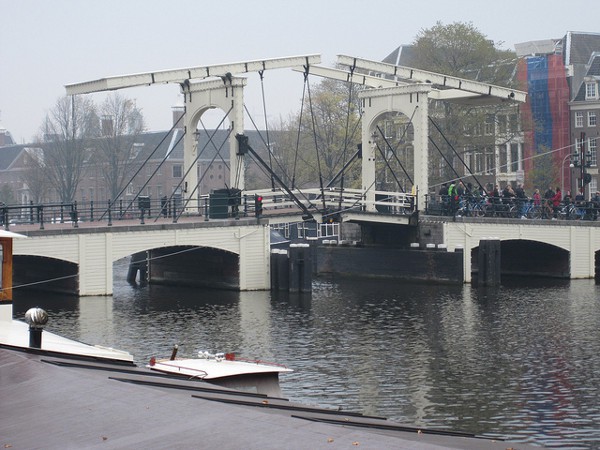
A city surrounded by canals like Amsterdam inevitably has many bridges, each with a story behind it. Of all of them, probably the most famous is the Magere Brug, or Magere Brug in Dutch, a drawbridge over the Amstel, the city’s most important canal, with a history and a tradition well worth getting to know.
We begin with a summary of its history, which is quite long, since the bridge has existed since the 17th century. Not the current one, of course, since the one you see now is much more modern, dating from after the Second World War. In between there was another bridge, from the late 19th century, until it was destroyed during the war.
That 19th-century bridge was built to replace the old one, not because it was in poor condition but simply because it could no longer cope with pedestrian traffic. It is said the bridge was so narrow, and this is where its name comes from, since Magere means thin, that people had to cross one at a time, which is why it had to be changed.
There is another story, or rather a legend, which says the name refers not to the word magere itself but to the surname of two sisters, the Magere sisters. The story goes that each sister lived in a house on either side of the Amstel canal, directly facing each other, and to avoid long detours a small bridge was built so they could visit one another. It should be noted that it isn’t very wide now either, to be honest.
Far better known than all these stories is the tradition attached to this bridge. It is said that couples who kiss under the bridge will remain together forever. So there you have it, lovers: you have to take a boat trip along the canals and fulfil this tradition so typical of Amsterdam, and let’s see if it works.
Photo | Flickr – NH53




1 comment · Comment
1 comment