The Klosterneuburg Monastery in Vienna
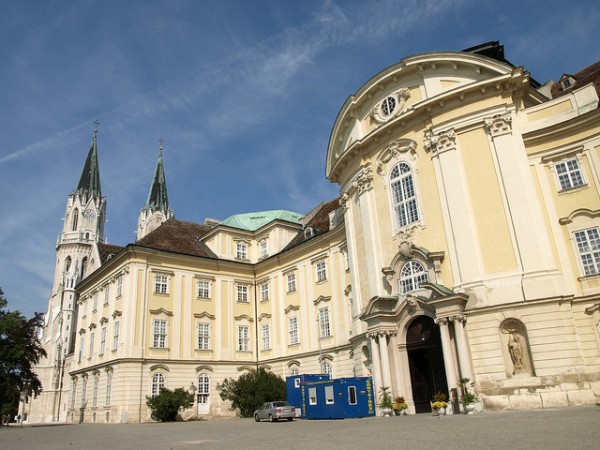
The Austrian capital, Vienna, always offers fascinating insights into the culture of the Austrian country. Numerous buildings are representative of the area and are a true treat for all visitors who explore it throughout the year. Today we are going to stop at the Klosterneuburg Monastery.
This monastery, located in the town of the same name, west of Vienna, is also known as the Danube Monastery because it sits on a hill rising directly from the banks of that same river, and it is recognized as one of the most important cultural and religious sites in the entire country. This monastery was founded in 1114 and, from 1133 until the present day, has been the home of the Augustinian Canons.
Upon entering the monastery, we come across the Ground Hall. This room, in the Baroque style, houses various works of the same style for the enjoyment of all visitors. It is formed by eight very tall columns and hosts various themed tours to immerse anyone who wishes in culture.
To make the visit as complete as possible, the tour can be divided into three types of routes. The first one has us stop at the Sacred Path, with one of the most famous works of the Middle Ages: the Verdun Altar. Although its name may be confused with that of the French city of Verdun, the work was created in Klosterneuburg. This altar is composed of as many as fifty-one different mosaics depicting episodes from the Old and New Testaments. Continuing along the route, and after finishing the Verdun Altar, we can admire various frescoes in the collegiate church and the spectacular organ, dating from the early Baroque period.
Next, we enter the Imperial Path route. This route allows us to visit the monastery’s various imperial chambers, as well as the magnificent Marble Hall, and shows us all the wealth of the princely Baroque era. An interesting journey that connects with the majesty of the Austrian princely period.
The last of our routes takes us to the monastery’s underground cellar (about 36 meters deep), the oldest in all of Austria. The wine history of the region is displayed in this ancient cellar which, in addition, offers in its Wine Room wine tastings and sales of the same to all those who want to take home a tasty memory of the monastery.
Other places, besides the museum and the cloisters, that can be visited include the Baroque Hall of St. Augustine and the Cooper Granary, and you can end your visit to the monastery at the Schüttkasten restaurant, enjoying a delicious meal, or at the Café Escorial, enjoying a magnificent view. Every day of the year, from 9 a.m. to 6 p.m., the monastery’s doors are open to the public, and guided tours can be booked, held from 10 a.m. to 5 p.m.
Source | austriainfo
Photo | flickr-barnyz

2 comments · Comment
2 comments